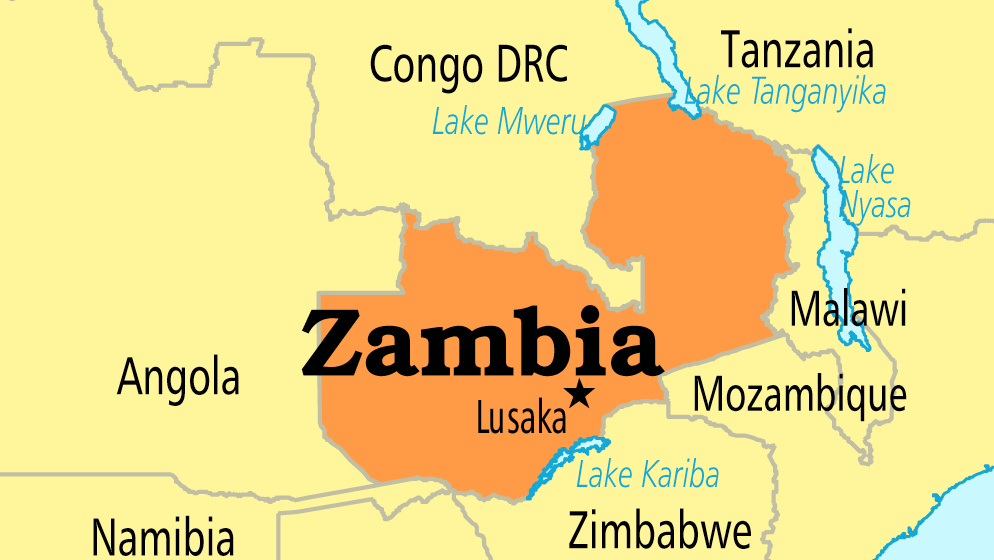
Zambia is one of the few African countries that has seen peaceful changes of power among different political parties. But its strong democratic history, especially the work of the Electoral Commission of Zambia (ECZ), will face a test during the general elections on 13 August.
In the 2025 Economist Intelligence Unit Democracy Index, Zambia ranks among Africa's top 10 democracies. But it still has a ‘hybrid regime’ label due to ongoing governance issues. The trustworthiness of the 2026 elections will depend more on how these democratic institutions work in a tense political environment than on whether they exist.
The ECZ has registered a record 26 presidential candidates, with 14 approved. Incumbent President Hakainde Hichilema is running for a second term after winning in 2021. The large number of candidates shows both an open electoral space and a divided opposition.
Internal conflicts and claims of government interference in the Registrar of Societies, which oversees political parties, have led to many short-lived alliances and new parties. This weakens the chances of any opposition candidate getting the 50%+1 needed to win, despite some late coalitions.
Around 8.7 million of Zambia’s more than 21 million citizens have signed up to vote, indicating a strong voter turnout. An Afrobarometer survey shows that 86% of Zambians think elections are the best way to choose leaders. This highlights the importance of public trust in electoral processes.
However, electoral competition is happening in a time of deep political divides. Issues like the ongoing burial controversy of former president Edgar Lungu are dominating discussions.
Yet, voters are likely to focus on social and economic issues, like the rising cost of living, unemployment, and unreliable electricity. In 2024, about 72% of people reportedly had little or no access to electricity. These issues suggest that economic concerns will matter more than political disputes when people vote.
Another major issue is the recent constitutional and legislative changes made just a year before the elections. The Constitutional Amendment Act No 13 of 2025 faced strong public backlash and court reviews. After criticism for being rushed and not properly discussed, the bill was declared unconstitutional by the Constitutional Court. Changes were made before it was finally passed in December 2025.
Key changes in the act include increasing Parliament from 156 to 226 directly elected constituencies and adding 40 seats for proportional representation for women, youth, and persons with disabilities. Women currently hold only 14.4% of parliamentary seats.
The ECZ’s recent delimitation exercise, which added 70 constituencies, marks the biggest reshaping of Zambia’s electoral map in the democratic era. This change, driven more by political choices than ECZ advice, has led to accusations of gerrymandering that favor the ruling United Party for National Development (UPND).
But proving gerrymandering needs a detailed look at each case, not just the overall seat numbers. The UPND-aligned Southern Province's seats increased from 20 to 29, which matches the gain in the opposition-friendly Eastern Province. Muchinga Province, which leans towards the opposition, saw the biggest proportional increase, while Western Province still has a fair share of seats based on population.
The government has also rushed through legislation, introducing over 70 bills in the two weeks before Parliament was closed. This includes the debated Electoral Process (Amendment) Bill and the proposed Public Gatherings Bill. This 'legislative overload' seems like a tactic to limit public scrutiny.
The Public Gatherings Bill replaces the old Public Order Act of 1955. It is meant to simplify things by using a notification system instead of a permit system, which should make it easier to hold gatherings. But some worry that unclear wording could limit protests and give police too much power.
The Electoral Process (Amendment) Act cuts the time to inspect the voter register from 90 to 14 days, includes provisions for party recalls, and ties the new proportional seats to presidential votes. These changes could hurt transparency and disadvantage smaller parties.
The act also requires candidate adoption certificates to be signed by the president and secretary-general, which clashes with constitutional qualifications.
In the end, the credibility of the August elections will not just depend on legal changes but also on how fair and reliable people see the institutions that enforce them. Zambia's ECZ, judiciary, and oversight bodies look solid on paper. But political influence over legal processes could damage public trust in democracy.
Even though laws against criminal defamation were removed in 2022, the Cyber Crimes Act of 2025 has been used to control political activities. On 2 March, opposition Socialist Party President Fred M’membe was arrested for allegedly making offensive Facebook posts about Hichilema.
This suggests that the ruling party is using laws to weaken its opponents. Many people may start to think elections are decided by legal tricks instead of the votes.
With less than 70 days to the election, several warning signs are showing. These include the challenges of implementing a new electoral map, mistrust of the Registrar of Societies, harassment reports against journalists and independent candidates, and limits on civic freedoms.
Election observers need to watch these signs closely after the African Union and Common Market for Eastern and Southern Africa's recent pre-election evaluation. Zambia's democratic health should be measured by how peaceful the elections are and whether people see institutions as fair and reforms as genuine.

Drop your comment
No comments yet — be the first to drop the gist 👇