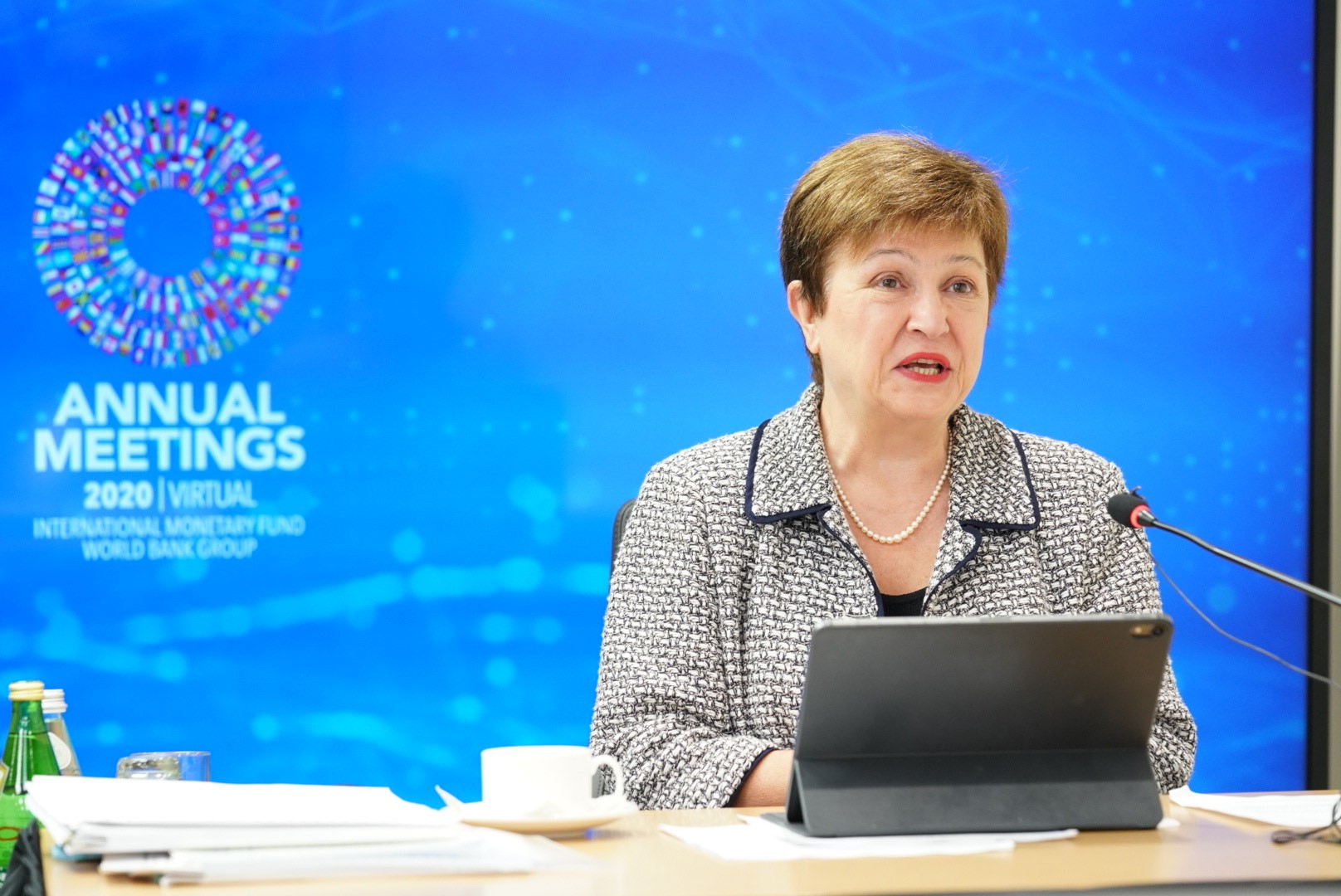
The Managing Director of the International Monetary Fund (IMF), Kristalina Georgieva, says Artificial Intelligence (AI) might affect around 40 percent of jobs around the world. She urged governments to get workers ready for the changing job market.
Ms Georgieva spoke during a panel on "Small Scale AI: More and Better Jobs" at the 2026 IMF/World Bank Annual Meetings in Bangkok, Thailand, on Monday.
She described AI as a "slow-moving tsunami" for the job market. She said it could add to, reduce, or even remove jobs altogether.
According to her, IMF estimates show that AI could impact about 60 percent of jobs in rich countries and 23 percent in low-income nations. She noted that the lower impact in low-income countries is due to the slower spread of AI, not because they are better protected from its effects.
Georgieva explained that AI is already boosting investment and demand in some economies. This is happening through the building of data centres and the creation of AI models.
She pointed out that the United States, China, and India are leading in AI production. Several Asian countries, including Thailand, are also helping to build the infrastructure for this technology.
Ms Georgieva said these investments are helping to keep global economic growth at about three percent, even with challenges from energy supply issues.
But she mentioned that the next step in AI development will depend on how many countries adopt it. More countries can benefit if they set up the right foundations.
The IMF chief stated that developing economies need reliable electricity, good digital infrastructure, the right skills, and effective government rules to ensure safe and inclusive AI use.
She mentioned IMF estimates that show AI could increase growth in advanced Asian countries by between 0.5 and one percentage point. Emerging Asian economies could see extra growth of between 0.2 and 0.8 percentage points.


Ms Georgieva said that an extra one percentage point of growth could more than balance the economic losses from rapidly ageing populations in advanced Asian countries.
On jobs, she said an IMF study in the United States found that about 10 percent of jobs already need advanced AI skills. These jobs usually pay better.
She noted that routine and repetitive jobs are disappearing, while lower-paying jobs are growing in areas like data centre construction and services.
Even though the study showed a positive effect on jobs in the areas looked at, Ms Georgieva said the trend is not completely positive. Much of the job growth is in lower-paying positions.
She stressed that young people entering the job market are especially at risk. These entry-level jobs are important for gaining experience and moving up in their careers.
She urged governments to keep an eye on job market changes, update education systems to encourage lifelong learning, and rethink tax policies as AI shifts the balance between labor and capital.
She warned that relying more on capital and less on human labor could reduce government income. This would limit how much public authorities can help society adjust to changes brought by AI.
Georgieva remains hopeful that AI will take over the tasks people don’t want to do. This way, people can enjoy better productivity, improved living standards, and a sense of meaningful social participation.
"Get AI to do all the stuff we don’t want to do and let us enjoy the things we love to do."




Drop your comment
No comments yet — be the first to drop the gist 👇