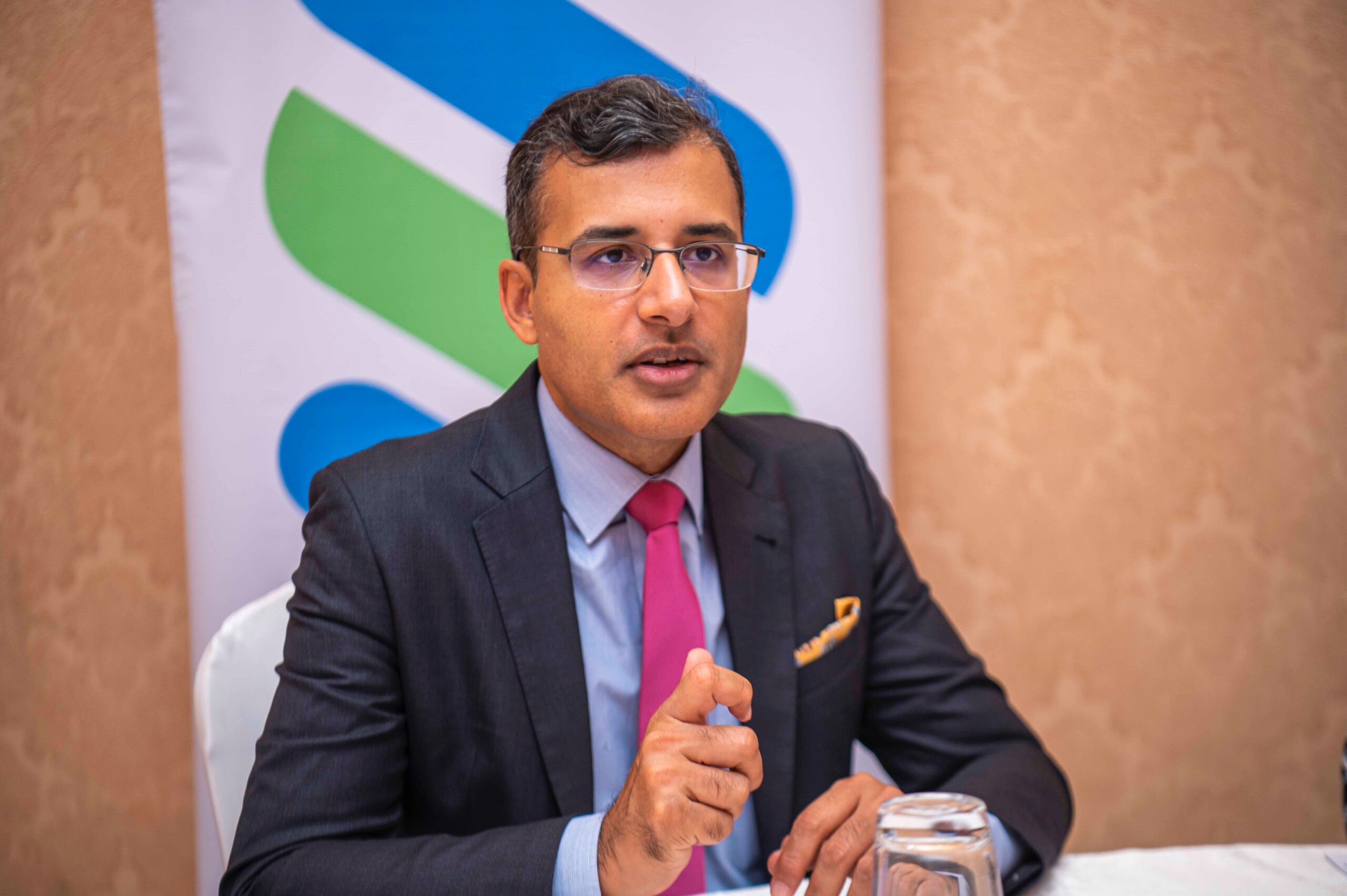
In this chat, Manpreet Gill, Chief Investment Officer for Africa, Middle East and Europe at Standard Chartered, shares insights on global markets, the US dollar, emerging markets, and what this means for investors in Nigeria and other African countries.
Q: Looking back at the first half of 2026, what have been the biggest investment lessons for investors?
Manpreet Gill: The first half of the year taught a key lesson about investing: stay disciplined during uncertainty. We often talk about diversifying, being resilient, and staying invested even when markets are shaky. This year showed exactly why these principles are important.
Despite rising tensions in the Middle East and a big jump in oil prices, global markets showed surprising strength. Global and Asian stocks both gained about 10% in the first half of the year, doing better than expected despite the uncertain situation.
The biggest takeaway for investors is that reacting emotionally to market events usually does not lead to the best results. Those who kept their investments diverse, stayed put, and focused on long-term goals were ultimately rewarded.
Q: What are Standard Chartered’s key investment themes for the second half of 2026?
Manpreet Gill: Even with this year’s uncertainty, we are optimistic about the global investment outlook. Three themes are guiding our strategy for the second half of 2026.
First, we still favor global stocks because corporate earnings are holding up well, not just in technology but across major markets. While we might see some market ups and downs, we see any pullbacks as chances to invest more rather than reasons to sell out.
Second, we see good income opportunities in corporate bonds and emerging market dollar bonds, especially African Eurobonds. Compared to government bonds in developed markets, investors are still getting good returns for the risks they are taking.
Finally, diversification is still very important. We are keeping a strong position in gold and other alternative assets because they help diversify portfolios and improve resilience during uncertain times.
Q: Which equity markets offer the strongest opportunities for the rest of the year?
Manpreet Gill: Our top equity markets are the United States and Asia.
The US continues to see solid earnings growth, with momentum spreading beyond just the semiconductor sector. In Asia, while recent gains came mostly from Korea and Taiwan, we believe opportunities are growing across the region, including Japan and other emerging Asian markets.
As earnings growth diversifies, we expect more broad participation in the equity rally in the second half of the year.
Q: Despite the recent strength in the US dollar, why do you expect it to weaken over time?
Manpreet Gill: The recent rise in the US dollar is mostly due to temporary issues, especially geopolitical uncertainty and the belief that US interest rates could stay high for a while.
We think this support will slowly fade. If inflation keeps going down and there are no big new geopolitical shocks, US bond yields should drop over time, taking support away from the dollar.
Historically, weak US dollar periods have led to stronger capital flows into emerging markets, better investor sentiment, and support for riskier assets. We believe these conditions are likely to come back in the second half of the year.
Q: You mentioned the US dollar has strengthened recently. What does this mean for emerging markets like Nigeria, especially for the naira, capital flows, and inflation?
Manpreet Gill: Even though the US dollar has gained strength due to geopolitical uncertainty and high US interest rates, we do not think this trend will last long. As inflation continues to drop and monetary policies normalize, many factors supporting the dollar are likely to ease.
For emerging markets like Nigeria, a strong dollar can pressure local currencies and reduce foreign investments while raising imported inflation. On the flip side, a weaker or stable US dollar would help the naira, boost investor interest in emerging market assets, and ease inflation by lowering import costs.
Ultimately, Nigeria’s future will depend on global market conditions and ongoing local reforms. A supportive global environment, along with consistent policy execution at home, should boost investor confidence, improve capital inflows, and help maintain macroeconomic stability.
Q: What does this outlook mean for investors in Africa?
Manpreet Gill: A weaker US dollar is typically better for emerging market assets. For African investors, we see strong opportunities in emerging market dollar bonds, especially African Eurobonds, where yields are still attractive compared to risks.

Many African asset classes have done well this year, so investors should be careful. Right now, emerging market dollar bonds offer one of the best risk-reward opportunities available.
For those looking for income, African Eurobonds stand out as one of the most appealing options in the emerging market fixed-income space.
Q: Geopolitical tensions have been high this year. How have markets remained resilient despite these events?
Manpreet Gill: Markets have shown impressive resilience despite a series of geopolitical shocks that many thought would hurt investor confidence.
Normally, a sharp rise in oil prices would put more pressure on economic growth and stock markets. Instead, global stocks bounced back quickly, and volatility remained low.
With oil prices returning to pre-conflict levels, one major risk to global growth has lessened, allowing the overall economic expansion to keep going. This resilience has boosted our confidence in the investment outlook.
Q: Gold has not met expectations this year. Why do you still hold a strong position?
Manpreet Gill: Gold has been one area where our expectations took longer to come true. We expected only a small drop after its big rally, but investor positioning stayed high longer than we thought.
Still, we believe in gold’s value. Central banks, especially in emerging markets, are still buying gold, keeping strong structural demand that should last.
Gold also serves as a good hedge against geopolitical uncertainty and is important for diversified portfolios.
Q: Has the first half of the year changed your investment outlook in any significant way?
Manpreet Gill: Overall, the first half confirmed our investment view rather than changed it. The strength of global stocks surprised us, especially given the geopolitical issues, while economic growth proved more stable than many expected, despite high energy prices.
The main change we made is to be more selective after strong gains in several asset classes. We still favor stocks and emerging market bonds, but we are focusing more on finding the best risk-adjusted opportunities instead of just chasing performance.
Q: What are the biggest risks investors should watch for in the second half of 2026?
Manpreet Gill: The US labor market is the most important factor to watch.
Currently, employment is good, not too hot or too cold, which supports our view that the Federal Reserve can keep a stable policy.
However, if the labor market strengthens unexpectedly, inflation could rise again, forcing interest rates to stay high for longer. This would likely strengthen the US dollar and make things harder for emerging market assets, including those in Africa.
Investors need to consider if inflation will stay high enough to delay easing monetary policies. This will be a key factor in the markets for the rest of the year.
Q: What is your overall message to investors as they prepare their portfolios for the rest of 2026?
Manpreet Gill: The first half of 2026 reinforced an important lesson: markets often withstand more than what news suggests. Investors who stayed disciplined, diversified, and focused on long-term goals were rewarded despite increased geopolitical uncertainty.
Looking ahead, we still see strong opportunities in global stocks, emerging market dollar bonds, and gold. While some volatility is expected, it should not distract investors from the bigger investment picture.
History shows that those who focus on long-term fundamentals instead of reacting to short-term market noise usually do better. Our message is clear: stay diversified, keep investing, and maintain a long-term view. This discipline will continue to be a major factor for investment success in the second half of 2026 and beyond.


Drop your comment
No comments yet — be the first to drop the gist 👇