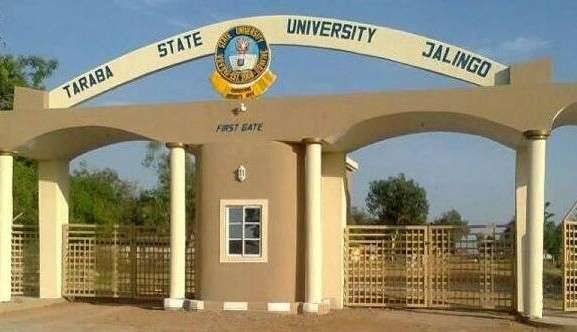
The Academic Staff Union of Universities (ASUU) has begun an indefinite strike at Taraba State University (TSU). This is due to the state government’s failure to implement a wage agreement and pay salary arrears that have not been settled since January.
The strike started on Monday after several months of talks, a government verification exercise, and disagreement over agreements between the union and the state government.
Joshua Mbave, the chairperson of ASUU-TSU, announced the strike in a statement. He said the union had run out of patience after trying to resolve the matter through discussions.
“The union had exercised considerable patience and demonstrated its commitment to dialogue since February 2026, when it began engaging the Taraba State Government over the outstanding issues,” Mr Mbave said.
Background to the dispute
This strike follows issues surrounding lecturers' welfare, unpaid academic allowances, and the implementation of pay agreements between the union and the state government.
In January 2025, ASUU-TSU stopped a strike after reaching an agreement with the government to deal with debt owed to lecturers.
As part of the agreement, the government promised to pay ₦50 million monthly starting in February 2025 to clear the accumulated Earned Academic Allowances (EAA).
But in August 2025, Mr Mbave claimed that the government had only made one payment, which was in July of that year.
The union also pointed out issues like unpaid salary arrears, overdue academic allowances, and a lack of a working pension plan for university staff.
In February 2026, the union went on another indefinite strike, saying the government failed to keep its promises from earlier talks. The strike ended in March 2026 after the state government, university management, and the union signed a plan to settle the outstanding issues.
The current dispute focuses on applying the 2025 Federal Government-ASUU wage agreement at the university and paying salary arrears that date back to January.
Verification exercise fails to prevent fresh strike
Mr Mbave mentioned that talks that started in February led to forming a verification committee. This committee was to look into the current salary structure and how much progress had been made on the wage agreement in the North-East.
He said the committee finished its work and gave its report on 24 September. The union also stated that a tripartite committee had looked into the financial impact of implementing the agreed salary structure and calculating the owed arrears.
Even after these reviews, Mr Mbave said the government had not implemented the agreement, leading the union to resume its planned strike.
He noted that the government had previously asked the Office of the Head of Civil Service for more time to resolve the issue. The union agreed to this extension to keep the peace but later objected to creating another committee to review pay and workforce planning in state universities.
In statements found in early October newspapers, the union said this new committee was not needed because verification and financial assessments had already been done.
ASUU also claimed that Taraba State University was the only university in the 19 northern states that had not applied the agreed pay framework. This claim has not been checked independently.
Government establishes fresh committee
The Taraba State Government set up a Tertiary Institutions’ Staff Remuneration and Workforce Planning Committee on 30 September. This committee is supposed to look at pay and workforce planning in the state’s tertiary institutions. It will include relevant ministries, governing councils, and staff unions like ASUU.
The government said this move is to support quality education, fair treatment of staff, proper handling of public funds, and orderly growth of tertiary education in the state.
But the government did not explain why another review was needed after the verification and financial assessments mentioned by ASUU.
Key issues in the dispute still include the status of the September committee reports, the total amount of unpaid salary arrears, and the government’s timeline for applying the wage agreement.
Union leaves door open to negotiations
Even with the indefinite strike, ASUU-TSU said it is still willing to negotiate with the government and other relevant parties. However, the union stressed that any further talks must be honest, timely, and aimed at a clear solution to the issue.
It urged the state government to apply the agreed wage framework, pay all outstanding salary arrears, and keep its promises from past negotiations.
The union stated that its demands are to ensure fairness, protect the dignity of university workers, and uphold agreements made in good faith.
The strike risks disrupting academic activities at the university, following earlier industrial action in 2026. How long it lasts will depend on the outcome of negotiations and the actions the state government takes to meet the union’s demands.

Drop your comment
No comments yet — be the first to drop the gist 👇