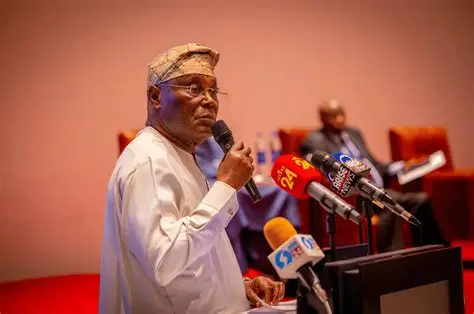
Former Vice President Atiku Abubakar has called on the Federal Government to clarify how the ₦144.86 billion meant for the National Plan on Financing Safe Schools has been spent. This demand follows reports that insecurity has led to school closures in about 40 local government areas.
Atiku stated that the ongoing disruption of education by terrorists and bandits highlights the government's failure to secure schools. This is happening during a time when Nigeria is already facing a serious out-of-school crisis.
In a statement released on Tuesday by his Senior Special Assistant on Public Communication, Phrank Shaibu, Atiku said the success of the Safe Schools programme should be judged by whether children and teachers can attend school safely.
“At a time when Nigeria is already battling a severe out-of-school crisis, insecurity is driving even more children from the classroom.
“If schools across about 40 local government areas cannot operate because government cannot guarantee the safety of pupils and teachers, Nigerians are entitled to ask a simple question: where is the ₦144.86 billion Safe Schools programme in all of this?” the statement said in part.
The African Democratic Congress presidential candidate is demanding a full account of the programme. He wants to know how much has been mobilised and released, which agencies and contractors received funds, the schools involved, what security measures were delivered, and what results have been achieved.
Atiku pointed out that financial accountability alone will not solve the security issues. “Budgeting money is not the same thing as securing schools. Announcing programmes is not the same thing as protecting children. The true measure of a Safe Schools programme is whether our children can actually go to school safely. By that elementary test, the present approach is failing,” he said.
The Safe Schools programme was launched as part of the Federal Government’s response to ongoing attacks on schools, especially in areas affected by conflict. This issue has become more urgent due to a series of abductions and attacks on schools in northern Nigeria, which have disrupted education and made parents worry about their children's safety.
Atiku believes the government should stop its centralised, Abuja-driven approach to school protection. Instead, it should build a security system that uses intelligence from the communities where vulnerable schools are.
“What Nigeria requires is a completely different security philosophy. Under my administration, school security will not be treated as another Abuja contract-awarding programme. It will be integrated into a decentralised, intelligence-led security system built around the communities where these schools actually exist,” he added.
He suggested establishing early-warning and rapid-response systems around vulnerable schools. This would include better intelligence sharing among schools, local communities, and security agencies, as well as clear security and emergency-response plans for high-risk schools.
Atiku noted that local residents often know about threats before federal security agencies do. “Local communities know their terrain. They know when unfamiliar people enter their communities and often see the warning signs before Abuja does. Our security architecture will make that local intelligence part of the national response rather than leaving communities helpless until an attack has already occurred,” the statement further explained.
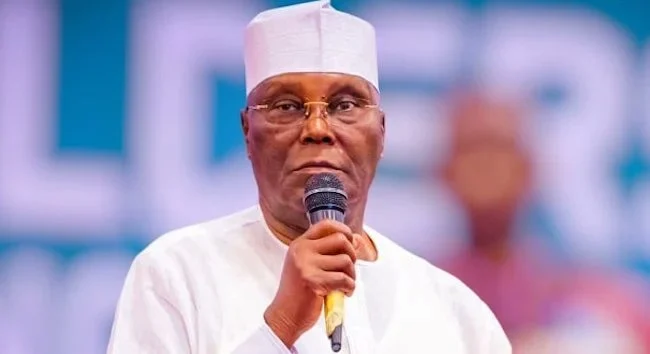
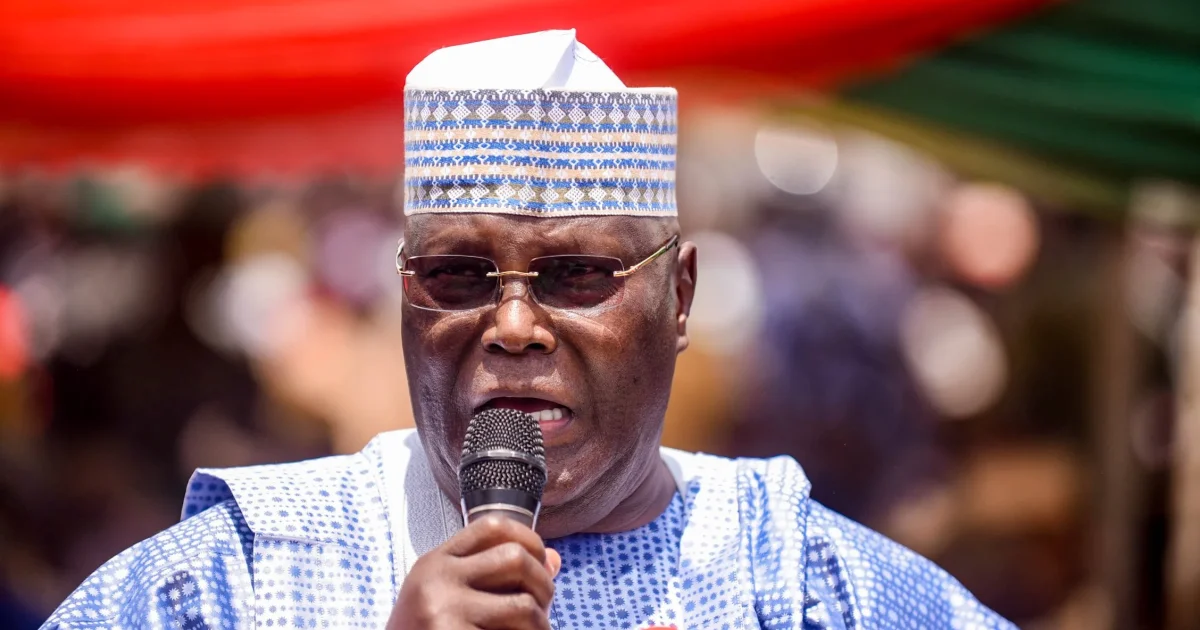
The ADC candidate also called for a system where every naira spent on school security could be tracked to a specific outcome. “Safe Schools will be measured by children in classrooms, not billions in government documents,” he said.
Atiku’s remarks come at a time when there are fresh worries about the safety of students in Borno State. This area has been hit hard by the Boko Haram insurgency and attacks by other armed groups. Reports indicate that 36 students and a staff member of Government Day Secondary School, Lassa, were kidnapped by gunmen during exams in late June. Additionally, 42 pupils are still missing after an attack in Mussa on May 15.
Atiku said the ongoing captivity of schoolchildren shows the connection between insecurity and Nigeria’s education crisis. “Every school that closes creates another opening for poverty, child labour, early marriage, exploitation, and radicalisation. Every child driven from the classroom becomes more vulnerable to the same criminal and extremist networks the government claims to be fighting. Protecting education is therefore itself a national security strategy,” he said.
He also challenged President Bola Tinubu over reports claiming that government forces know the locations of forests where kidnappers and terrorists operate. “When terrorists can decide whether Nigerian children go to school, they are exercising authority that belongs to the Nigerian state. That is not merely an education crisis. It is a surrender of state authority. And since Mr President says his government knows the forests where these kidnappers and terrorists operate, Nigerians are entitled to ask: what exactly are they still doing there?” he asked.
Atiku urged the president to send security forces to those locations, rescue the kidnapped children, and ensure their kidnappers face justice. “Intelligence that tells the government where terrorists are hiding but does not result in their capture or the rescue of their victims is of little comfort to parents whose children remain in captivity,” he said.
The former vice president emphasized that the issue should not just be about numbers. He argued that every child in captivity shows a failure of the state to provide basic security for education and human development. “These are not statistics. They are Nigerian children who should be sitting in classrooms, writing examinations, and planning their futures, not names on an endless list of the missing,” he said.
Atiku linked the school-security issue to his broader call for restructuring Nigeria’s security system. He advocates for greater reliance on local intelligence, community involvement, and quick responses.
“Our alternative is straightforward: secure the communities, empower local intelligence, protect vulnerable schools, respond rapidly to threats, measure results, and account for every naira.
“A government cannot announce billions for Safe Schools and expect Nigerians to applaud their failure while terrorists are shutting the schools. Budgetary allocations are not achievements. Press conferences do not protect children. The only result that matters is that a Nigerian child can leave home for school and return safely,” he noted.
He concluded by saying that protecting schools should be seen not just as an education policy but as a key part of national security. Under an ADC administration, criminal groups would not be allowed to decide when schools open or close.
Drop your comment
No comments yet — be the first to drop the gist 👇