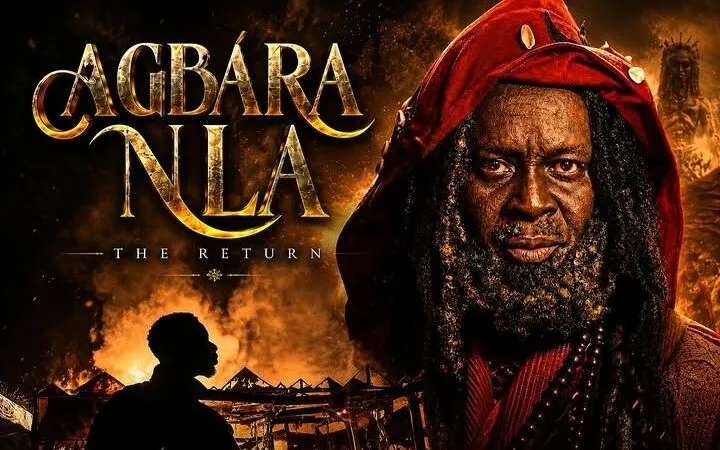
Nollywood's faith-based film ‘Agbara Nla: The Return’ has set a record for the biggest non-December opening for a Nigerian film. It made about N170.6 million during its preview screenings and first weekend in cinemas.
The film earned around N71.4 million from preview screenings that ended on 1 October. It added about N99.2 million from Friday, 2 October, to Sunday, 4 October.
This performance makes it the highest-grossing October opening for a Nigerian film and the best opening for a faith-based Nollywood movie.
The distinction of being the biggest non-December opening is significant. Nigerian cinemas usually see their highest numbers during the festive season. Many Nollywood films are released in December to take advantage of public holidays, family outings, and increased spending.
Many of Nollywood's biggest opening records are from December releases. These include Funke Akindele’s ‘Everybody Loves Jenifa’ (2024) and ‘Behind the Scenes’ (2025).
By bringing in N170.6 million in October, ‘Agbara Nla: The Return’ hit blockbuster numbers without the Christmas holiday boost.
The term “biggest non-December opening” means the highest opening gross for a Nollywood film released from January to November, based on box office data.
The original ‘Agbara Nla’ was produced by Mike Bamiloye in 1993. It returned to cinemas on 1 October 2026 as ‘Agbara Nla: The Return’, directed by his sons, Damilola Mike-Bamiloye and Joshua “Jay Mikee” Mike-Bamiloye.
Before its first full weekend, ‘Agbara Nla: The Return’ made around N71.4 million from 12,134 tickets sold during preview screenings.
From 2 to 4 October, the film made about N99.2 million from 16,223 tickets. This brought its total gross to about N170.6 million.
This opening puts the faith-based film among Nollywood's strongest cinema debuts. Still, Funke Akindele’s December releases lead the overall opening-weekend rankings.
‘Everybody Loves Jenifa’ had an opening weekend total of about N206 million. ‘Behind the Scenes’ earned around N205.5 million.
In a video about the film’s history, Mike Bamiloye shared that the original Agbara Nla was made in 1993 for just N5,000.
“In 1993, we wanted to shoot Agbara Nla. We started the film with N5,000. People were bringing yam and corn; we were eating corn in the forest just to shoot Agbara Nla,” he said.
Bamiloye said they had no manager or promotional team when they finished. He mentioned that several marketers wanted to distribute it later. Despite its popularity, the filmmakers struggled financially.
“We were hungry, we were suffering, we had no food to eat, but our name was everywhere,” he said.
Bamiloye also recalled asking a marketer for help after the film was made. “We approached one marketer and said, ‘Give us money, please give us money, even if it is N10,’ and the marketer said, ‘Mount Zion people, you are becoming lovers of money; you are pursuing money.’
“But he is the one advertising the thing and selling. You can take all the money; you can’t take the anointing. You can take all the money; you can dupe us, but you can’t carry the grace. If you steal our movie, another one will rise from inside.”
He shared that this tough experience helped him understand the film’s impact. “I went to God and said, ‘Lord, we are suffering.’ You know what God said? He said, ‘I never told you that I would make you rich through Agbara Nla, but I will give you a name through the movie,’” he recalled.



Bamiloye said this promise became clear as the film gained a following. Audiences began to link him and his colleagues with Mount Zion Faith Ministries.
Though the film became popular through TV and home video in the 1990s, Bamiloye traced the story’s roots to the National Festival of Christian Drama, HARVEST ’87.
Mount Zion Faith Ministries held the festival at the GOFAMINT International Gospel Centre in Ojoo, Ibadan.
The project was first called Agbara To Ju Agbara Lo. It involved drama ministers from various churches and universities, including the University of Lagos, University of Ibadan, Ogun State University, and the College of Education, Ilesa.
The first attempt to make the film fell apart after shooting at Apete Village in Ibadan. Bamiloye said the cameraman vanished with the recorded tapes, and they could not find him.
After that, the project was left unfinished until Bamiloye rewrote the script and restarted production at Badeku Village in Ibadan.
Members of the Christian community helped keep the project alive. A pastor from Foursquare Gospel Church gave N5,000 for a camera deposit, while the late Idowu Animashawun of World Hope Mission housed the crew members.
They eventually finished the film, which was then broadcast on TV and introduced the story to audiences nationwide.
An English version, ‘The Ultimate Power’, came out in 1994, reaching beyond the mostly Yoruba-speaking audience of the original.
The story is set in Muwonleru, a village controlled by Isawuru, a strong herbalist whose influence keeps the people in fear.
It tells the story of the battle between Christian faith and traditional spiritual power when evangelists try to bring the gospel to the village.
Isawuru, played by Bamiloye in the original, became one of his most famous characters.
The film’s focus on spiritual warfare and divine power over evil has influenced many future Mount Zion productions.
More than thirty years later, the story has been updated for a new audience in Agbara Nla: The Return, with Bamiloye again playing Isawuru.
Damilola Mike-Bamiloye, Joshua “Jay Mikee” Mike-Bamiloye, and Chris Odeh produced it. Mohammed Sedik and Damilola Mike-Bamiloye are co-producers.
Mount Zion Film Productions, Circuits, and Sozo Films worked on it, while Nile Entertainment handles distribution.
The cast includes Philip Olubakin as Olaboye, Damilola Mike-Bamiloye as Kola, Aanu Kolade Abiodun as Bose, Gloria Mike-Bamiloye, Remilekun Mosiko, and David Kola Okeowo.



Drop your comment
No comments yet — be the first to drop the gist 👇