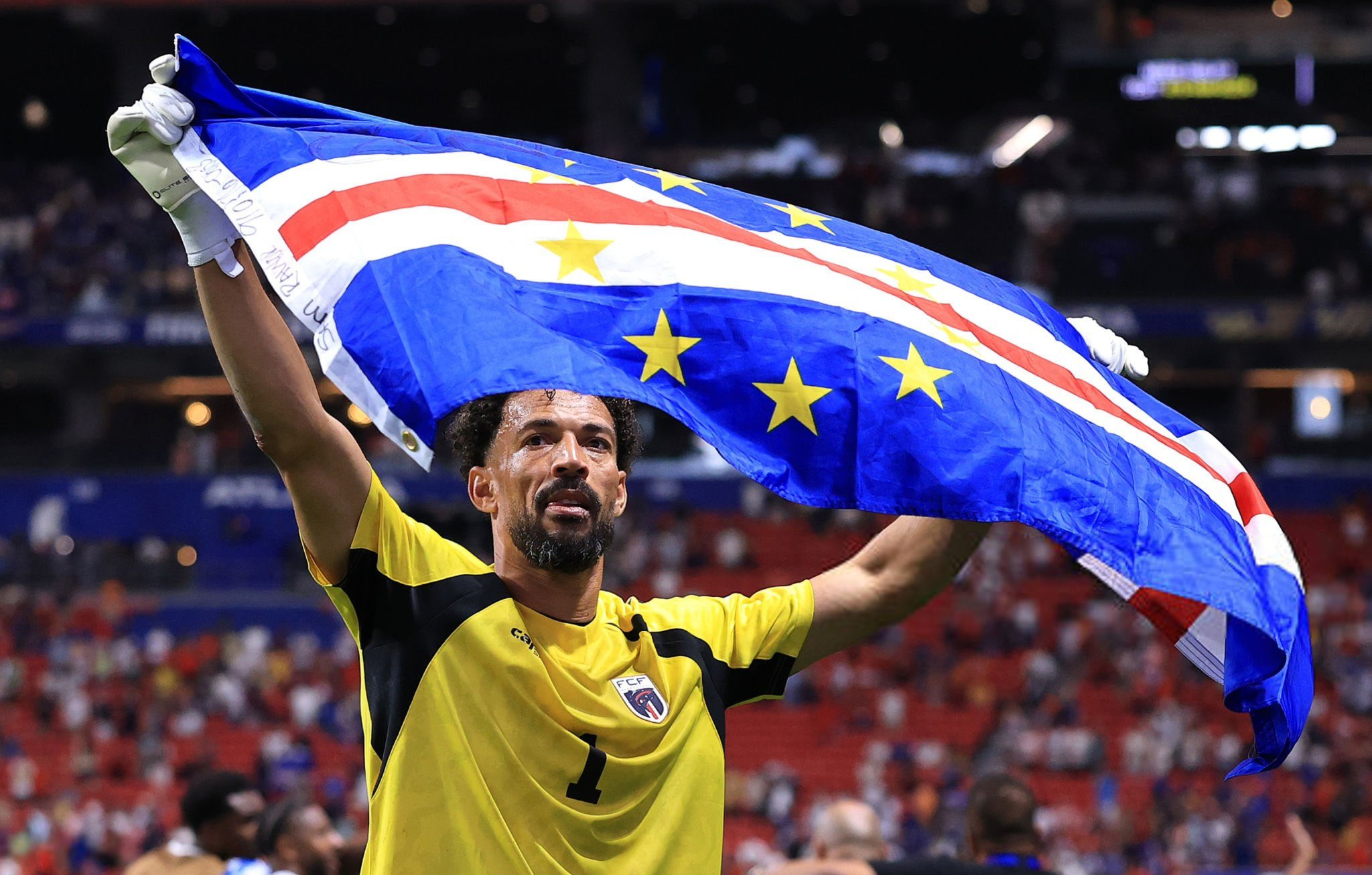
Cape Verde made it to the World Cup with just over 500,000 people and no history in big-time football. When Argentina finally survived a tough match after 111 minutes, the Blue Sharks taught Africa a big lesson in planning, identity, and belief.
The giant screen at Hard Rock Stadium showed 111 minutes.
What started as a regular match for Argentina turned into a tough fight that surprised many fans at the stadium.
Lionel Messi scored a goal that usually helps teams win knockout matches. Argentina led the game twice. But the defending champions found themselves in a tough battle against a country whose entire population could fit into many Nigerian cities.
Cape Verde's captain Vozinha rose slowly after making another great save. His gloves were muddy, and he was breathing heavily. But the 40-year-old goalkeeper kept shouting instructions, organizing the defenders, and refusing to give up.
Something surprising happened around the stadium. The loudest cheers were not for the world champions. They were for Cape Verde.
For nearly two hours, this tiny nation, the smallest ever to qualify for the FIFA World Cup, turned one of football’s biggest powers from favorites into nervous competitors. Argentina eventually won 3-2 after extra time, but by then, the score was not the main point.
Cape Verde had already achieved something much bigger. It changed the discussion.
For years, football has celebrated big countries, those with large populations, rich leagues, and many talented players. Cape Verde entered the tournament without any of those advantages. Instead, it brought something harder to achieve: a solid football philosophy, a long-term plan, and a strong belief that being small should not limit a nation's dreams.
Cape Verde is often overlooked on maps. The Atlantic islands, located off West Africa, have just over 527,000 people, according to the latest World Bank estimates. That is smaller than Ibadan and a tiny fraction of Nigeria’s over 230 million citizens.
Yet on football’s biggest stage, the island nation played like it belonged there. It drew with European champions Spain, earned a point against Uruguay, and pushed the defending champions Argentina into extra time in one of the tournament’s most thrilling matches.
No African country had ever reached the World Cup with a smaller population. Yet few have left such a strong emotional impact. Fans who had never watched Cape Verde before suddenly found themselves cheering for the team. Commentators admired their organization. Fans from other countries adopted them as their second team.
The Blue Sharks did not lift the trophy, but they earned something more valuable, respect.
For many African football fans, Cape Verde’s brave performance brought back memories of Nigeria’s memorable World Cup debut in 1994 when Nigeria challenged Diego Maradona’s Argentina. More than 30 years later, another African debutant put Argentina to the test again, reminding the continent that just having a good reputation does not guarantee victory.
But unlike many romantic football stories that fade quickly, Cape Verde’s journey raised a deeper question: How did such a small country become so impressive?
The answer goes beyond ninety minutes of football. It starts years before the first whistle in Miami.
Every great sports story has a human side. For Cape Verde, that was Vozinha. Before the cameras followed him in Miami, he was just Josimar José Évora Dias, a man trying to make a living on a small island where football dreams often do not pay off.
Playing football professionally was not enough; he also drove buses and worked as an electrician. Unlike top players who become professionals in their teens, Vozinha did not turn pro until he was in his mid-twenties.
By football standards, he was already late. While most players chased opportunities in their twenties, Vozinha spent part of that time just trying to stay in the game.
Maybe that is why, at 40, he was calm in pressure situations where younger goalkeepers might struggle. Life had prepared him for pressure.
Four years earlier, he watched Messi lift the FIFA World Cup from home like many fans. Cape Verde had not qualified. Now, facing the man he admired from his living room, Vozinha was no longer just a fan. He was the captain.
Before the match against Argentina, he spoke with admiration for Messi: "Sharing the pitch with Messi is a dream, and I’ll proudly tell my children I played against him one day."
When the match started, emotions were put aside. Messi scored, but Vozinha responded. Time and again, he stopped Argentina from scoring goals that seemed certain. His reflexes frustrated the reigning champions and kept Cape Verde in the game into extra time, finishing the night with eight incredible saves.
The attention on him grew. His emotional reaction after the draw with Spain, where he wished his mother could witness his greatest night, resonated deeply. The U.S. State Department even fast-tracked a visa to fly his mother to Miami before their next match. It was a moment when football reminded the world that its best stories are often deeply human.
But focusing only on Vozinha misses the bigger picture of Cape Verde’s achievement. Heroes can win matches, but they cannot build football cultures. For that, proper planning is needed.
It is easy to call Cape Verde’s World Cup run a miracle. Miracles make good headlines but do not explain much.
Cape Verde did not reach North America by chance. Its journey was built slowly, through years of planning, coaching, community engagement, and a football culture that valued teamwork over individual fame. Resources matter. Population matters. History matters. But nothing is as important as having a clear goal.
This was not a team that suddenly had a good season; it was a football project growing up. Coach Bubista, who spent years developing the national team, often rejected the idea that Cape Verde’s success should surprise anyone. Before the match against Uruguay, he reminded everyone how long the journey had been: "We have spent many years working, searching, striving so that our country can be known to the world."
Many years. Not just months or one qualifying campaign.
Bubista described his team with words rarely linked to football fairy tales: organization, character, determination, and identity. These qualities are built long before the first whistle. Successful nations create systems, and Cape Verde’s World Cup run in the U.S. was just the chapter that made the world pay attention.
Underdog stories often rely on one amazing night. Cape Verde’s journey did not depend on that; their performances showed a consistent pattern.
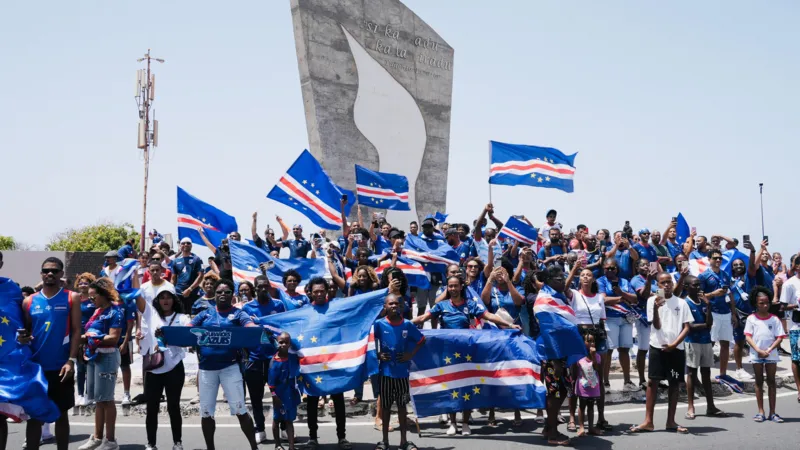

Against Spain, they defended well. Against Uruguay, they showed strength. Against Argentina, they fought back after falling behind. Each game showed the same traits: solid defending, smart positioning, patience, quick transitions, and teamwork.
Against stronger teams, Cape Verde did not play recklessly. They controlled the game by denying space rather than chasing possession. They attacked only when clear chances arose. This pattern against Spain, Uruguay, and Argentina shows deep preparation, and that structure is more important than just talent in defining their tournament success.
Modern international football is no longer just about geography; it is shaped by networks. For Cape Verde, one key network reaches far across its global diaspora.
With about half the team born abroad, Cape Verde recognized its communities in Portugal, France, the Netherlands, and the U.S. as part of its national football system. Players trained in top European academies stayed connected to their home through family and culture.
The federation’s job was not just to find eligible players but to persuade them that playing for Cape Verde was their best choice.
Cape Verdean Football Federation officials have consistently stressed commitment to the national team over birthplace, presenting players with Cape Verdean roots as part of the country’s football family.
Players born in Rotterdam, Paris, or Lisbon play like they grew up on the same street.
Cape Verde’s greatest achievement was convincing top talents that representing Cape Verde was not a backup plan but the main goal. This shared commitment became one of the team’s strongest advantages, visible in every tackle, every block, and every refusal to give up.
NPR’s analysis of the 2026 World Cup noted that Cape Verde’s use of its diaspora shows a shift in African football, where countries like Morocco have combined long-term investment with successful recruitment of players developed abroad. More elite players are choosing to represent African nations because they believe in these programs. Cape Verde became a clear example of this change. Only then did tactics start to matter.
If the diaspora provided talent, Bubista shaped the team. Throughout the tournament, Cape Verde showed a rare tactical maturity for a World Cup newcomer, executing smart defensive transitions and playing with a clear plan.
Their tactical discipline impressed former Super Eagles captain and coach Sunday Oliseh. During the thrilling match against Argentina, Oliseh praised Cape Verde’s fearlessness, athleticism, and skill, contrasting their performance with the inconsistency seen in other African football teams: "Wow! This is a thunderstorm, win or lose! I am so proud and inspired by this Cape Verde side versus Argentina. The overall performance, lack of any complex, aggressive, fast, physical, technical ability compared to most African teams at this World Cup, you cannot imagine!"
Earlier in the tournament, Oliseh had pointed out what he believed was the real secret behind their success: "The way they play, the organization, this is no joke. This has been worked upon."
Worked upon. Not improvised. Not by chance. Built. Long before the first whistle in Miami.
Bubista’s team showed a football philosophy that became visible to the world. For years, the work happened quietly. The World Cup simply provided the stage for everyone to finally notice.
Even before reaching the knockout stage, Bubista insisted that his players represented more than just a nation of half a million people: "We not only represent Cape Verde. We also represent Africa."
Then he said something that may define this World Cup campaign: "A country like ours being able to achieve this dream and compete with the best teams in the world means that any child in Africa can have this dream. The goal is that this dream can help them believe they can reach any goal."
That ambition turned Cape Verde’s story from a national achievement into a continental topic. All over Africa, millions watched one of the continent’s smallest nations face some of football’s biggest names without fear. They saw clear proof that good governance, careful planning, and strong institutions can close even the biggest gaps in international football.
When the referee finally blew the whistle, relief spread across the Argentine bench. The defending champions had survived. On the other side, Cape Verde’s players sank onto the grass, exhausted after more than two hours of chasing a dream that had almost become real.
They lost, but the applause belonged to the Blue Sharks from fans, neutrals, and even their opponents. They came as newcomers; they left as a nation the football world could no longer ignore.
Their journey shows a path of careful planning, strong institution-building, a clear football identity, effective connection with its diaspora, coaching continuity, and a firm belief that a country's size should not limit its dreams.
The giant screen inside Hard Rock Stadium eventually stopped at 111 minutes.
For Argentina, it marked survival.
For Cape Verde, it marked arrival.
Their World Cup journey ended in Miami, but their influence may just be starting.
For African football, the lasting question is no longer whether a small nation like Cape Verde can compete with the world’s best. It already has.
The real question is whether larger nations with more resources will embrace the same patience, discipline, and long-term vision that took the Blue Sharks from a small Atlantic island to the brink of one of the biggest upsets in World Cup history.
Because Cape Verde did not just change the discussion at the 2026 FIFA World Cup.
It gave African football a model to follow.
Whether Africa’s football giants choose to follow that model may shape not only the continent’s next World Cup but also its next generation of football.

Drop your comment
No comments yet — be the first to drop the gist 👇