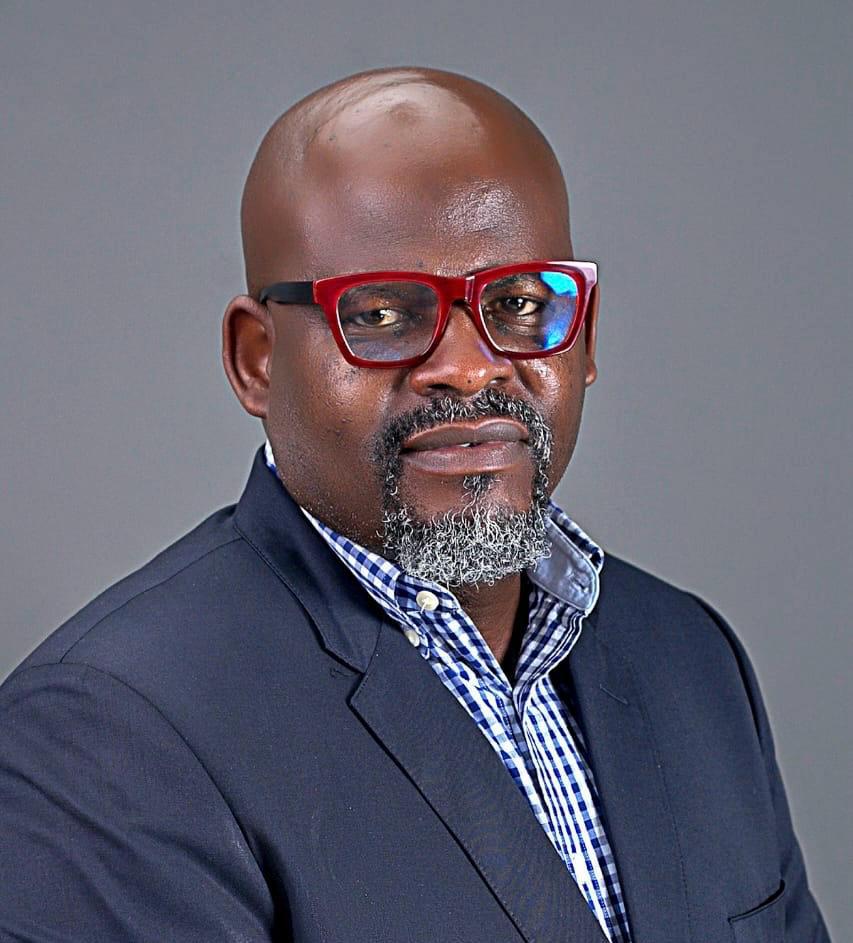
My prayer for my mentor, leader, and friend is that the God he has served so faithfully will give him many more years in good health and strength. I hope the wisdom he has gathered over these seven decades will continue to help our country and future generations. I also pray that the seeds he has sown in public institutions, the Church, education, and in people will keep bearing fruit long after our current political stories have faded.
It was already past 11 o’clock that night when I finally got home. We had spent most of the day reviewing data on how ministers performed, looking at numbers, testing conclusions, and thinking about what they meant for government work. It had been a long day, even for an office where long days are normal. I took my bath and was about to sleep when my phone rang.
It was Boss Mustapha. He said there was something important that needed to be settled. A decision had to be made, and the document needed to get to President Muhammadu Buhari the next morning. He apologized for calling so late and asked if I could come back to the office.
So, I went back to the office. We worked into the early hours of the morning, discussing the issues until he was sure that what would reach the president was clear, well thought out, and ready.
For me, that night shows something very important about the man whose 70th birthday we celebrate today. For nearly six years, Boss Mustapha (CFR) served as Secretary to the Government of the Federation. I had the chance to work closely with him, providing technical support through the UK Government’s Foreign, Commonwealth and Development Office and its Partnership to Engage, Reform and Learn (PERL) programme. This position gave me more than just knowledge of the public record. It let me see the man behind the office.
What I saw was a strong dedication to duty. Boss, as many of us call him, was truly a workaholic. Midnight was not an unusual closing time for him. He read files, examined briefs, challenged assumptions, and rarely made decisions lightly. The demands of the office were huge, but his love for work seemed even bigger.
But hard work alone does not define Boss Mustapha. The office of Secretary to the Government of the Federation has a unique role in Nigeria’s governance system. Its holder must understand administration without being trapped in bureaucracy, politics without being lost in partisanship, policy without forgetting implementation, and power without forgetting that public office is a trust.
Boss understood these balances very well. He was a politician who spoke the language of public service and a public servant who understood political realities. He could move between both worlds without mixing them up. He knew when to seek agreement, when to push through bureaucracy, when to use political judgment, and when the evidence had to speak.
This skill became especially important as we worked to improve performance management in the government. With support from the FCDO through the PERL Governance Programme, we worked with his office to create what became the first structured performance management system in that administration. It was tough work. Building systems at the center of government is rarely attractive. It needs careful negotiations across ministries and agencies, agreement on what to measure, discipline to separate activities from results, and, often, the will to face uncomfortable evidence.
Boss gave the leadership needed for that work to grow. For someone like me, working beside him was an education that no classroom could provide. Through his mentorship, I learned more about how governance and public service work at the highest levels. I saw how decisions are shaped before they become public, how different institutional interests are balanced, and how simple policy choices get complicated by political, administrative, and financial realities. I also learned that big decisions often come after hours of work that the public may never see.
Some mentors teach by instruction. Others teach by example. Boss Mustapha did both. I learned from his discipline. I learned from his attention to detail. I learned by watching him deal with challenging personalities and competing interests. I learned that being close to power should increase one’s sense of responsibility, not importance. I learned that at the highest levels of government, competence without character can only take a person so far.
Maybe this is why it's hard to fully understand Boss Mustapha without knowing his faith. His Christianity is not just an addition to his public image. It is central to who he is. He is not just a Christian by title; he is a preacher who has devoted his time, influence, and resources to God’s service.
There is something special about a man in one of the most powerful offices in the country who still finds joy in building for God and for future generations he may never meet. His support for the Lutheran University of Nigeria in Demsa, Adamawa State, is an example. He helped raise resources for a major complex that includes a Senate building, an administrative block, and a library. This complex, named the Wesley Mustapha Complex, is more than just a building. It represents an investment in knowledge, faith, human development, and future generations.
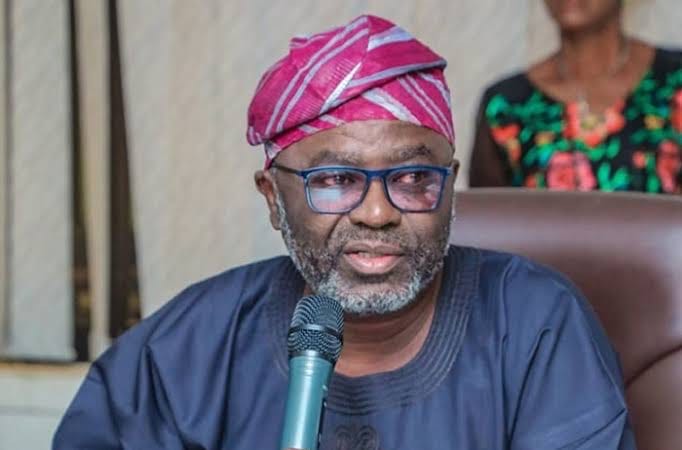

That, too, tells us a lot about Boss. Public office eventually ends. Convoys disappear. Titles change. Doors that once opened easily now require appointments. What remains is the question every person given responsibility must answer: What did you do with the chance you were given?
Boss Mustapha has much to say in answer to that question. His years as SGF came during some of Nigeria’s hardest times. He worked at the heart of government through economic challenges, complex political changes, and, most importantly, the COVID-19 pandemic. He led the Presidential Task Force coordinating Nigeria’s response. These were roles where decisions affected millions of lives.
Through it all, the traits I saw in him were steady: discipline, stamina, dependability, and a strong sense of duty. But as he turns 70 today, I think less about the titles he has held and more about what we can learn from him.
Seventy years is a big milestone. It gives us a chance not just to count years, but to think about what has filled those years. In Boss Mustapha’s case, there has been service to the country, community, and God. He has had a distinguished career, engaged in politics, served at the highest level, invested in institutions, and, perhaps less seen by the public, mentored many people who came into contact with him. I feel lucky to be one of them.
There are things I know about government today because Boss let me see it beyond textbooks. There are lessons about leadership I carry because I watched him work when there were no cameras and no applause. There are standards of professional commitment that stick with me because I saw a man, already in one of the highest offices, still willing to work late into the night because it mattered that the president got the best advice the next morning.
That late-night phone call many years ago stays with me. Not because returning to the office at that hour was especially remarkable. Many in public service have similar stories. It sticks with me because it showed that for Boss Mustapha, responsibility does not stop at office hours. When something needed to be done, it had to be done.
Today, the files are different. The office has changed hands. The busy pace of his years as SGF has moved to another phase of life. But the values that kept him going remain. At 70, Boss Mustapha can look back on a life of meaning. But knowing him, I believe he will be more focused on what still needs to be done than on what he has already achieved.
And maybe that is how it should be. For a man whose life has been about service, seventy should not just be a celebration. It should be a time to give thanks for the journey and to prepare for what lies ahead.
My prayer for my mentor, leader, and friend is that the God he has served so faithfully will grant him many more years in good health and strength. I hope the wisdom he has gathered over these seven decades continues to help our country and future generations. I also pray that the seeds he has sown in public institutions, the Church, education, and in people continue to bear fruit long after our current political stories have faded.
Happy 70th birthday, Boss. Thank you for letting me learn closely from you. Thank you for showing that professionalism and politics can coexist, that public power can be paired with humility, that faith can express itself in service, and that true leadership is about the responsibility we take for others.
At seventy, the offices Boss Mustapha has held are part of his story. The lives and institutions he has helped shape are his legacy.


Drop your comment
No comments yet — be the first to drop the gist 👇