Nigeria is handling the reported Ebola case in Abuja with its usual nonchalance. Authorities should remember that if you don't cut the sapling of an Iroko tree when it's young, it will grow large and demand unbearable sacrifices later. Since October 20, when a 42-year-old Ugandan woman, the wife of a Swiss diplomat in the Federal Capital Territory, tested positive for the disease, Nigeria has been carelessly playing with a loaded gun and holding a dangerous snake with shaky hands.
Our ancestors warned about this kind of dangerous complacency. In both the careless handling of guns and the hesitant touch of venomous snakes, they frowned on such foolishness. As they say, "A kì í fi ọwọ tẹtẹrẹ mú ìbọn; a kì í fi ọwọ rọrọ mú ejo", you do not handle a gun carelessly, nor do you grasp a snake with soft, hesitant hands.
History shows what can happen when public health complacency meets administrative slowness. Between 1827 and 1831, in Ọyọ-Ilé, the capital of the Old Oyo Empire, the people ignored the warning signs. The Yoruba say that bullets eventually fly, and the snake’s bite can lead to disaster.
A strange disease called Pẹhẹ suddenly appeared. It was highly contagious and attacked the human respiratory system. Pẹhẹ devastated the capital, a sad chapter recorded by the famous historian Samuel Johnson in his book, History of the Yoruba.
By 1831, Pẹhẹ had turned from a local issue into a widespread epidemic. That year, it breached the palace walls and took the life of the esteemed monarch, Aláàfin Májòótú. His death marked a turning point, as Aláàfin Amodo took over a nation already in decline.
The death of Aláàfin Májòótú from a simple pandemic reminds us that no one, not even the royals, is safe from disease. Plagues do not discriminate; they affect everyone, rich or poor.
This truth brings to mind a song by Kelani Yesufu, the famous Yoruba Sakara music singer. In his track “Ikú ò Mo Olówó”, he talks about how death does not respect wealth or status.
Yesufu wrote this song in memory of his master drummer, Shittu Shitta Alabi, who collapsed and died during a live performance in 1972. Alabi's last moments were spent with his drum in his hands, a testament to his dedication.
Kelani Yesufu rose to fame in the mid-20th century, alongside greats like S. Aka and Yusuff Olatunji. He used traditional instruments like the goje violin and Sakara drums to address social issues in his songs.
Yesufu was known for his bold lyrics. He tackled issues like alcoholism in songs like “Emu Ògùrò” and social hypocrisy in “April Fool.” He also broke the taboo around sexually transmitted diseases with his song “Àtòsí” (Gonorrhea). Before him, such diseases were hidden behind romanticized names.
In his song mourning his master drummer, Kelani emphasized that death is inevitable and impartial. This track has become a significant part of cultural history, showing the bond between traditional Yoruba singers and their drummers. This bond existed between many famous musicians and their drummers, highlighting how disease can break these connections.
In Ọyọ-Ilé, Pẹhẹ quickly claimed many lives. It was part of a cycle of epidemics that hit the empire's capital. This prompted a visit by the Cornish explorer Richard Lander in 1827, known for his work with the River Niger. After suffering illnesses, Lander was sent back by the British government to investigate.
When Lander arrived, he was shocked by the quarantine measures in place. The authorities had set up isolation centers in the forest outside the city walls. He noted that the sick were placed “underneath the branches of trees…”
The law required the next of kin to bring food and water to those in isolation. However, this outbreak hit the empire hard. It coincided with a severe drought, causing famine and political instability that had begun a decade earlier. The Pẹhẹ pandemic worsened the already dire situation. It was described as a highly contagious respiratory illness that caused swift deaths among all social classes.
Lander's notes preserved the memory of this tragedy. He reported that many victims died of starvation rather than the disease. Even though Pẹhẹ killed thousands in 1831, Ọyọ-Ilé had already lost over 100,000 people to famine, conflict, and disease. This health disaster weakened the empire, making it vulnerable to external attacks and rebellions, leading to the abandonment of Ọyọ-Ilé as the capital between 1835 and 1836. Epidemics can destroy not just lives but entire empires.

If pre-colonial Nigeria failed to control infectious diseases, it is unacceptable for modern authorities to do the same. Long before modern medicine, diseases like chickenpox and smallpox struck the rich and poor alike.
The Yoruba were so terrified of smallpox that they deified it, calling it Ṣọnpọnná. It was given fearful titles like Olóde, “The Owner of the Outside,” due to its mysterious spread through open air. The annual Ìtàpá festival still honors those ancient outbreaks. The white chalk designs on Ọbàtálá priests during the festival symbolize the skin eruptions of their ancestors.
Ṣọnpọnná priests were respected and feared. They managed pox outbreaks, performed rituals, and cared for the sick. Until smallpox was eradicated, it caused panic due to its high death rate.
Cholera has also been a major health crisis in Nigeria's past, wiping out entire communities in no time. But nothing compares to the speed of the 1918 Influenza Pandemic.
Starting in March 1918 in Kansas, USA, and spreading through returning World War I troops, the “Spanish Flu” killed more people than any other pandemic. It was the first major pandemic to hit Nigeria, arriving via maritime passengers at coastal ports.
Lagos was the center of this disaster. Public historian Oludamola Adebowale notes that passengers infected in Accra arrived in Lagos, spreading the virus. Within weeks, Lagos lost 1.5 percent of its population of 81,941. Across Nigeria, over 500,000 people died, with 50 to 80 percent of the population contracting the virus.
From Lagos, the flu spread rapidly along trade routes. By October 1918, towns like Abeokuta and Ibadan reported cases. The flu reached other cities, traveling through ports and rivers until by December 1918, the whole of Nigeria was affected.
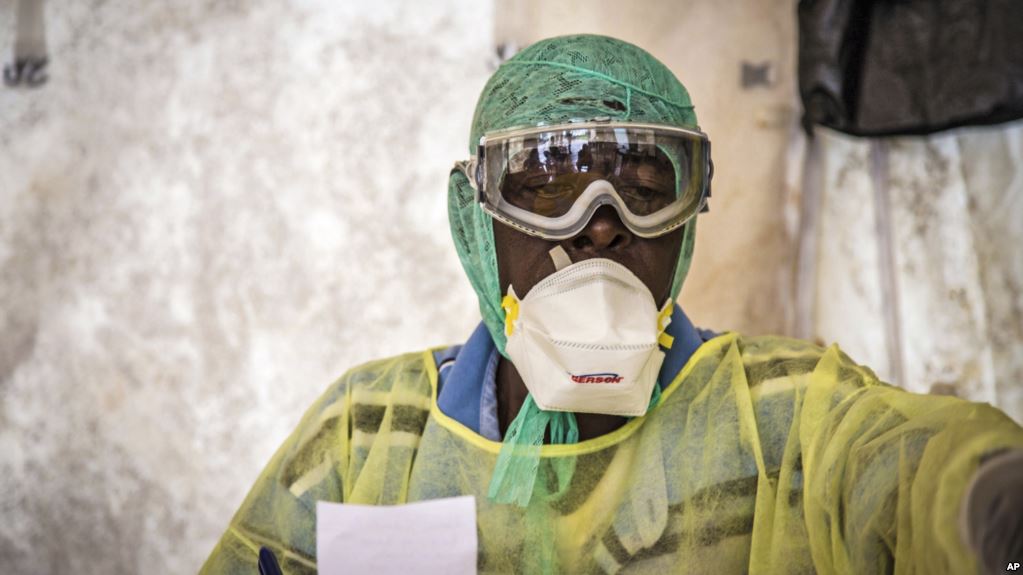
With this tragic history and our recent experience with COVID-19, Nigeria's slow response to the Ebola case in Abuja is baffling. Ebola is real. Since it was first discovered in 1976 in the Democratic Republic of Congo, it has a high death rate. Past outbreaks in the DRC have killed 4,690 out of 9,742 confirmed cases, a shocking 48 percent.
Nigeria knows this fight well. In 2014, we successfully battled Ebola. When Patrick Sawyer arrived at First Consultants Medical Centre in Lagos, we faced a huge threat. It took the bravery of Dr Stella Ameyo Adadevoh, who ultimately lost her life, and her team to stop the outbreak.
Like the strict measures in Ọyọ-Ilé, Dr Adadevoh and her team resisted pressure to release Sawyer. They held him, locked down the hospital, and alerted health authorities. Dr Adadevoh died on August 19, 2014, but her actions limited Nigeria to just 20 cases and eight deaths.
Look at how other nations handle this threat. Rwanda, despite its closeness to the DRC, has recorded zero Ebola cases during regional outbreaks. This success is not by chance; it's due to proactive measures. The Rwandan Ministry of Health actively screens borders and has strict protocols in place.
In Nigeria, when news of a new Ebola threat emerged, the government responded as usual. On June 9, a ₦10 billion emergency fund was approved, and a Presidential Task Force was formed. But as new cases are reported, Nigerians are right to ask: Where is the readiness? What has been done with the ₦10 billion?
We cannot treat a deadly virus with casualness or political talk. As our ancestors warned through Aláàfin Májòótú, if a government fails to address an epidemic early, it will grow into a beast that demands great sacrifice. Nigeria must wake up, stop playing with danger, and act before history repeats itself.


Drop your comment
No comments yet — be the first to drop the gist 👇