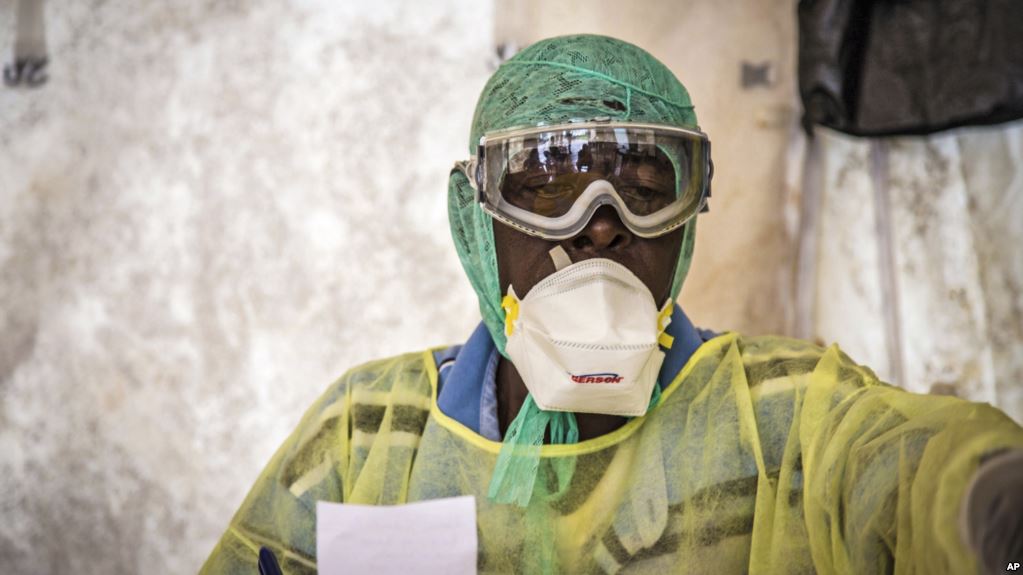
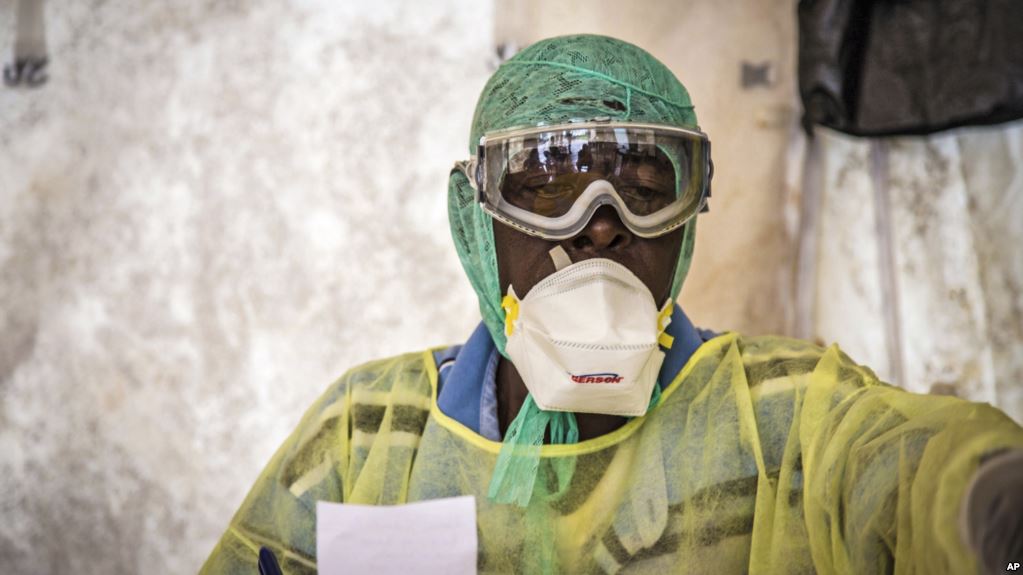
Nigeria's first confirmed Ebola patient in over ten years probably got the virus while in Uganda. However, health officials have not confirmed how she was infected.
The Swiss Federal Department of Foreign Affairs said in an email to Reuters that the patient is a Ugandan-born woman married to a Swiss diplomat in Abuja. She has been getting treatment at a private clinic in Abuja for about a week.
The statement mentioned that the woman likely contracted the virus during a trip to Uganda around two weeks ago. Her husband, who was with her, is in isolation but is not showing any symptoms.
The World Health Organisation (WHO) and the Africa Centres for Disease Control and Prevention (Africa CDC) have not confirmed that the woman went to the Democratic Republic of the Congo (DRC), where the current Ebola outbreak started.
Conflicting travel accounts
Ugandan officials said earlier that the woman traveled to eastern DRC before going through Uganda.
But Africa CDC official Wessam Mankoula said on Thursday that there is no verified information to confirm that the patient went to the DRC.
Mr. Mankoula stated that Nigeria and Uganda are sharing information to piece together her travel history and find out how she got infected.
Pavel Ursu, the WHO representative in Nigeria, said they received information that the woman was in Uganda from 16 September and returned to Abuja on 3 October.
The WHO official added that there is no evidence that she traveled outside Uganda.
Patrick Otim, a WHO emergency response manager, said the source of the infection is still unknown as investigators are trying to track her movements before she fell ill.
One area they are looking into is the health facilities she visited in Abuja after showing symptoms and before being hospitalized. They are checking for possible exposure to others during that time.
Meanwhile, the Ugandan government stated that there are no active Ebola cases in the country.
Uganda had 20 Ebola cases between May and June, most linked to infections from the DRC. The WHO announced that the outbreak in Uganda was over in August after 42 days without a new confirmed case.
Nigeria’s response
The confusion about the woman's travel history comes as Nigeria tries to stop further transmission after confirming the imported case on 20 October.
As reported by PREMIUM TIMES, the patient is a 42-year-old woman living in Abuja who recently traveled to Uganda. She started showing symptoms on 6 October, three days after getting back to Nigeria, and first sought treatment at a private hospital, thinking she had malaria.
She later went to another private hospital, where she was admitted on 11 October after not getting better. Her infection was confirmed through lab tests.
PREMIUM TIMES also reported that health officials have identified 44 people who might have been exposed to the patient. This includes healthcare workers, patients, caregivers, and travel contacts.
The government has started contact tracing and is working with international partners to figure out the woman's movements and find anyone who might have been exposed.
The WHO has told Nigerians to stay calm, explaining that one confirmed case does not mean there is an Ebola outbreak in the country. The agency is helping Nigeria with case investigation, lab testing, contact tracing, and infection prevention measures.
Regional outbreak
Nigeria's case comes during an Ebola outbreak that was declared in the DRC in May and has spread to other African countries, raising fears about cross-border transmission.
The outbreak is caused by the Bundibugyo virus, a type of Ebola virus without a licensed vaccine right now.
Kenya has also reported cases linked to the virus crossing borders, increasing worries about tracing infections among international travelers.
Ebola spreads through direct contact with the blood or other body fluids of an infected person or contaminated materials. Symptoms can include fever, headache, weakness, vomiting, and diarrhea.

Drop your comment
No comments yet — be the first to drop the gist 👇