
The night was just beginning to settle over Enugu City.
I slowly pulled my blue Peugeot 504 out of my apartment’s driveway near the Fire Service Office. I then turned onto the main road at Otigba Junction. Otigba is an important transportation spot on Ogui Road in Enugu. It connects different areas of the city. From there, I shifted gears and drove down Bisalla Road. The streets were almost empty. After passing through New Haven, I drove toward the Government House via Independence Layout.
That day, Enugu felt tense and quiet. The city was shedding the day’s worries, moving into the stillness of early morning. My phone rang, breaking the silence in my room. It was the Governor’s ADC. The ADC later served the same role for Mrs Patience Jonathan and became a Commissioner of Police.
“The Lion is waiting for you,” the ADC said sharply. “Go immediately to interrogate the Lion.” The Lion refers to the governor of Enugu State and Lion Building, where the government operates. The ADC’s tone was cold and direct. There was no warmth or humor in his voice. It felt like a rule that when the Lion is troubled, even the grass around Lion Building feels the pain.
Since 2003, when Governor Chimaroke Nnamani made me his media aide, such late-night calls had become routine. I often received calls “to interrogate the Lion” at least five times a day. The ADC’s call jolted me awake. As I got dressed in the dark, I saw my baby son, Chiagozie, sleeping soundly, unaware of the worries. My wife also woke up suddenly, a routine we had adapted to since we moved from our comfortable life in Ibadan to be close to powerful figures in Enugu. An Ofe manu (an Igbo term for Yoruba known for their rich palm oil soup) like me suddenly became significant in Enugu’s political scene, shaking up the opposition against the Lion of Agbani. At one point, the opposition was so irritated with me that they asked if I could “disrespect” Abraham Adesanya as I did to CC Onoh, a major adversary of my Lion.
When I entered the Governor’s private living room, he was pacing back and forth.
Chimaroke was known as a tough leader, a hard nut for Enugu’s opposition. But looking at him that night, I could see his heart was troubled. His face showed a deep, dark worry. Soon, the Commissioner for Information joined us, looking just as anxious and pale.
The Governor then shared his fears: his sources had informed him that EFCC operatives had just arrived in Enugu. Their plan was straightforward and dangerous: intimidate the House of Assembly, force the Speaker’s impeachment, and then target the Governor.
A heavy silence filled the room. It felt like the entire world was holding its breath. What could we do? We spoke in low voices before we slowly stepped back into the quiet morning.
Despite claims of presidential interference in its work, the EFCC under Obasanjo’s administration was a strong part of his legacy. Powerful men, who once spoke boldly, now whispered nervously. The source of their fear was four letters spoken like a curse: E-F-C-C. Back then, Nuhu Ribadu’s commission operated with fearsome efficiency. Those who feared Nuhu had good reason to. They had seen what happened to Tafa Balogun. “Tafa, you are a big thief! Ole!” Obasanjo had yelled at the Inspector General of Police. Ribadu then took him to court, and I believe the shame contributed to his death.
The background to that midnight call was as dangerous as it was revealing. The political atmosphere in Enugu was heavy, filled with the fear that usually comes before a storm. Since 1999, Nnamani held power tightly. It was clear to his opponents within his party that unless they acted against him, he would always have the upper hand. Despite their efforts, they could not access the Lion Building unless they significantly changed the game. Little did Nnamani know that they would get their chance through someone he thought was a friend.
Weeks earlier, a rumor had circulated around Government House. During a private meeting with the National Assembly about President Olusegun Obasanjo’s rumored Third Term ambition, the Governor had reportedly lost his cool. Upset by the discussion, he allegedly said some harsh words about the President. Unbeknownst to him, someone who was supposed to be a friend secretly recorded it. The tape made its way to the President in Abuja. Days later, Ribadu’s operatives showed up in Enugu. Their mission was to take revenge on a former political ally who had crossed a line.
But amidst the panic about Ribadu, a troubling truth emerged: the EFCC was not just going after notorious criminals. It was also targeting political opponents. Ribadu was not just a beacon of justice; he was also a powerful force for the President’s interests. As the EFCC became more active, it took down enemies and protected allies. Over two decades after EFCC’s formation, the reality is that not much has really changed.
Until those allegations defined the commission’s work, as Prof Chinua Achebe wrote in the Foreword of A Paradise for Maggots: The Story Of An Anti-Graft Czar (2010) by Prof Wale Adebanwi, Ribadu had become Nigeria’s own Eliot Ness. Ness led the famous group of law enforcement agents known as ‘The Untouchables.’ They became celebrated figures in American history.

Since Ribadu’s time, public opinion of the EFCC has greatly declined. Today, that once-respected institution reminds us of major political concepts in history. These ideas trace the evolution of government, showing the shift from unchecked power to systems meant to protect freedom.
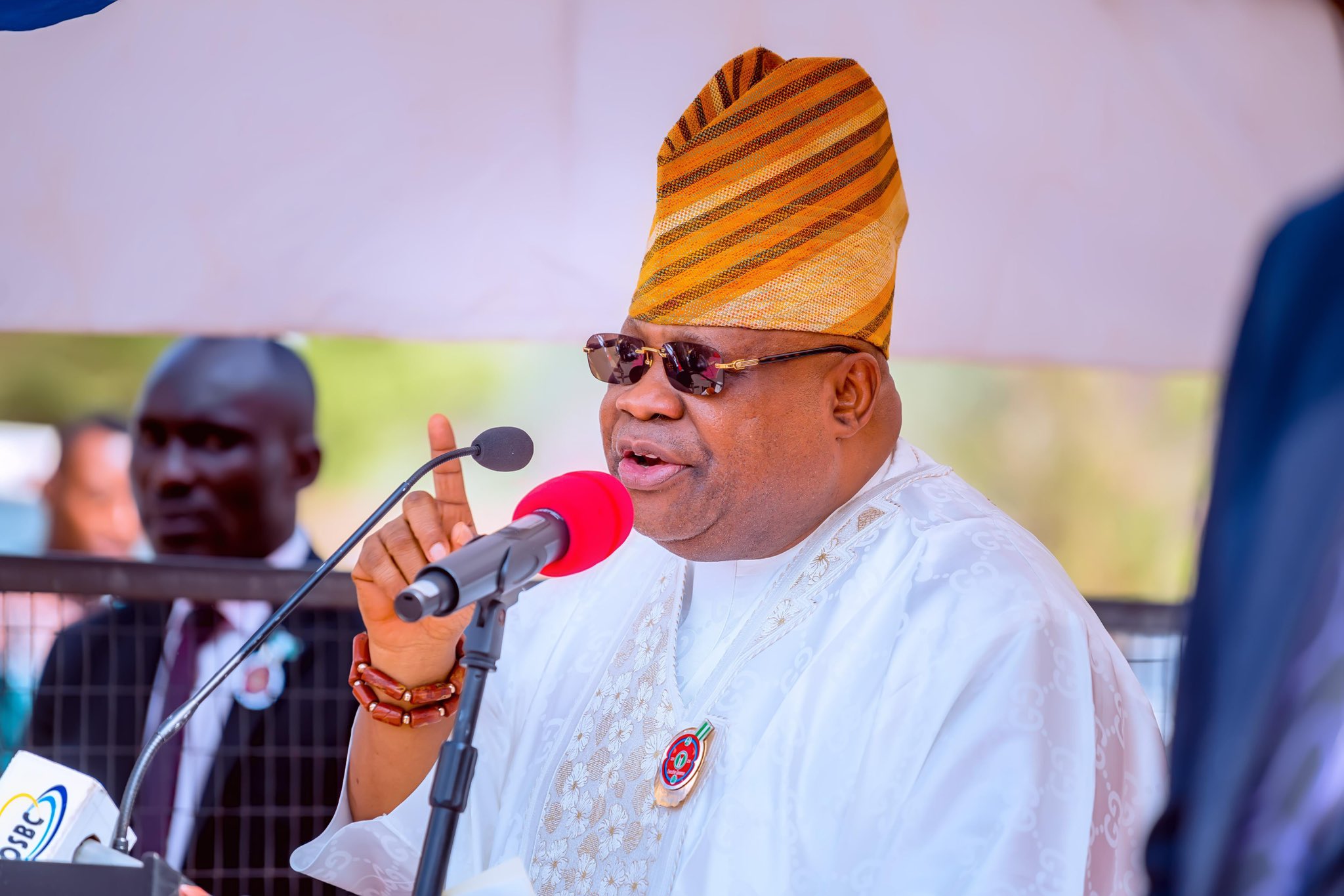
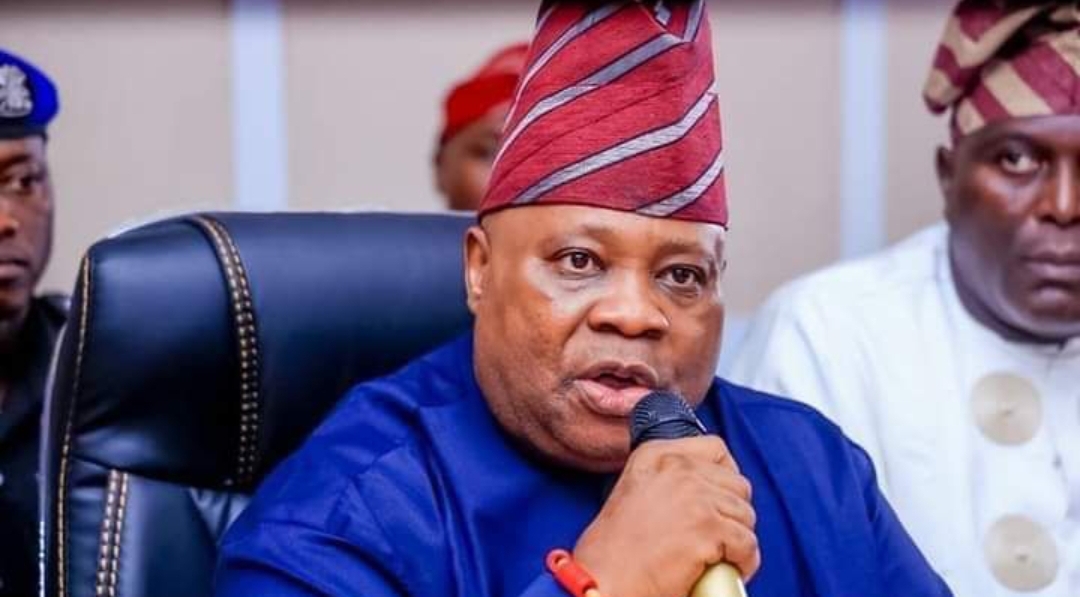
Last Wednesday, the Nigerian political scene felt the impact of the Osun State election. With only ten days to go, the machinery of anti-corruption law enforcement acted with unusual precision. Pointing to suspicious transfers from a government account, the EFCC froze that account. Governor Adeleke reacted strongly; civil servants, who view him as their savior, panicked and governance came to a halt.
In no time, it became clear that the Federal Government’s reputation had completely collapsed. Sympathy quickly grew for Ademola Adeleke. Soon after, overwhelmed by criticism, President Bola Tinubu instructed the EFCC to lift the freeze on the account.
When the president claimed he was unaware of the EFCC’s actions in Osun, many doubted him. If true, it suggests a troubling reality: he runs a weak administration where others act without his knowledge. If the EFCC could freeze a state government’s account without consulting the Attorney General or the National Security Adviser, we have a deeper problem on our hands.
Tinubu’s intervention felt significant. His statement indicated many things to the public. None were flattering. He expressed “embarrassment” and called the timing “inauspicious.” The King had spoken; the officials scrambled; the freeze was lifted. To many, this appeared as a kind act from the president to prevent chaos and protect the upcoming election. While the intervention might aim to avoid state paralysis, it highlights a recurring issue in Nigerian governance.
The president’s signed statement and his call to Governor Adeleke remind me of a Yoruba saying: one does not recognize the king and still bow to a wooden post, A kì í mọ ọba tán, kí á tún mọopó. Nigerians have criticized both the president and the EFCC for their clear bias, trying to act like the Leviathan, a powerful creature from folklore.
Their actions during this brief display of power made them seem less credible. The president’s actions were like a father who beats a child but also swats the flies away. His statement highlights the contradiction of using law enforcement to show strength while stepping in to protect the victim from the very system he controls. To this, the Yoruba say, “*O nse mi, o ngba mi; bawo ni a se ndupe lowo eni ti nse ni ti o tun ngba’ni?” (You are both my tormentor and my rescuer; how does one show gratitude to the one who kills and saves at the same time?) If you want to understand what it means to throw a subordinate under the bus, just ask Olukayode of the EFCC about what the president has done to him.
Before long, we are cheering “Kaabiyesi o!” as the president approaches. In traditional Yoruba belief, the Oba holds authority (opa ase); he is Alase Ekeji Orisa, the custodian of command, second only to the gods. When the Kabiyesi speaks, his decree becomes law. Yet, even in the historical governance of Old Oyo, the Alaafin was not above the law. His actions were checked by the Oyo Mesi and sacred traditions. So, why is Nigeria’s power structure today so focused on the president alone?
The perception of the president’s actions is similar to a cutlass that does not control the hand holding it. Everyone knows that the master wields the cutlass. This shows the lack of independence in Nigerian agencies like the EFCC when the presidency holds the power. The president’s actions suggest that the account freeze and his later intervention are not isolated mistakes, but signs of Nigeria’s ongoing constitutional problems. The presidency’s directive reflects the reality where institutions depend on the president’s protection. It also shows a political landscape where the executive allows an agency to overreach just to display “presidential kindness.” The danger is an executive that can order courts or agencies to act at will.
The only moment in Nigerian history that feels like the president's recent actions is the Ouster Clauses of military decrees. For instance, Decree 2 and Decree 13 stripped courts of authority whenever military leaders deemed a matter “a security priority.” By using presidential orders to override anti-corruption efforts, the president reminds us of the dark days of military rule.
Even then, I can’t recall Sani Abacha openly scolding his own anti-graft agency. This display of presidential control shows that anti-corruption agencies are caught between doing their jobs and serving the interests of those in power.
As the people of Osun State prepare to vote this week, I believe their interests must not be overlooked. I have observed the two main candidates from a distance. I have also listened to their representatives on TV. They keep talking about battles and fears of conflicts. They must ensure that this election doesn’t lead to disaster. There should be life after the polls. It is essential for democracy, for Tinubu, and for all of us that votes count and no lives are lost. The military leaders of Israel, after returning from a battle, told Moses: “Your servants have taken a count of the men of war who are under our command, and not a man of us is missing.”
That is the message Nigerians want to hear from the candidates in Osun after Saturday.

Drop your comment
No comments yet — be the first to drop the gist 👇