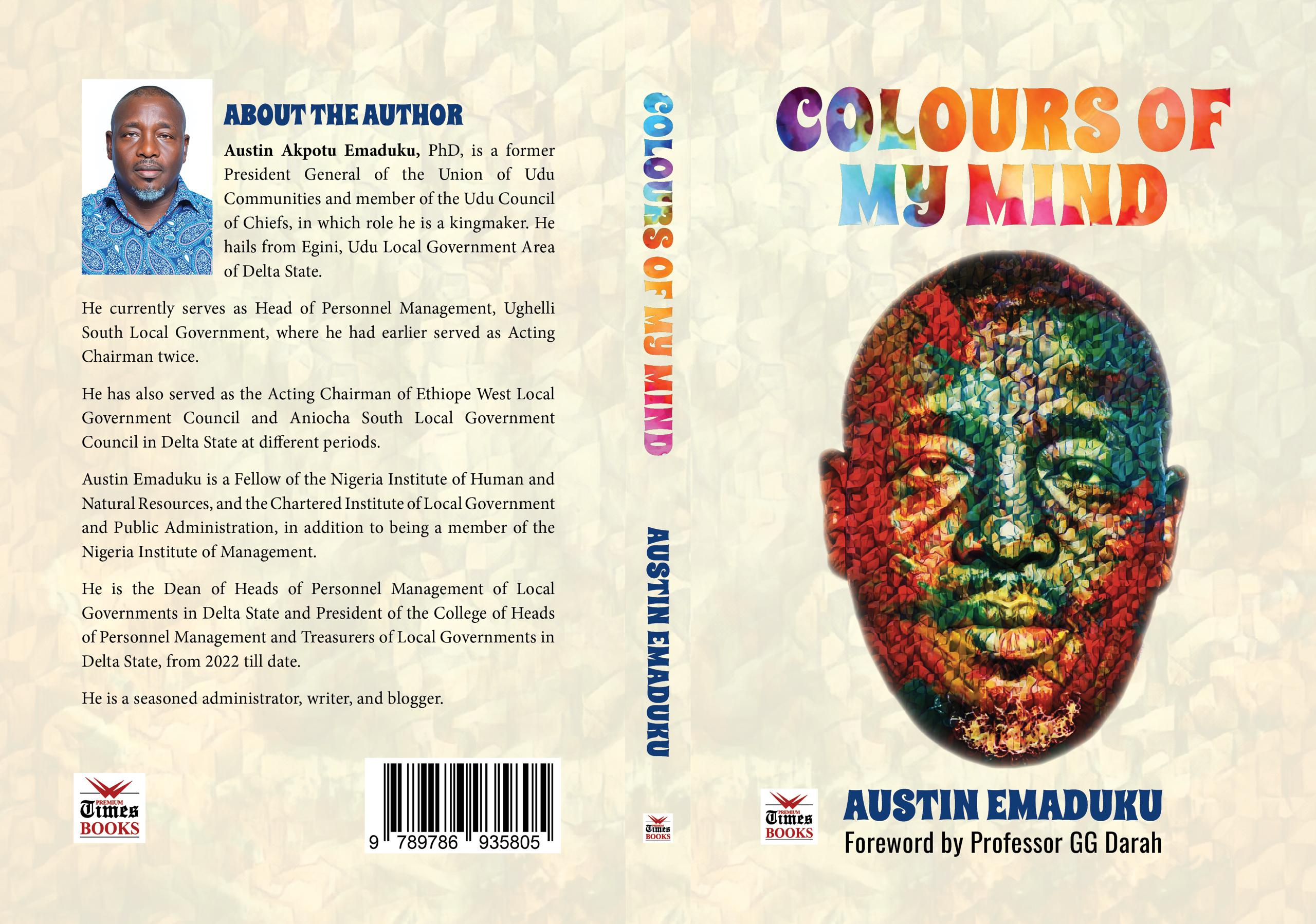
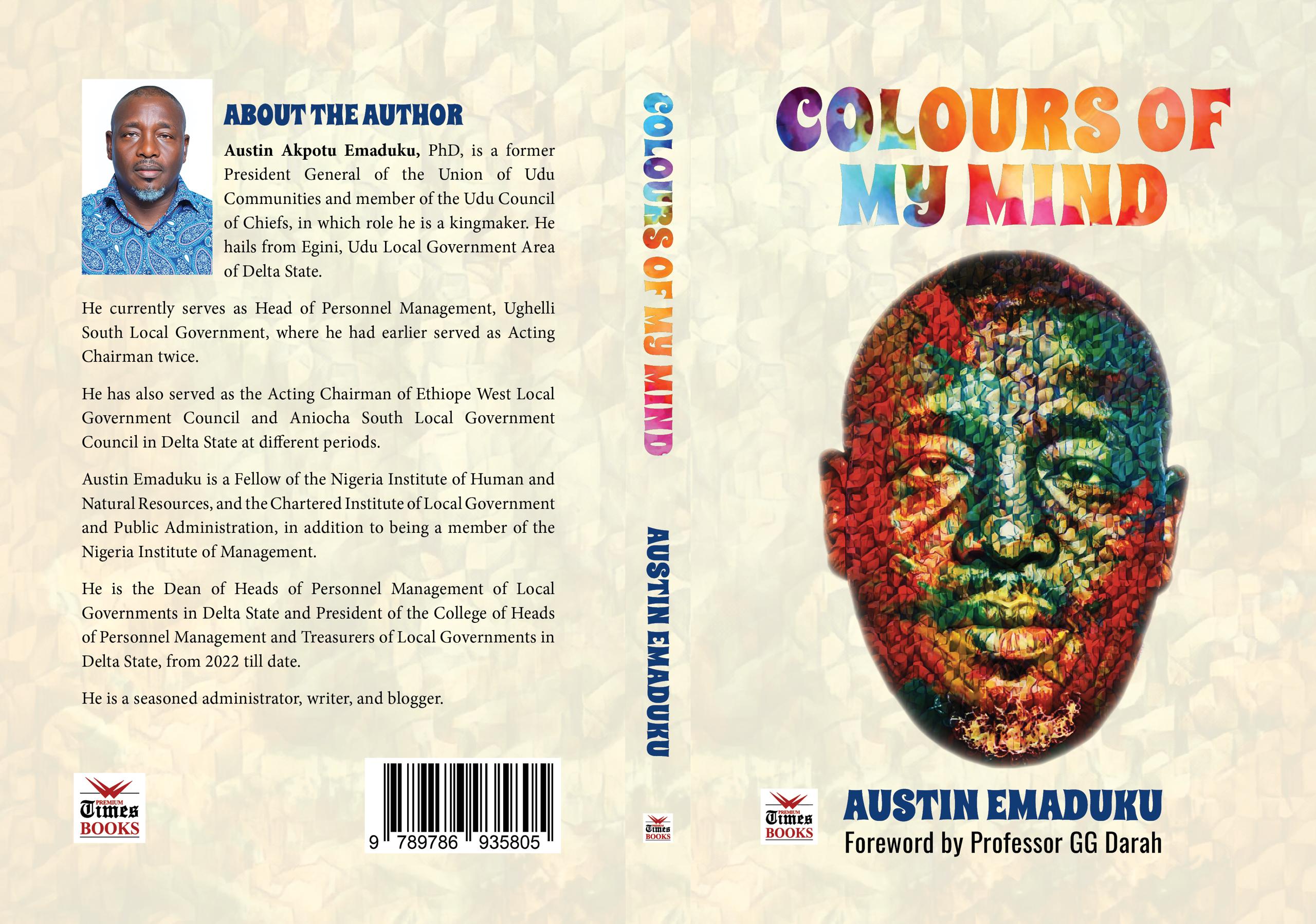
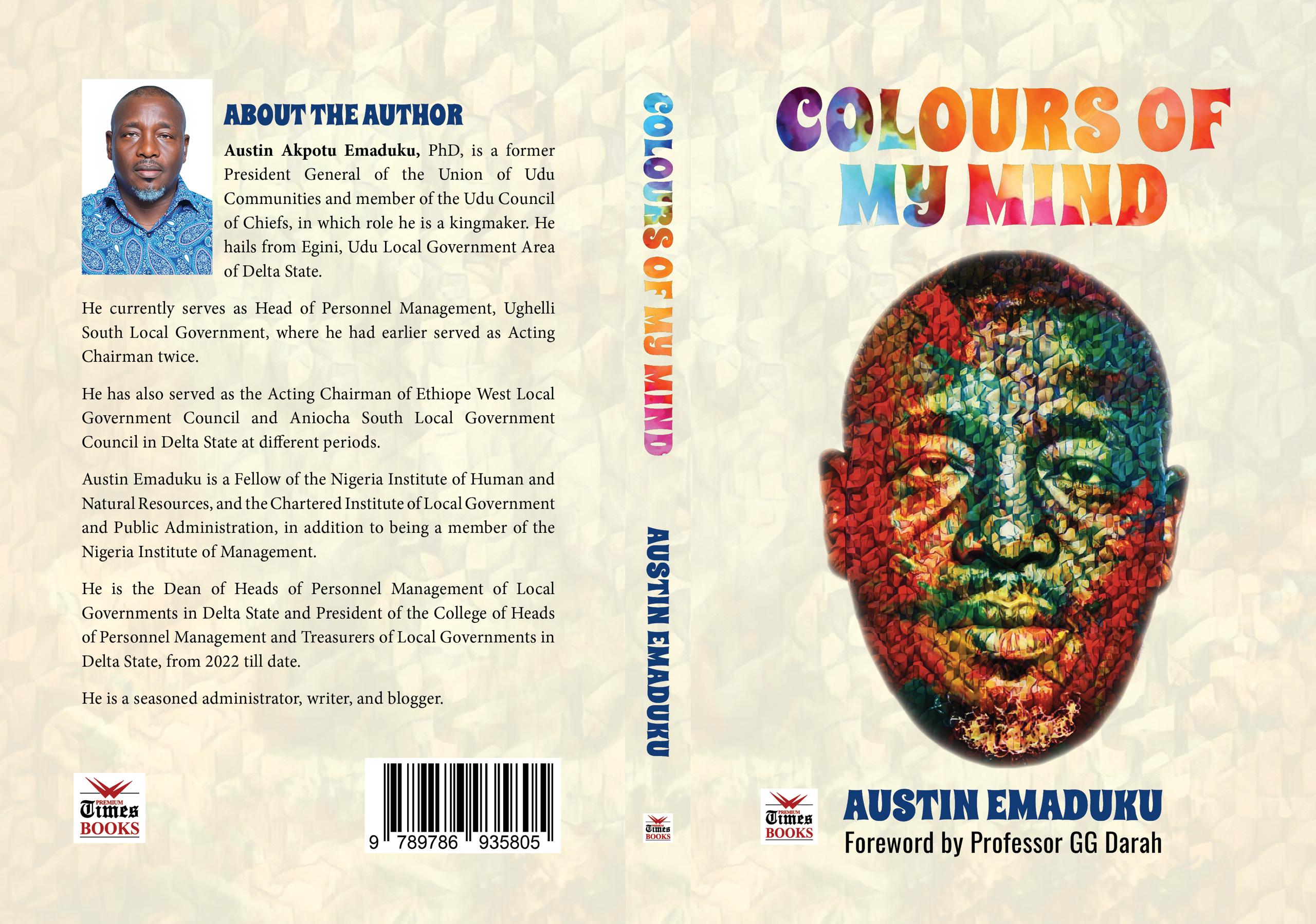
Emaduku’s “Colours of My Mind” is based on his experiences and thoughts, covering various aspects of Nigerian society. The book connects relatable social, political, and cultural moments in Nigeria. The author’s vision shows his commitment to change in the Niger Delta and Nigeria as a whole. Emaduku uses straightforward and rhythmic language to express urgent realities, with some literary touches. The mix of writing styles adds an impressive depth to the book.
The ideas that shape and uplift communities come from the mind, expressed through language. In the Bible, when God said, “Let there be light,” it shows a thought process that values creativity. It is fitting to link this idea to the many themes in Austin Emaduku’s book, Colours of My Mind. Covering the years from 2016 to 2022, the essays and comments in the book reflect current situations in Nigeria, highlighting the author’s hopes for a better society.
Published by Premium Times Books in Abuja in 2025, Emaduku’s Colours of My Mind is a 275-page collection of essays and poems about local and national issues. The book is neatly divided into six parts or chapters, each holding specific but connected thoughts about human and societal growth. This clear structure makes it easy to find the issues troubling our humanity and the author’s hopeful thoughts as he seeks a healthier society. Readers can easily follow the colours of the author’s mind as they move from page to page, chapter to chapter.
The first section, “Thoughts on the Niger Delta,” includes 15 essays that explore the social, cultural, and economic conditions of communities in the oil-rich Niger Delta. It highlights neocolonial oppression, collaboration, local ignorance, and some hopeful solutions. From the topics covered, it is clear the author cares about community and human development. The opening essay, “Preserving Udu History and Culture,” focuses on cultural history and the writer’s desire for cultural revival. Here, Emaduku uses myths and legends to reflect on the bravery of the Udu people, which seems to be fading due to current manipulative politics. The main point of this essay is the urgent need to revive the fading spirit and unity of the Udu people. In another essay, Emaduku plays with “Udu-Ovo,” a symbol of unity in Udu Kingdom, to show his love for his culture.
Many essays in this first section show the author’s fair view on the pressing issues in the Niger Delta, especially the violence that chased investors away from the area. In “The Tragedy of an Unthinking Agitation,” Emaduku expresses sadness about how insecurity from careless protests harmed the economy of Niger Delta communities. He laments how insecurity “chased away the companies that would have employed our teeming unemployed youths” (p. 6). Emaduku recalls Warri’s lost glory as an economic center in Delta State: “I can recall the mid 1980s to the early 1990s when Warri, the economic hub of Delta State, was home to hundreds of oil companies” (p. 6). This essay warns Niger Delta youths about the negative effects of violence. Here’s a message for our youths: “Until we create a conducive atmosphere for investment to thrive, we will continue to be jobless” (p. 7). This idea is echoed in the following article, “Youth Restiveness, Militancy and the Intractable Problems of the Niger Delta.”
Some essays in this first section analyze the disunity among ethnic groups in Delta State as a big obstacle to progress. Emaduku criticizes this disunity and calls for peaceful relations within and among different language groups. The essay, “The Itsekiri and their Neighbours,” shows the author’s frustration with the avoidable ethnic conflicts in Delta State that continue to block growth in Warri and its surroundings. He accuses the Itsekiri of being responsible for many of the conflicts in Warri, saying, “To maintain the false sense of domination, the Itsekiris have fought and continue to fight against anything that benefits the other ethnic groups or areas which they occupy” (p. 33). This criticism comes after the author carefully considers the issues before offering solutions. Referring to the Bible, Emaduku highlights how kindness and love for each other is a universal principle.
A major part of this essay celebrates the Wado City Advocacy Movement, which Emaduku says offers “a creative, almost magic-like solution to the issue of identity that has been the underlying cause of tensions and crises which rocked the city and led to avoidable deaths in the past” (p. 33). The next essay, “Vice President Yemi Osibanjo’s Visit and the Place of the Urhobo Nation in Delta State and the Niger Delta Question,” shows the frustration of the Urhobo people, who, despite being the most peaceful and largest language group in Delta State, are overlooked by their neighbors. The essay recalls the disrespect shown to Urhobo kings during President Yemi Osibanjo’s visit in 2017 and urges the Urhobo nation to carry itself with dignity. Emaduku’s call for peace in the Aladja-Ogbe-Ijoh crisis shows his desire for unity. He says, “Well, I was on the side of peace then as I remain now” (p. 80). This shows his character, a thoughtful, dignified mind that yearns for peace and its benefits.
The issues of disunity discussed in the book also highlight the divisions within the Urhobo people. Emaduku believes that a people’s strength lies in their unity and good image. He stresses that the Urhobo nation should look within, respect itself, and build a strong presence in the country. In “Urhobo Youths, Social Media and Unthinking Criticism,” Emaduku criticizes the rising sycophancy and thoughtlessness among Urhobo youths who quickly insult their leaders and culture online for political gain. He says, “constructive criticism is good and can serve as a wake-up call from lethargy for the leader(s) but criticism for criticism’s sake is ‘pull downism’” (p. 44). He advises Urhobo youths to be wise and careful.
In “Leave the Urhobo Progress Union (UPU) Out of Your Partisan Politics,” Emaduku criticizes the deep-rooted sycophantic politics that have tarnished the Urhobo nation, damaging the image of its leading body, the UPU. This idea also appears in the essay, “The Need to Separate Partisan Politics from the Upcoming UUC Elections,” showing Emaduku’s consistent call for unity and dignity in Urhobo culture. Emaduku’s vision for a better society and his disdain for hypocrisy are reflected in Colours of My Mind. The book represents his mental outlook; a free mind seeking to uplift others. This consistency shines through in his essays.

As the former President General of Union of Udu Communities (UUC), Emaduku discusses electricity supply issues in some essays. He understands how important stable electricity is for any community’s growth. That is why he criticizes the injustices displayed by BEDC in Udu in the essay, “Help! BEDC is Returning Udu 30 Years Back to the Days of Rural Electrification Boards (REBs).” As a dedicated leader driven by the vision to develop his communities, Emaduku suggests steps for the new President of UUC to advance Udu.
The second section of the book, “Restructure or Rupture,” focuses on the Nigerian federation, discussing serious challenges and possible solutions. The essays in this section call for a complete restructuring of Nigeria as a way to achieve peace and growth. Emaduku believes that “what the nation needs is the return to a true federal structure with minimum central might” (p. 93). He urges Nigerian leaders to “make the centre less attractive and the tensions will cease” (p. 90). He illustrates further, saying, “Each federating unit will become more acutely aware of its strengths and weaknesses and will consequently respect the strengths of other regions over its own weaknesses” (pp. 90-91).
These points show his deep understanding of Nigeria’s political situation. In “The Conflagration Will Come from the North,” Emaduku warns that as a nation, we must avoid every ethnic and religious bias and tackle the ongoing poverty in Northern Nigeria. Clearly, the problems of terrorism and banditry stem from poverty and lack of education, which now affect the whole country.
The third and fourth sections of the book, “When Democracy Insults” and “Nigeria, We Hail Thee,” contain essays that examine the Nigerian political scene. Emaduku’s anger at the visible sycophancy and passiveness in Nigerian society is evident in the essay, “Our ‘Mumu’ Our Fears?” This challenges Nigerians to overcome fear and hypocrisy and hold their leaders accountable. The pidgin term ‘mumu,’ meaning ‘foolishness,’ shows the author’s dislike for foolishness and hypocritical loyalty in Nigeria’s politics. Other essays that express frustration with the growing foolishness and absurd behavior of Nigerians include “Gullibility and the Average Nigerian,” “The Self-Devaluation of the Nigerian Electorate,” and “The Stomach is the Leader.”
Emaduku’s political views and activism come through in many essays in sections three and four, including “Human Right and Minority Opinion,” “The Arrest and Release of Journalist, Chido Onumah,” #EndSARS,” and “The Injustice in the Nigerian Prison System.” His thoughts on election fraud and his insights on free and fair elections are powerful.
The fifth section of the book discusses religious and cultural experiences. Titled “Of Culture and Religion,” Emaduku criticizes the harmful effects of religious sentiments in Nigeria. In “The Familiar Spirits of the Nigerian Nation,” he points out that religion is one of the main causes of Nigeria’s problems. He states that “of all the familiar spirits, religion is the one that has been mostly deployed, sometimes with devastating effect, due to its emotive nature” (p. 229). Emaduku doesn’t just talk about the harm caused by ethnic and religious sentiments; he encourages discussion and urges people to reject the harmful fanaticism linked to religion in Nigeria, which includes political passiveness, sycophancy, violence, and terrorism. Some essays in this section mock religious hypocrisy while others question our declining morals and values.
The final section of the book reveals the author’s creative side. This part, titled “Colours of My Mind,” showcases Emaduku’s poetry and stories. The poems and personal narratives here reflect similar social, political, and cultural realities in Nigeria and beyond. They highlight Emaduku’s social vision and desire for change.
Emaduku’s Colours of My Mind is all about experience and expression, covering various aspects of Nigerian society. The sections of the book connect relatable social, political, and cultural stories in Nigeria. The author’s vision shows his commitment to change in the Niger Delta and Nigeria. With the need to share real experiences, Emaduku uses simple and rhythmic language, adding some literary flair. The mix of writing styles makes the book stand out. This is a valuable collection that every Nigerian, especially those from the Niger Delta, should read. It captures different experiences in Nigeria’s social, cultural, and political landscape. I recommend this book without any hesitation.



Drop your comment
No comments yet — be the first to drop the gist 👇