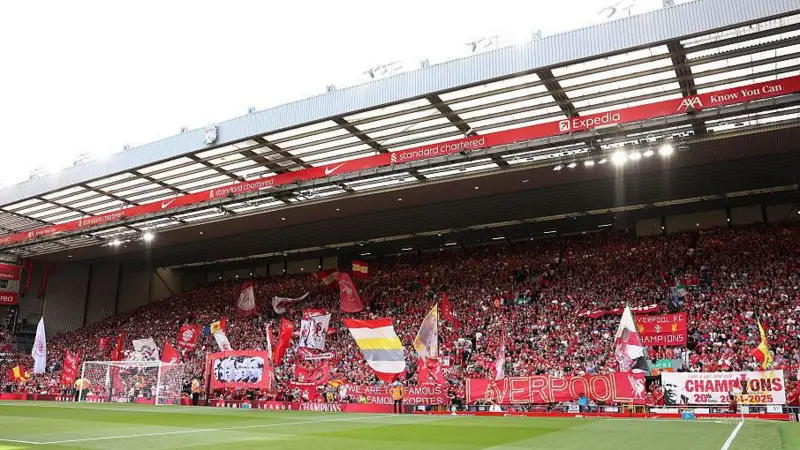
The Premier League has some of the most popular football stadiums in the world. These include Manchester United’s famous Old Trafford, Arsenal’s Emirates Stadium, and Liverpool’s well-known Anfield.
The 2026/27 season features 20 clubs playing in England. Each stadium has its own size, history, and unique character.
Some of these stadiums have been home to their clubs for over a century, while others are relatively new. Several have seen major renovations, and some are still expanding.
Details about all these stadiums were shared in a release on the league’s website on Sunday. Here’s a look at the history and important features of all 20 Premier League stadiums.
1. Arsenal, Emirates Stadium
Arsenal has played at the Emirates Stadium since 2006 after leaving Highbury, their home for 93 years. Located in Holloway, north London, the stadium holds 60,704 fans and is named after Emirates, a Dubai-based airline that sponsors the club.
Outside the stadium, you will find six bronze statues honoring Arsenal legends. This includes former players Tony Adams, Dennis Bergkamp, and Thierry Henry, along with managers Herbert Chapman and Arsene Wenger, and former director Ken Friar.
2. Aston Villa, Villa Park
Aston Villa has called Villa Park home since 1897. It is located in Aston, Birmingham. The stadium previously held 43,205 fans, but that number has dropped to 36,887 for the 2026/27 season due to the North Stand being closed for renovations.
Once the renovations are finished, Villa Park is expected to hold over 50,000 fans. One stand is named after former club chairman Doug Ellis. Villa Park has hosted 55 FA Cup semi-finals, more than any other stadium.
3. Bournemouth, Vitality Stadium
The Vitality Stadium is the smallest ground in the Premier League. It currently has a capacity of 12,357 fans. Located in Boscombe, Bournemouth, the stadium is undergoing renovations to expand its capacity to about 20,200.
Originally opened in 1910, it was called Dean Court before being renamed Vitality Stadium in 2015 after an insurance company became the club’s naming-rights sponsor. Two stands are named after Bournemouth legends Steve Fletcher and Ted MacDougall.
4. Brentford, Gtech Community Stadium
Brentford moved to the Gtech Community Stadium in 2020 after leaving Griffin Park. It was originally named Brentford Community Stadium before being renamed in 2022 due to a sponsorship deal with British tech company Gtech.
The stadium can hold 17,250 fans, making it the second-smallest stadium in the Premier League.
5. Brighton & Hove Albion, American Express Stadium
Brighton & Hove Albion has played at the American Express Stadium since 2011, when it replaced Withdean Stadium. The stadium is often called the Amex, but its official name is Falmer Stadium.
It has been sponsored by financial services company American Express since it opened and has a capacity of 32,176.
6. Chelsea, Stamford Bridge
Stamford Bridge has been Chelsea’s home since the club's founding in 1905. Located in Fulham, west London, the stadium has a capacity of 40,044.
One of its stands is named after former Chelsea vice-chairman Matthew Harding, who passed away in 1996. A bronze statue of former Chelsea forward Peter Osgood stands outside the stadium.
7. Coventry City, Coventry Building Society Arena
Coventry City moved from Highfield Road to the Coventry Building Society Arena in 2005. The stadium was known as the Ricoh Arena before changing its name in 2021 due to a naming-rights deal with Coventry Building Society.
The club gained ownership of the stadium in August 2025 after owner Doug King bought it from Frasers Group. The stadium has a capacity of 32,609 and is hosting Premier League football for the first time in the 2026/27 season after Coventry returned to the top flight after a 25-year absence.
8. Crystal Palace, Selhurst Park
Selhurst Park has been Crystal Palace’s home since 1924. The stadium, located in south London, has a capacity of 25,194 and was also shared with Wimbledon from 1991 to 2003.
Palace and Wimbledon both played Premier League games at Selhurst Park during the 1992/93, 1994/95, and 1997/98 seasons. Recently, the stadium became more famous as the fictional home of AFC Richmond in the Apple TV series Ted Lasso.
9. Everton, Hill Dickinson Stadium
Everton’s Hill Dickinson Stadium is the newest ground in the Premier League, having opened in 2025. The Toffees played at Goodison Park for 133 years before moving to their new home at Bramley-Moore Dock by the River Mersey.
This stadium holds 52,769 fans and is named after the Liverpool-based law firm Hill Dickinson, its naming-rights partner.
10. Fulham, Craven Cottage
Craven Cottage has been Fulham’s home since 1896. The stadium in west London has gone through several changes, most recently with the expansion of the Riverside Stand, bringing its capacity to 28,107.
The Johnny Haynes Stand is named after the Fulham legend and is a Grade II-listed building, making it the oldest stand still in use in professional football.
11. Hull City, MKM Stadium



Hull City has played at the MKM Stadium since 2002. Previously known as the KC Stadium, it took its current name in 2021 after a deal with builders’ merchant MKM.
The stadium has a capacity of 24,983 and is also used by rugby league club Hull F.C.
12. Ipswich Town, Portman Road
Portman Road has been Ipswich Town’s home since 1884. The stadium holds 30,294 fans and honors two of the club’s most famous managers, Sir Bobby Robson and Sir Alf Ramsey, with stands named after them.
Statues of Robson and Ramsey stand outside the stadium, along with one of former Ipswich player Kevin Beattie.
13. Leeds United, Elland Road
Elland Road has been home to Leeds United since 1919. The stadium currently holds 37,633 fans, although the West Stand is being renovated to eventually increase capacity to 53,000.
All four stands are named after iconic figures from Leeds’ history: Don Revie, Jack Charlton, Norman Hunter, and John Charles. There is also a statue of legendary Leeds captain Billy Bremner outside the ground.
14. Liverpool, Anfield
Liverpool has played at Anfield since the club was formed in 1892. Recent renovations have raised the stadium’s capacity to 61,276, making it the third-largest stadium in the Premier League.
Two famous gates at the stadium are named after former managers Bill Shankly and Bob Paisley, both of whom have statues outside. Another Liverpool legend, Sir Kenny Dalglish, has a stand named after him. Liverpool won their latest Premier League title at Anfield during the 2024/25 season.
15. Manchester City, Etihad Stadium
Manchester City moved from Maine Road to the Etihad Stadium in 2003. The stadium was built for the 2002 Commonwealth Games and was initially called the City of Manchester Stadium before being renamed in 2011 after a sponsorship deal with the Abu Dhabi-based airline.
The stadium now holds 61,038 fans after recent expansions. A stand was named after Pep Guardiola when he left the club in May 2026, while another honors former City great Colin Bell. The Etihad has seen many important moments in Manchester City’s Premier League history, including the dramatic title-winning goal by Sergio Aguero against Queens Park Rangers in 2012.
16. Manchester United, Old Trafford
Old Trafford is the largest stadium in the Premier League, with a capacity of 74,158. Known as the Theatre of Dreams, it has been Manchester United’s home since 1910.
Two stands are named after club legends Sir Alex Ferguson and Sir Bobby Charlton. Outside the stadium is the famous statue of United’s “holy trinity”, George Best, Denis Law, and Bobby Charlton. Old Trafford has hosted six Premier League title-deciding matches, a league record.
17. Newcastle United, St James’ Park
St James’ Park has been Newcastle United’s home since 1892. The stadium, which holds 52,729 fans, is near Newcastle city centre and is affectionately called the “Cathedral on the hill” by supporters.
The Milburn Stand honors former Newcastle player Jackie Milburn, who also has a statue outside. There are also statues of former manager Sir Bobby Robson and former striker Alan Shearer, who is Newcastle’s all-time leading goalscorer and the record goalscorer in the Premier League.
18. Nottingham Forest, City Ground
The City Ground has been Nottingham Forest’s home since 1898. Located in West Bridgford, south of Nottingham city centre, the stadium is on the banks of the River Trent.
It currently holds 31,212 fans, but there are plans to increase that to 52,500. Three stands are named after Forest legends Brian Clough, Peter Taylor, and John Robertson.
19. Sunderland, Stadium of Light
Sunderland moved to the Stadium of Light in 1997 after leaving Roker Park. This stadium, which has a capacity of 48,095, was built on the site of the former Monkwearmouth Colliery, reflecting the region’s coal-mining history.
Outside the stadium is a statue of former manager Bob Stokoe, who led Sunderland to FA Cup glory in 1973. A stand is also named after legendary goalkeeper Jimmy Montgomery, who was Sunderland’s hero in the 1973 FA Cup final against Leeds United.
20. Tottenham Hotspur, Tottenham Hotspur Stadium
Tottenham Hotspur Stadium is the second-largest stadium in the Premier League, holding 62,850 fans. It opened in 2019, replacing Tottenham’s former home, White Hart Lane.
The stadium features a 17,500-seat South Stand, which is the largest single-tier stand in the UK. It also hosts annual NFL games and has the world’s first retractable synthetic turf pitch, allowing it to change between football and other events.
Premier League Stadiums by Capacity
The 20 stadiums vary greatly in size. Bournemouth’s Vitality Stadium holds 12,357 fans, while Manchester United’s Old Trafford can accommodate 74,158 fans.
The 2026/27 Premier League season marks the first top-flight campaign at Coventry Building Society Arena since Coventry City returned to the Premier League. Also, Everton’s move from Goodison Park means the Premier League has a new stadium, with Hill Dickinson Stadium opening in 2025.
With historic grounds like Anfield, Stamford Bridge, Villa Park, and Craven Cottage alongside newer ones like Tottenham Hotspur Stadium and Hill Dickinson Stadium, the Premier League’s stadiums showcase over a century of English football history.


Drop your comment
No comments yet — be the first to drop the gist 👇