
The Nigerian government plans to provide reliable electricity to at least 30 percent of health facilities by the end of 2027. Currently, about 40 percent of Primary Healthcare Centres (PHCs) do not have electricity.
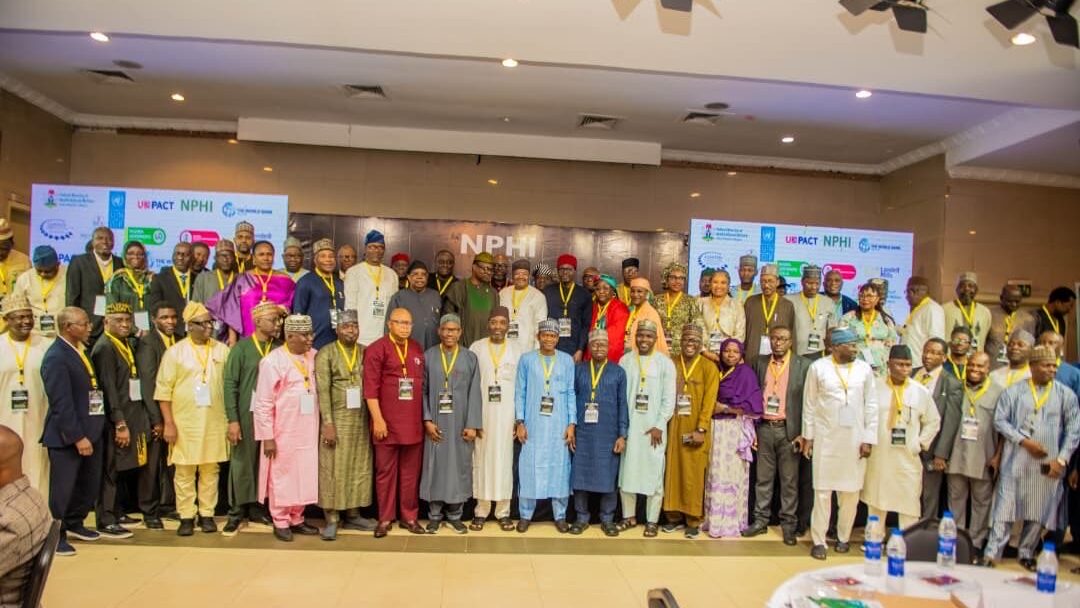
The Minister of State for Health and Social Welfare, Iziaq Salako, shared this information on Wednesday in Abuja. He spoke at the launch of the Rural Electrification Agency (REA)-Renewable Asset Management Company (RAMCO).
The event was themed, "Powering Sustainable Growth: Launching Nigeria’s Renewable Asset Management Company."
Mr Salako mentioned that the lack of electricity in health facilities affects healthcare delivery. He stated that reliable power is not just a nice-to-have but crucial for health outcomes. "In a hospital, electricity is not an amenity; it is a clinical input," he said.
He pointed out that electricity is needed for important services and equipment. This includes vaccine cold chains, oxygen concentrators, operating theatres, and incubators for premature babies.
Mr Salako noted that between 60 and 70 percent of Nigeria’s primary and tertiary health facilities face regular power outages or have no power at all. "About 40 percent of functional PHCs have no electricity access, with most of the remaining 60 percent receiving only six to 10 hours of electricity per day," he said.
He added that the unreliable power supply is also a heavy financial burden for teaching hospitals. Teaching hospitals need between three and eight megawatts to run properly but get only about five hours of electricity from the national grid daily.
Due to this, hospitals spend between 40 and 50 percent of their operating costs on energy, a lot of which goes to diesel. Mr Salako acknowledged the work of the Federal Ministry of Power and the REA in providing sustainable electricity to health facilities.
He mentioned that federal tertiary health institutions, such as teaching hospitals in Maiduguri and Calabar, have benefited from the Energising Education Programme. Under the Nigeria Electrification Project, 100 health facilities also received 50 kilowatt solar hybrid systems. There is a plan to target 400 more PHCs in a second phase.


Despite these efforts, Mr Salako said the sustainability of renewable energy systems is still a big issue. He explained that the 30 percent target is part of the Nigeria Power-for-Health Initiative. This was approved by President Bola Tinubu after the first National Stakeholders’ Dialogue on Power in the Health Sector in September 2025.
According to him, the dialogue created a Compact for the Sustainable Electrification of Public and Private Health Facilities. This was signed by the Federal Ministry of Health and Social Welfare, Federal Ministry of Power, state governments, the Committee of CMDs/MDs, the private sector, development partners, and civil society.
He said that the dialogue also led to an implementation plan to ensure that at least 30 percent of health facilities in Nigeria have steady power by the end of 2027. The initiative also set up a governance structure that includes the REA and other government agencies.
Mr Salako stated that achieving this target will need private investment and partnerships, as the government alone cannot finance the energy infrastructure required across Nigeria’s health system.
He suggested four areas for collaboration between RAMCO and the Nigeria Power-for-Health Initiative. He proposed that health facilities be seen as a separate asset class within RAMCO’s portfolio, starting with teaching hospitals already solarised under the Energising Education Programme.
He also suggested connecting RAMCO’s professional asset management with the establishment of Facility Energy Management Teams in hospitals, with help from UK PACT. According to him, RAMCO’s asset register should include health facility energy audits so both sectors can plan together.
Furthermore, he proposed that a portion of RAMCO’s capital be allocated to PHCs, which are crucial for maternal and newborn survival but are often not commercially attractive. Mr Salako said the Federal Ministry of Health and Social Welfare would support RAMCO by giving it a position on the Inter-Agency Technical Committee of the Power-for-Health Initiative.




Drop your comment
No comments yet — be the first to drop the gist 👇