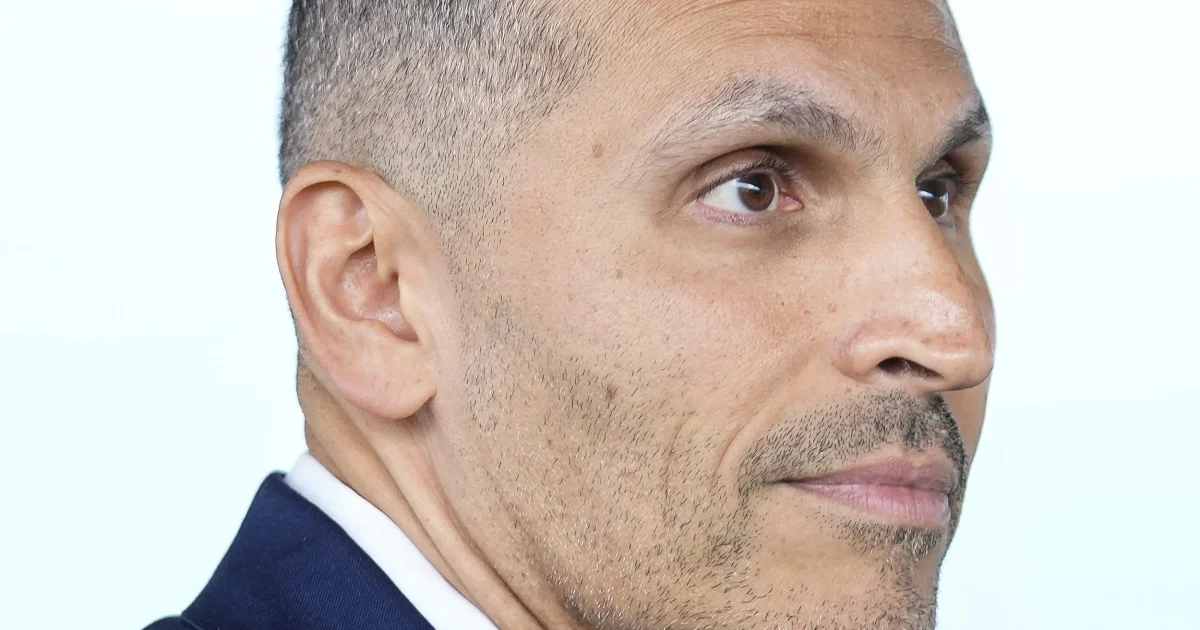
Manchester City chairman Khaldoon Al Mubarak.
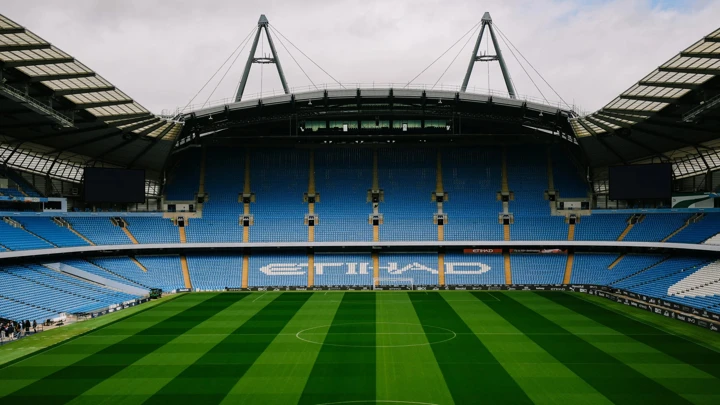
Five top officials from the Premier League board will help decide what punishment Manchester City could face for breaking financial rules.
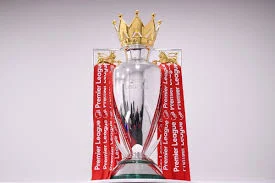
This case, called the most important disciplinary issue in Premier League history, has drawn a lot of attention. Possible punishments include fines, point deductions, expulsion from the league, or even taking away past titles.
An independent three-member commission will make the final decision on the punishment. But the Premier League board will present its recommendations and Manchester City’s stance.
City insists they are innocent and are appealing against the commission’s findings.
The Premier League board has five members: the chair, the chief executive, and three independent non-executive directors.
No representatives from any club sit on the board. This setup is meant to keep things fair and neutral in disciplinary issues.
As reported by BBC Sport on Wednesday, here are the five senior officials on the Premier League board.
Alison Brittain, Premier League Chair
Alison Brittain is the chair of the Premier League board. She became the first woman to hold this position nearly four years ago.
She has a background in hospitality and finance, bringing a lot of corporate experience to the role even though she has never worked in football before.
At first, she was unsure about joining the Premier League. But after talking to former Arsenal chief executive Vinai Venkatesham and former Aston Villa chief executive Christian Purslow, she changed her mind.
Brittain believes keeping a competitive balance is a key duty of the Premier League. She argues that the league’s appeal relies on clubs being able to challenge each other.
In 2025, all 20 Premier League clubs backed her for another three-year term.
Richard Masters, Premier League Chief Executive
Richard Masters has been the Premier League chief executive since 2019. He is a familiar face in English football administration.
He has been directly involved in the league’s response to Manchester City’s financial issues. He defended the decision to take action against the club for breaking competition rules.
After the independent commission’s findings, Masters said the ruling proved the league was right to pursue the case.
He also highlighted the need to protect the integrity of the league, saying that Premier League rules must be enforced to ensure fairness among clubs.
Masters has told a parliamentary committee that the league applies its rules fairly, no matter which club is involved.
Mai Fyfield, Independent Non-Executive Director
Mai Fyfield is another important member of the Premier League board. She has a wealth of experience in media, broadcasting, and commercial strategy.
She worked nearly 20 years at Sky as chief strategy and commercial officer, playing a key role in negotiating Premier League television rights.
Her experience also includes serving on the boards of several organizations, including BBC Commercial. Fyfield’s background in commercial negotiations adds a valuable viewpoint to the Premier League’s leadership.
Dharmash Mistry, Independent Non-Executive Director
Dharmash Mistry has experience in technology investment, business development, and corporate finance.
He worked with Procter & Gamble and Boston Consulting Group before moving into media and becoming a technology venture capitalist.
Currently, he chairs the Premier League’s Audit and Finance Committee and represents the league on the Football Association’s board.
His financial and business knowledge is crucial as the league looks at its position in a case about financial regulations and accountability.
Matthew Ryder, Independent Non-Executive Director
Matthew Ryder is the last member of the five-person board.
He is a senior barrister and part-time judge with a lot of experience in legal, regulatory, and public affairs.
Ryder previously served as Deputy Mayor of London, focusing on social mobility and community issues. In the Premier League, he chairs the Legal Advisory Group, making his legal expertise important for handling disciplinary matters.
He has also been on the board of the Scott Trust, which owns The Guardian newspaper.
Previous cases show differences over proposed punishments.
Manchester City’s case is seen as unique in its scale. But earlier financial cases involving Premier League clubs provide some hints on how recommendations can differ from final outcomes.
In 2023, the Premier League aimed for a 12-point deduction for Everton over financial rule violations. However, the independent commission first imposed a 10-point penalty, later reduced to six points after an appeal.
Nottingham Forest faced action in 2024 for breaking Profitability and Sustainability Rules (PSR). The Premier League wanted an eight-point deduction, but the commission settled on four points.
Recently, Leicester City faced proceedings for overspending during the 2023-24 financial year. The Premier League pushed for a 12-point deduction, while the independent commission suggested a six-point deduction to the English Football League.
Chelsea is another example of a negotiated deal. The club accepted a £10 million fine and a suspended transfer ban after an investigation into undisclosed payments involving unregistered agents and third parties between 2011 and 2018.
The Premier League noted Chelsea’s cooperation and proactive reporting as key factors in their case.




Drop your comment
No comments yet — be the first to drop the gist 👇