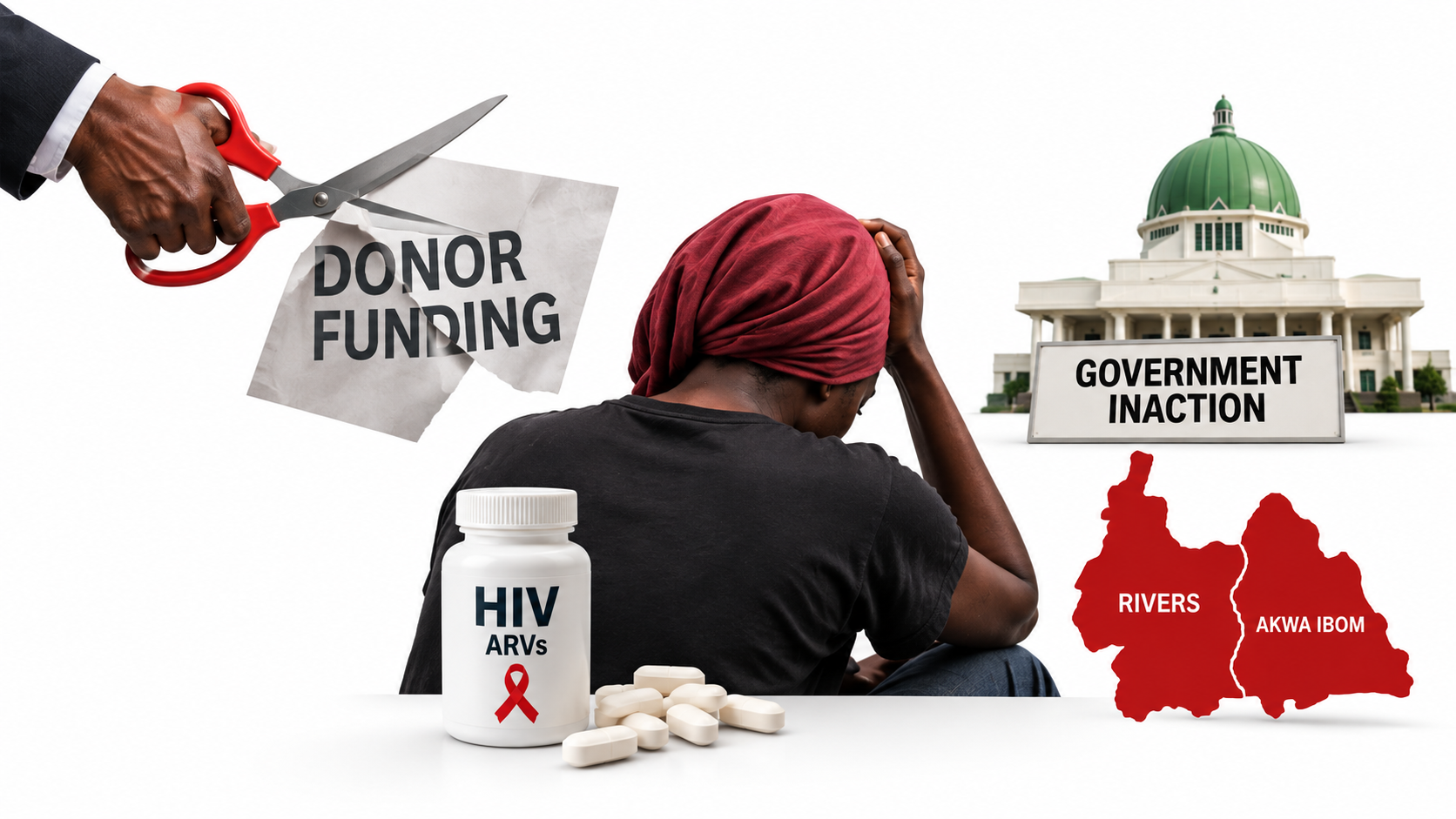
Long before international funding for HIV started to drop, Akwa Ibom and Rivers states had laws in place to stop a crisis.
These laws recognized that donor support would not last forever. They aimed for a future where governors would lead, governments would fund programs from local resources, local councils would coordinate community efforts, and legal protections would help people living with HIV seek treatment without fear of being judged.
On paper, these laws showed a plan for sustainability. But a PREMIUM TIMES investigation found that many of the systems set up to support the HIV response did not work as they should have during the review period. This was happening even as donor-funded community services started to fade away in both states.
This raises an important question: If the institutions meant to keep the HIV response going aren’t fully active before donors pull out, what happens when that funding is gone?
The Council That Should Lead HIV Response
In Akwa Ibom, the HIV/AIDS Control Agency Law set up the State Council on HIV/AIDS as the top body to coordinate the state's HIV response.
The council is made up of important figures. The governor leads it, and the deputy governor is the vice-chair. Other members include the Secretary to the State Government, the Head of Service, key ministry commissioners, and the Director-General of the State Agency for the Control of AIDS (SACA).
According to the law, the council should provide leadership, gather funding, coordinate partnerships, review the state’s HIV plan, and make sure the response is effective.
The law says the council must meet at least once every three months. But despite asking several times, the Akwa Ibom government did not give PREMIUM TIMES any records showing how many meetings took place between January 2023 and June 2026, what decisions were made, or what actions were taken to prepare for less international support.
PREMIUM TIMES looked at government websites, social media pages, publications, and other public records but found no proof of quarterly council meetings on HIV during that time.
When asked if the meetings happened, Commissioner for Health Ekem Emmanuel said Governor Umo Eno “holds meetings on HIV/AIDS.” He told PREMIUM TIMES to ask the State Agency for the Control of AIDS about the number of meetings and records.
Later, he said he could not be expected to keep track of such meetings. "You honestly think I will be keeping count of the meetings? I was not the Commissioner for Health in 2023," he said.
On July 7, PREMIUM TIMES sent a detailed 12-point inquiry to the agency’s Programme Manager, Enobong Akpan. They asked for records of council meetings, budget releases, and the state’s readiness for reduced donor support.
Mr. Akpan got the inquiry and said he would respond after coming back to Akwa Ibom from a meeting. But despite follow-ups, he did not answer.
Missing Grassroots Structures
Akwa Ibom’s HIV law goes beyond state governance. It creates Local Action Committees on HIV/AIDS in all 31 local government areas, with council chairpersons expected to lead local HIV efforts.
These committees should mobilize communities, coordinate prevention and treatment, raise awareness, and get funding from local budgets.
They aim to make sure that the HIV response reaches communities before patients even get to hospitals or clinics.
Yet, interviews by PREMIUM TIMES with officials from the Network of People Living with HIV/AIDS in Nigeria (NEPWHAN) and local stakeholders showed no evidence that the committees were doing their jobs.
“We have tried engaging local governments, particularly in areas with high HIV prevalence, but the response has been poor,” Elizabeth Udo, Akwa Ibom State Coordinator of NEPWHAN, told PREMIUM TIMES.
PREMIUM TIMES also could not find recent HIV activities carried out by any of the 31 local governments as planned by the law.
The issue of local government spending is made worse by the councils not publishing their budgets and other financial documents. PREMIUM TIMES has reported this before, saying it goes against the state’s fiscal responsibility law.
The situation in Rivers is not clear either. The Rivers State Agency for the Control of AIDS Law creates structures meant to support political commitment, gather local funding, and coordinate the HIV response through a Governor’s Committee on AIDS, a State Council on HIV/AIDS, and Local Government Action Committees.
These bodies were supposed to be more important as donor support decreased. But when PREMIUM TIMES asked on July 7 for records showing whether these structures were working during the donor transition, the Rivers State Agency for the Control of AIDS did not reply.
Its Programme Manager, Naaziga Francis, initially wanted to meet in person. But when a PREMIUM TIMES reporter went to the agency’s office in Port Harcourt, Mr. Francis refused to answer the questions.
“I am just a civil servant. Those questions you have asked will have political consequences,” he said.
PREMIUM TIMES also visited the Rivers State Ministry of Health. Officials said the ongoing political crisis in the state meant there was no commissioner appointed, and the permanent secretary had retired.
Repeated calls, texts, and WhatsApp messages sent to the state’s Commissioner for Information, Honour Sirawoo, were not answered before publication.
Law Still Waiting for Assent
Beyond issues of governance and finances, another layer of protection is still missing.
In Nigeria, fear of discrimination still stops some people from getting tested for HIV, revealing their status, or staying on treatment.
Even though the National HIV and AIDS Anti-Discrimination Act stops discrimination against people living with HIV, health experts and human rights advocates say state laws are still needed. They provide clearer ways to implement laws, assign responsibilities, and improve access to help.
Akwa Ibom has been trying to pass such legislation for years. The State House of Assembly first passed an HIV Anti-Stigma Bill in 2021. But despite calls for then-Governor Udom Emmanuel to sign it, the bill lapsed after he did not sign it before the Assembly ended its term.
Lawmakers passed the legislation again in September 2024, but nearly two years later, it still waits for the governor’s signature.
For people like Grace, Mercy, Victoria, and Peter, whose experiences are central to this investigation, the wait means more than just slow government work. They believe it extends an environment where people living with HIV face discrimination at work, at home, and in their communities.
Ms. Udo said NEPWHAN members still face workplace discrimination, family rejection, and violence linked to their HIV status.
“The government should urgently sign the anti-stigma law,” she said.
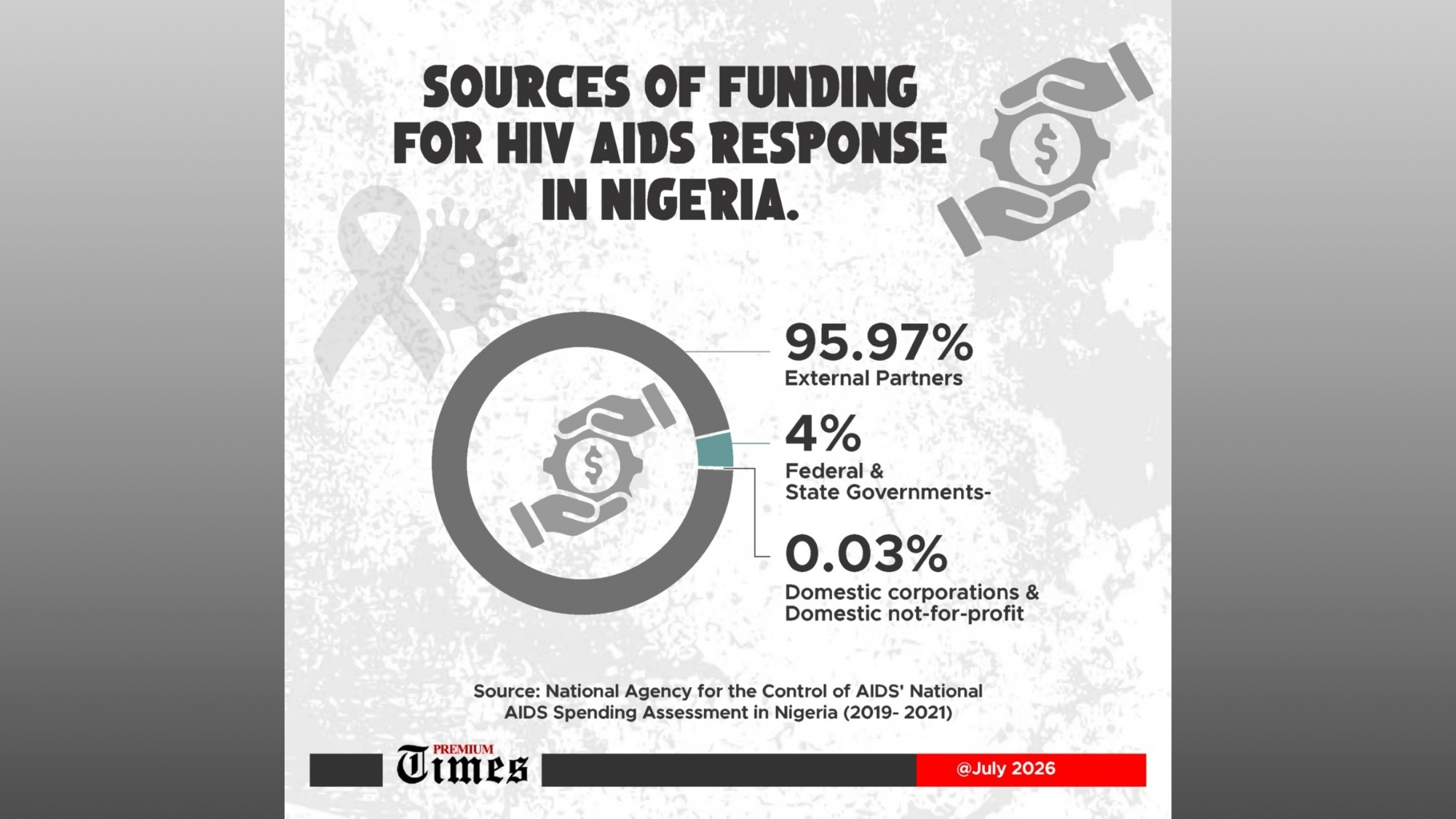
“We should not continue relying on the United States alone for HIV response while neglecting the legal protections that encourage people to seek treatment without fear.”
Rivers State has not passed a similar anti-stigma law, although its budgets have included money for the process.
Lawyers Alert, a legal and human rights group that helps vulnerable people, including those living with HIV, said the lack of enforceable state laws weakens public health and human rights protections.
Its Legal Adviser, Peace Okesola, said fear of discrimination stops some people from getting HIV tests, revealing their status, or starting treatment early.
“The passing and implementation of HIV anti-stigma laws are not just legislative actions; they are vital public health and human rights steps,” the organization told PREMIUM TIMES.
Assembly Promises Oversight
The Chairman of the Akwa Ibom House of Assembly Committee on Health, Moses Essien, told PREMIUM TIMES that the legislature has done its job by providing funds for the HIV response.
“The House of Assembly has used its power by making sure there is enough money in the budget for HIV/AIDS,” he said.
“Release of funds is for the right agency to apply for.”
He said lawmakers had not seen any formal report saying that approved funds were not released.
About concerns on whether the State Council on HIV/AIDS had held meetings as required, Mr. Essien said the committee would check with the State Agency for the Control of AIDS later this year.
“We will make sure the regulations covering the agency are followed,” he said.
On the unsigned HIV Anti-Stigma Bill, Mr. Essien, who sponsored the legislation, said he recently reminded Deputy Governor Akon Eyakenyi to bring it to the governor’s attention.
He disagreed with claims that the Local Action Committees on HIV/AIDS were inactive.
“I won’t agree that the committee is inactive because I know steps taken by SACA regarding the functionality of all committees,” he said.
He added that Akwa Ibom has set up a Local Resource Mobilisation Committee, led by former Speaker Sam Ikon, to find local funding as donor support decreases.
“As an Assembly that cares about our people's welfare, we will add more budget for HIV/AIDS in the next budget,” he said.
Beyond Budgets, Behind Every Statistic
The questions at the heart of this investigation go beyond just government documents.
Why are HIV funds mentioned by PREMIUM TIMES not shown in budget records? Are the governance structures set up by state laws working as they should? What steps have Rivers and Akwa Ibom taken to keep HIV services going as donor funding lessens? And how will the governments fund community programs that patients and advocates say have disappeared?
For people living with HIV, these questions are not just about governance. They affect whether a missed clinic appointment leads to a follow-up call, whether medicines reach patients afraid to visit clinics, whether newly diagnosed youngsters find support instead of being isolated, and whether progress against one of Nigeria’s biggest public health issues can survive changing funding.
Across the three parts of this investigation, PREMIUM TIMES found a growing gap between the systems set up to support the HIV response and the experiences of people who depend on them.
Budgets reviewed by PREMIUM TIMES show that money was allocated. Laws passed by both states created bodies meant to provide leadership, sustainable funding, and community coordination. Government officials insist that efforts are being made.
Yet key questions about how things are being done, accountability, and preparedness remain unanswered.
Grace’s family still remembers a woman who fought to keep her dignity until she felt the system meant to protect her had failed.
Her story, and those of many others, highlight the human cost of that uncertainty. Behind every missing appropriation, delayed anti-stigma law, and unanswered question about statutory institutions are people whose survival depends not only on antiretroviral medicines but also on governments doing what they have already promised.




Drop your comment
No comments yet — be the first to drop the gist 👇