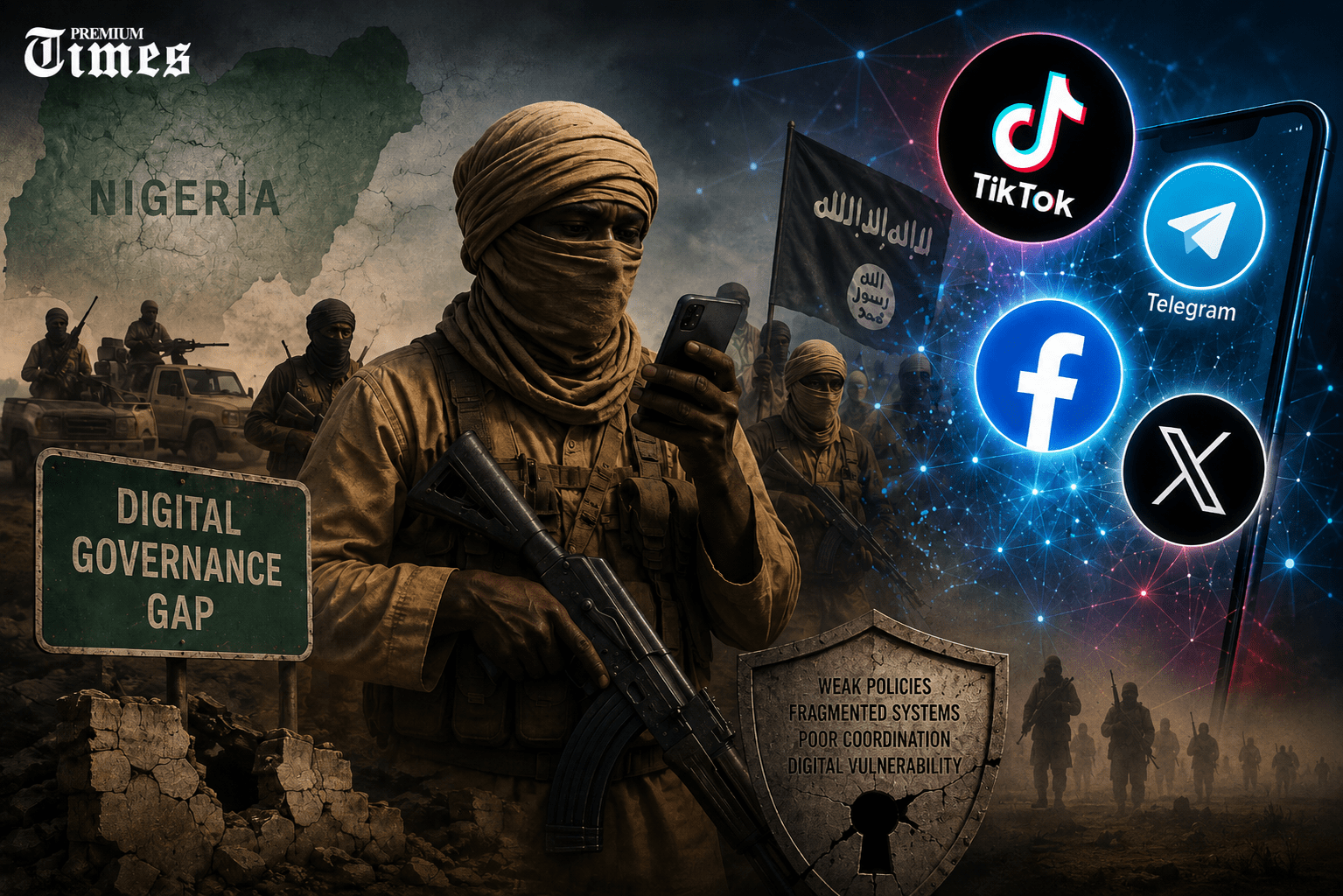
A week after the Boko Haram group, led by Sadiku, killed and abducted over 170 women and children in Woro, Kwara State, the group shared a video on TikTok. In this video, they mocked the Nigerian government, accusing it of “deceit and infidelity” for downplaying the number of kidnapped victims.
The 90-second video was posted by someone using the name Abu Muhammad Abba. This name could be real, but it is more likely a fake name, which is common among jihadists.
After the video went viral in February, both the video and the account disappeared from TikTok. This suggests the account may have been turned off or the video was taken down. A recent check showed the account, likely created in 2025, is back sharing propaganda and sermons from jihadi figures, including the late Boko Haram founder, Muhammad Yusuf.
This message was not just propaganda. It highlights a growing global issue where extremist groups use digital platforms and gaps in digital governance to communicate, spread their message, recruit followers, and show power beyond the battlefield.
A global digital battlefield
The use of social media by extremist groups is not just a Nigerian problem.
From the Islamic State’s media operations to al-Qaeda channels on Telegram, terrorist groups have turned digital platforms into tools for recruitment, propaganda, coordination, and fundraising, according to the Geneva Centre for Security Policy (GCSP).
What were once simple communication tools are now used by extremist groups to shape public opinion and recruit followers. “The war is not [only] about guns and bullets again,” said Malik Samuel, a security analyst at Good Governance Africa (GGA). “It is now more of an information warfare.”
Countries worldwide have been trying to adapt to this new reality.
In West Africa, groups like the Islamic State and al-Qaeda cause chaos in the Sahel and Lake Chad areas. Regional efforts like the Multinational Joint Task Force (MNJTF) and the ECOWAS Counter-Terrorism Coordination Unit focus mainly on sharing intelligence, military cooperation, and ground operations.
In Europe and North America, security agencies see online propaganda as part of a larger system that helps recruitment, radicalisation, and coordination of attacks.
One major effort in Europe involved Europol-led operations that dismantled key parts of the Islamic State’s online propaganda. Instead of just targeting individual posts, investigators aimed at the servers, websites, and apps that allowed extremist content to spread.
These efforts have pushed many extremist groups away from mainstream platforms to more hidden spaces, especially encrypted Telegram channels, where propaganda still thrives, supported by automated accounts and sympathisers.
But the rise of TikTok has opened up new chances for these groups.
Researchers and law enforcement have noted how extremist groups exploit TikTok’s recommendation system to spread their messages further and faster. An Institute for Strategic Dialogue (ISD) report called ‘CaliphateTok’ found at least 20 TikTok accounts supporting the Islamic State that together had over a million views. Europol has also recorded terrorist and violent extremist content on TikTok.
In September 2023, Europol’s European Counter Terrorism Centre (ECTC) and TikTok worked together in an operation that included 11 countries. This operation found over 2,100 pieces of suspected terrorist content linked to jihadist and violent far-right groups.
What sets many Western responses apart is not a lack of extremist content but having dedicated institutions that monitor, analyse, and disrupt terrorist networks online.
For instance, Europol’s EU Internet Referral Unit (IRU), set up in 2015, tracks extremist propaganda and supports online investigations. They also collaborate with tech companies to remove harmful content and maintain databases for criminal cases.
In June 2024, Europol, with Eurojust and US authorities, dismantled online infrastructure for multiple Islamic State media outlets, taking down servers used to distribute propaganda in at least 30 languages.
This operation showed that modern counterterrorism is not just about removing content but also disrupting the digital systems that support extremist groups.
Nigeria’s emerging digital challenge
Nigeria is not far from these global issues.
Over the last decade, Nigeria has put a lot of money into Digital Public Infrastructure (DPI). The National Identification Number (NIN), Bank Verification Number (BVN), mobile networks, and digital government services have built a foundation for a rapidly digitising society.
But while Nigeria’s digital infrastructure has grown, there are doubts about whether enough has been done to secure it against new threats.
The increasing presence of extremists on TikTok and other social media shows the difficulty.
For years, groups like Boko Haram and the Islamic State West Africa Province (ISWAP) used intermediaries and secret websites to share messages about their activities and ideology.
That is changing. TikTok allows armed groups to talk directly to followers, potential recruits, local communities, victims, and even the government.
As TikTok becomes more part of Nigeria’s digital landscape, experts say its misuse by extremists raises serious questions about how DPI affects national security.
Joseph Ekong, a researcher at Stakeholder Democracy Network (SDN), said while using technology for counterterrorism is key, it is also important for the Nigerian government to treat “early-warning and early-response systems as public infrastructure rather than ad-hoc, donor-driven projects.”
The algorithm advantage
TikTok’s design is fast, algorithm-driven, and very engaging, which makes it easy to misuse.
Like many social media platforms, it relies on recommendation systems to show content to users. But the short video format and responsive recommendation system can quickly spread content beyond an account’s followers. This amplification allows propaganda to reach a wide audience fast.
A single video can be downloaded, reshared, and repackaged across many accounts, making it hard to control. The video of the abducted Woro victims is a clear example. While the original clip is gone, copies can still be found on other accounts.
In this way, content moderation becomes reactive while sharing remains proactive.
Experts say this shows a bigger problem. As social media becomes part of national information systems, security institutions must deal with not just physical threats but also the influence of algorithmically amplified operations.
Mr Samuel suggested that the Nigerian government, especially the Office of the National Security Adviser, could “work with social media companies” to shut down extremist accounts. But he also believes that this alone won’t solve the issue, as groups can easily move to other platforms or create new accounts.

A shifting paradigm
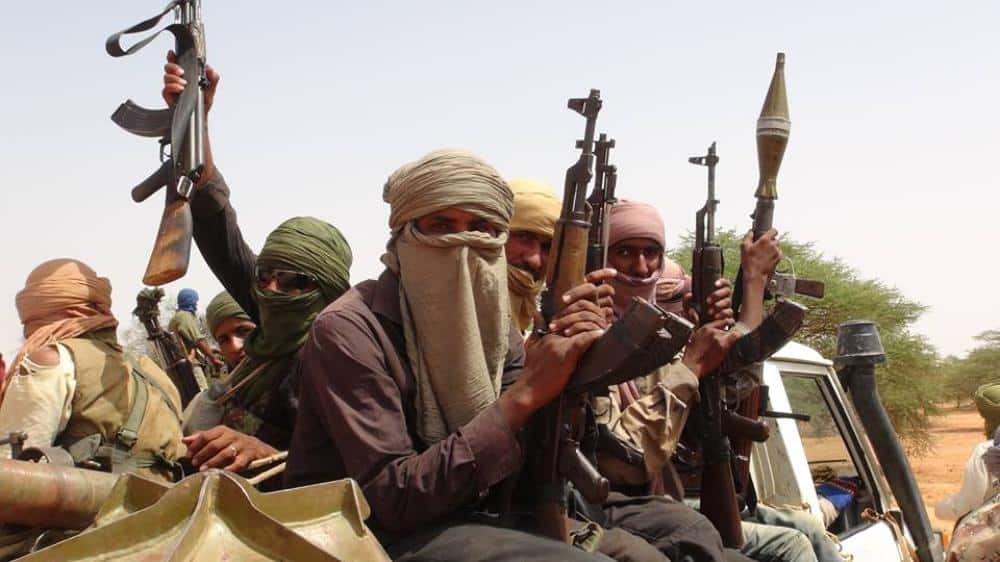
Initially, TikTok was more popular among terror groups without clear political goals, known locally as bandits.
During this report, PREMIUM TIMES monitored over 20 accounts, including some said to be run by bandits linked to the notorious kingpin Ado Alieru.
Recently, however, Boko Haram factions seem to have started using similar methods.
This newspaper found at least two accounts linked to Boko Haram factions. An independent researcher, who asked to remain anonymous for security reasons, connected one account to a faction led by Bakura Doro in the Lake Chad area.
“It started with bandits,” Bulama Bukarti, a lawyer and security analyst, said in an X post. “Now, Boko Haram members are hosting live TikTok shows, spreading propaganda, justifying their violence, and threatening anyone who dares speak against them.”
Mr Bukarti noted that the insurgents interact with viewers in real time, answering questions, responding to comments, and creating a disturbing sense of community.
“Some of their pre-recorded videos have hundreds of thousands of views,” he added. “At this rate, it’s only a matter of time before they start livestreaming attacks.”
He advised that Nigerian intelligence should work with TikTok to “shut down terrorist and bandit accounts.”
A system struggling to respond
Nigeria’s response to this growing threat has been inconsistent.
Responsibility for digital security is divided among various groups, including law enforcement, intelligence services, and communication regulators. Although some coordination exists, researchers and policymakers have pointed out issues with information sharing, overlapping roles, and cooperation between agencies.
While several agencies watch different aspects of cybercrime, terrorism, and online activity, there is no clear system for tracking extremist content across platforms or analyzing digital threats across agencies.
This fragmentation reflects broader issues in Nigeria’s security setup, where information is often kept separate, and coordination can be slow.
The National Counter Terrorism Centre (NCTC) did not respond to requests for comments from PREMIUM TIMES. However, last year, Adamu Laka, the centre’s Director-General, said the government was partnering with social media platforms to identify and remove accounts linked to terrorists.
This shows that officials see the growing digital part of terrorism. Data from TikTok’s transparency report showed that the platform received 33 requests from the Nigerian government to take down accounts between January 2023 and mid-2025. This included 24 content from 55 accounts, with 30 taken down for breaking community rules and local laws.
But experts say that just removing accounts won’t solve the bigger issue.
Mr Samuel thinks that merely taking down accounts may give only short-term relief. Instead, he said the government should engage knowledgeable clerics and credible community voices to provide alternative messages on the same platforms that terrorists use.
Automated moderation tools often struggle with local languages. Human moderation for African content is also limited, leading to gaps that violent actors can exploit.
To tackle this, Mr Samuel suggested more collaboration with local tech companies that understand the language and culture better.
Influence, recruitment and radicalisation
Using TikTok is not just about showing attacks. It also raises worries about influence and recruitment.
Short videos are easy to watch and share, making them great tools for shaping ideas. Over time, seeing such content repeatedly can normalise extremist views or desensitise viewers to violence.
For younger users, who make up a large part of TikTok’s audience in Nigeria, this is a serious risk.
Subtle and misleading messages from terrorists could lure frustrated, jobless youths into their ranks, according to Mr Samuel.
Unlike traditional recruitment, which often needed physical networks, digital paths are more spread out and harder to spot. A user might see a video, follow an account, and then be drawn into more private spaces where deeper engagement occurs.
However, identity matters too. Nigeria has invested a lot in the NIN as the country’s main identity system. But how does this help hold digital platforms accountable? Can accounts linked to terrorists be traced through stronger identity checks? Can social platforms work with governments without breaching privacy rights? Can digital identity systems support lawful, rights-based security checks?
These are tough but necessary questions. Analysts believe that without trusted identity systems in the digital space, anonymity becomes a tool for violent groups.
The governance gap
At the core of the problem is a gap in digital governance.
Nigeria has not fully aligned its security strategies with the realities of digital threats. There are laws, like the Cybercrimes Act and the Terrorism Prevention Act, that make online terrorist activities illegal. But these laws do not fully address the speed and scale of platforms like TikTok.
Implementation is messy. Coordination between institutions is weak, and technical skills are limited. Existing laws provide a base for enforcement, but there is no clear, integrated policy for monitoring, holding platforms accountable, and sharing digital intelligence.
This gap is not only about rules; it is also about readiness, Mr Ekong said.
Without systems to track, analyze, and respond to online threats in a coordinated way, the government falls behind groups that are quick to adapt, taking advantage of policy gaps and delays in enforcement.

Drop your comment
No comments yet — be the first to drop the gist 👇