
A new study from the University of Cambridge says that some Boko Haram fighters used advanced artificial intelligence (AI) tools, including ChatGPT, Claude, Gemini, Grok, Meta AI, and DeepSeek. They used these tools to plan attacks, make explosive devices, and improve their operations on the battlefield.
The report, titled ‘God has helped us, and so will AI: How the Terrorist Group Boko Haram Uses Frontier AI,’ is based mainly on 57 interviews with 27 former Boko Haram members in North-east Nigeria between 2025 and 2026.
Antonia Juelich, a terrorism researcher at the Cambridge Programme on AI Science & Policy (CASP), wrote the study. It claims to be the first to show field-based evidence of AI use by terrorist groups.
A review of the 93-page report by PREMIUM TIMES found that many claims in it could not be independently verified. Many are based on interviews with Boko Haram defectors, which raises questions about their reliability.
The researcher recognized these limitations, mentioning that many claims could not be confirmed due to the secretive nature of Boko Haram and the challenge of reaching active members. The report does not provide forensic proof, platform records, or technical data linking Boko Haram to the identified AI systems. It also does not say whether the companies behind those products were contacted for comments about the group's use of their services.
The researcher stated that the study cannot show if AI really improved Boko Haram’s operations. Instead, it captures the views of former members who believed the technology made them more effective.
Now in its 17th year, the Boko Haram insurgency has killed over 35,000 people and displaced more than two million in Nigeria’s North-east. The violence is spreading to other areas despite military efforts to stop it.
Unlike earlier studies that mainly looked at extremist propaganda, this report says Boko Haram’s two factions, the Islamic State West Africa Province (ISWAP) and Jama’atu Ahlis Sunna Lidda’awati wal-Jihad (JAS), have used advanced AI in combat.
Former members interviewed for this study said they used AI tools for attack planning, improving security, troubleshooting weapons, logistics advice, and designing improvised explosive devices. Some even claimed AI helped commanders come up with battlefield tactics and improved the use of drones.
“We mostly used it in three ways: the first one is to learn how to assemble and use guns and how to manufacture bombs,” a former ISWAP commander told the researcher. “The second one is for surveillance, like how to improve our surveillance strategies to monitor what is happening in our camps and also to better understand our enemy and prepare attacks. The third one is to make plans, like when we come up with new ideas on how to attack, we ask it for tactics on how to make it work in practice to be successful.”
The researcher also mentioned that the insurgents figured out how to bypass AI safety measures with techniques from foreign trainers, which allowed them to get responses that commercial AI systems typically limit.
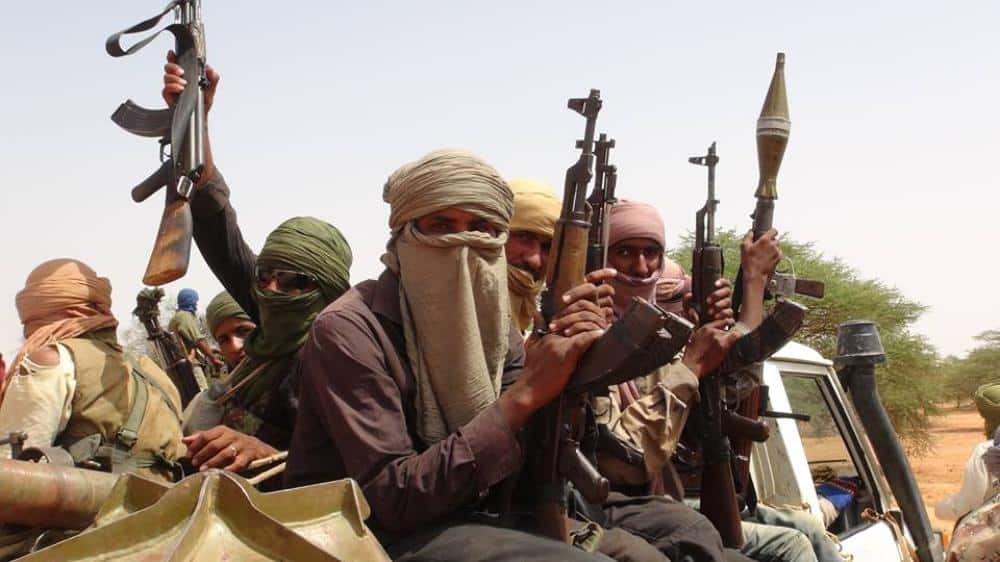
One major claim in the study is that foreign Islamic State fighters allegedly introduced AI to ISWAP around 2023. “The white guys came and taught us,” Juelich quoted a former ISWAP mid-ranking commander. He explained that he was talking about trainers from Libya, France, and Arab countries.
Former commanders who spoke to the researcher said these foreign trainers provided laptops, virtual private networks (VPNs), encrypted software, and paid subscriptions to various AI platforms while training selected commanders.
The report says dedicated AI units were set up in both ISWAP and JAS to manage access to AI tools, train other fighters, and aid in operational planning.
While the report does not suggest specific policy measures, the researcher calls on governments, AI companies, and the academic community to work together to understand and respond to how terrorist groups are using AI.
“The specific policy implications are beyond the scope of this paper,” the author wrote, adding that the study mainly aims to present findings that could guide future policy discussions.
The researcher believes more attention should be given to how terrorist groups could use AI for less dramatic but still important tasks like logistics, communications, planning, and fixing weapon systems.
She also recommends more research to find out if AI use extends beyond Boko Haram to other Islamic State affiliates, al-Qaeda-linked groups, and non-jihadist armed groups. Such studies are needed to see if the patterns observed in this research are common in other militant groups.
Furthermore, the researcher urges AI developers and policymakers to involve conflict and terrorism experts more directly in AI safety checks. She argues that just technical testing cannot fully show how militant groups make decisions or use new technologies. Understanding the motives and structures of these groups is key to assessing AI-related security risks accurately.
Overall, the researcher believes that the findings should encourage governments, intelligence agencies, and AI companies to rethink how quickly terrorist groups might adopt advanced AI technologies. She stresses that figuring out the right policy response is beyond what this study covers.


Drop your comment
No comments yet — be the first to drop the gist 👇