
Recently, a former head of state and president who led Nigeria at two different times spoke out in the media about why courts should not decide electoral matters, especially elections. He called court decisions on these issues "Cathedral judgements." Many people have been making similar statements lately, as if this trend is completely new and strange in Nigeria. In a country where many people suffer from "collective amnesia," we need to look into whether the courts have gone too far in handling election matters and whether this is really a new trend in our electoral and judicial issues.
For younger Nigerians who might not care much about our political history, it can be easy to think this is a new thing that started in the last twenty years. But that is not the case. If we look back to the beginning of the Second Republic in 1979, our political transition program, interestingly led by the same former president who made the claim, saw the presidential election end up in court. The Supreme Court ruled that late Alhaji Shehu Shagari was the duly elected president.
I remember how, as a secondary school student, I sat with my late father, glued to the television on NTA Ibadan, watching the presidential results announced by the well-known broadcaster, Mr Bankole Laotan. This happened after the results were approved by the National Electoral Commission led by the late Chief Michael Ani in 1979. The main candidates were Alhaji Shehu Shagari of the National Party of Nigeria (NPN), Chief Obafemi Awolowo of the Unity Party of Nigeria (UPN), Dr Nnamdi Azikiwe of the Nigeria People’s Party (NPP), Alhaji Aminu Waziri of the Great Nigeria Peoples Party (GNPP), and Alhaji Aminu Kano of the Peoples Redemption Party (PRP).
Even as kids, we knew the NPN had a wider reach than the other parties, even though the three main parties had strongholds in their regions. When Chief Obafemi Awolowo went to court, I was curious. His party didn’t have enough votes to come close to winning, and he also failed to get the required twenty-five percent of votes in two-thirds of the states, which was meant to be thirteen out of the then nineteen states. But he went to court because the winner also didn’t secure two-thirds of the votes in thirteen states. Shagari won in twelve states and had a good number of votes in the thirteenth state. Chief Richard Akinjide made a strong case in court, arguing those votes counted as two-thirds of the required twenty-five percent in that thirteenth state. The Supreme Court accepted his argument and confirmed President Shagari's victory.
I still remember how Chief Akinjide earned the nickname "Mr twelve two-thirds" after that legal battle in 1979. Before the fall of that republic on December 31, 1983, the presidential election that year, even with a new National Electoral Commission chairman in late Justice Ovie Whiskey, also ended up in court. The governorship elections in the old Ondo, Oyo, and Bendel states also faced court challenges. The Ondo State election got a lot of attention due to violence after late Chief Omoboriowo was declared the winner, only for the tribunal to later reverse it in favor of then Governor Adekunle Ajasin, led by the respected late Dr Justice Olakunle Orojo to the Supreme Court. The transition during President Ibrahim Babangida's time did not see much electoral litigation, except for the National Assembly elections, before the annulment on June 23, 1993, of the widely praised presidential election on June 12, 1993. So, there wasn't much focus on electoral lawsuits during that time.
Jump to the 1999 presidential election, which also went to the Supreme Court. Chief Olu Falae from the ANPP/AD alliance challenged Chief Obasanjo of the PDP for the win. Late President Muhammadu Buhari ran in the 2003 presidential election as the ANPP candidate and again in 2007 as the Congress for Progressive Change (CPC) candidate, losing all until he won in 2015 as the All Progressives Congress (APC) candidate. It’s fair to say President Buhari went to the Supreme Court at each of those elections to protest the results. It was his right.
In elections held under President Obasanjo in 2007, the gubernatorial results in Ondo, Edo, and Osun states were also decided by the courts after petitions were filed. Interestingly, the courts overturned the results in favor of the petitioners one by one. Just like how the court validated Governor Hope Uzodinma's petition, affirming his victory during his first term, both Messrs Peter Obi and Rotimi Amaechi had also benefited from judicial actions in their states to become governors. How can we forget this so quickly?
We need free and fair elections in our democracy, but I believe a key part of democracy is missing in Nigeria today. That is sportsmanship. Politicians find it hard to accept defeat, even when it is clear they lost an election. From Ani to Whiskey to Eme Awa to Nwosu to Okon Uya to Dagogo-Jack to Akpata to Guobadia to Maurice Iwu to Jega to Mohamed Yakubu and now to Amupitan, Nigerians have always criticized electoral commission heads after every election. From ECN to FEDECO to NEC to NECON and now to INEC, it is always the same story when politicians lose elections. They claim the electoral body is "compromised."
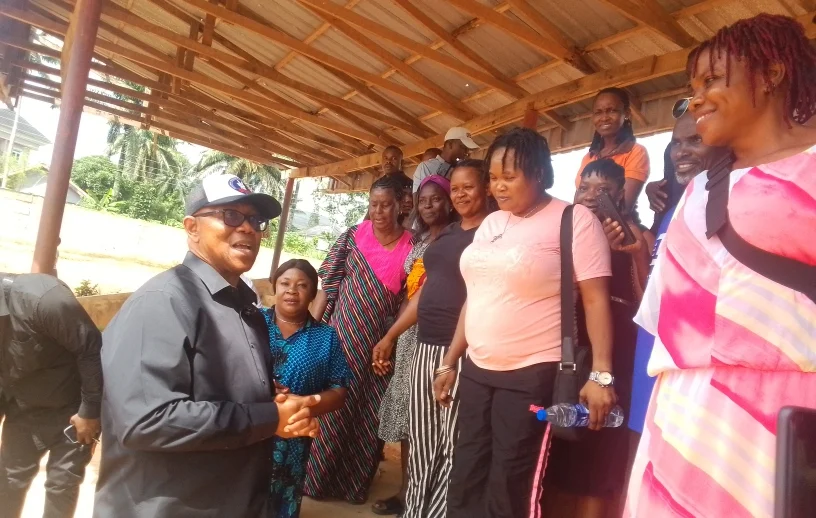
This is where Dr Goodluck Jonathan (GCFR) comes in. He is seen as a symbol of electoral sportsmanship today because he accepted the outcome of the 2015 presidential election, even when his party members wanted him to fight it. Today, President Jonathan is recognized globally for that decision. We still remember the actions of then Minister Orubebe at the results collation center in Abuja in 2015. I also remember that the late Chief Adefarati, who was then the governor of Ondo State in 2003, did not take the winner, late Dr Segun Agagu, to court after the contentious election results were declared. He accepted defeat and returned quietly to his village. Now that the campaign season is here again and elections are approaching, it seems no lessons have been learned about sportsmanship in elections.
I don’t want to downplay the need for credible, free, and fair elections, but even when elections are fair, are the losers ready to accept defeat? Isn’t it funny to hear the first runner-up in the last Osun State gubernatorial election claiming he is studying results from an election with a margin of over sixty thousand votes, especially when the leader of his party, the president, has congratulated the winner? This is my concern for democracy in Nigeria.
Lawyers have a part to play in this. While it is a loser’s constitutional right to seek justice in court, not every case is worth pursuing, unless for the money involved. Critics might argue that "lawyers need to eat too." The divisions in Nigeria are so deep that they can easily lead to crisis. Tribe, religion, and ethnicity become tools for politicians who create false narratives that cause problems.
The issue is not whether the courts have interfered in our political process, as that is their constitutional duty. They have always played this role since our democracy began, even with the insults that come with it. The real issue is for our politicians to understand that elections are like games; there will always be winners and losers. It won’t be surprising if this situation continues in 2027 after the presidential elections, as the candidates’ comments do not suggest otherwise, even after signing a peace treaty. This is where all Nigerians who care for the country must step in to ensure there are no problems after the elections.
Many things are happening in Nigeria right now that require serious thought. It affects all parts of society, social, economic, political, and religious. But even in these tough times, there are chances for those who are smart and have positive mindsets. Those who can turn bad situations into good ones. They see problems and create solutions, which are economically beneficial. Young people are building wealth and businesses from the issues in our country. Positive minds in telecoms, IT, academics, sports, and entertainment have put Nigeria on the global map in the last ten years. They have become proud representatives of the country, always looking ahead with hope.
Politicians should support these young people by encouraging them with their actions and not scaring them with stories of our troubled past. Patriotism and positivity are key here. We need to inspire citizens to love Nigeria and assure them that there is hope in their country. This hope must be shown in real ways. Nobody benefits from a country torn apart by war; we have seen examples in Syria, Libya, and Congo. My hope is for us to continue living peacefully in our beloved Nigeria.
Drop your comment
No comments yet — be the first to drop the gist 👇