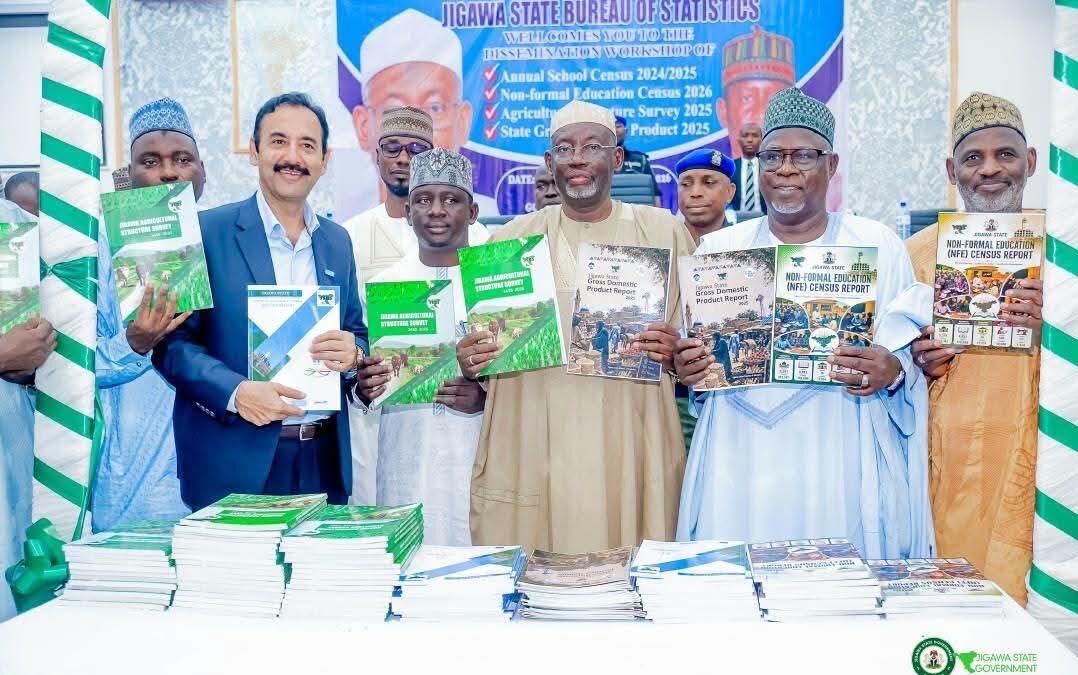
The Jigawa State Government has shared new information on education, agriculture, and the economy. This data will help in setting development goals, improving public services, and making informed decisions.
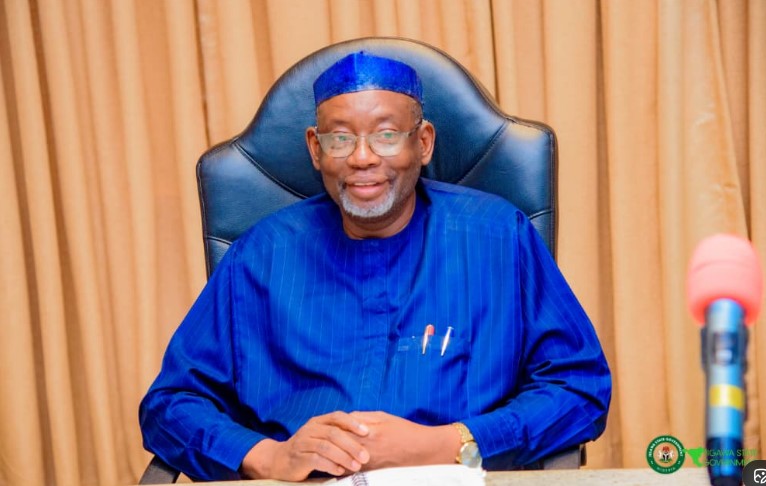
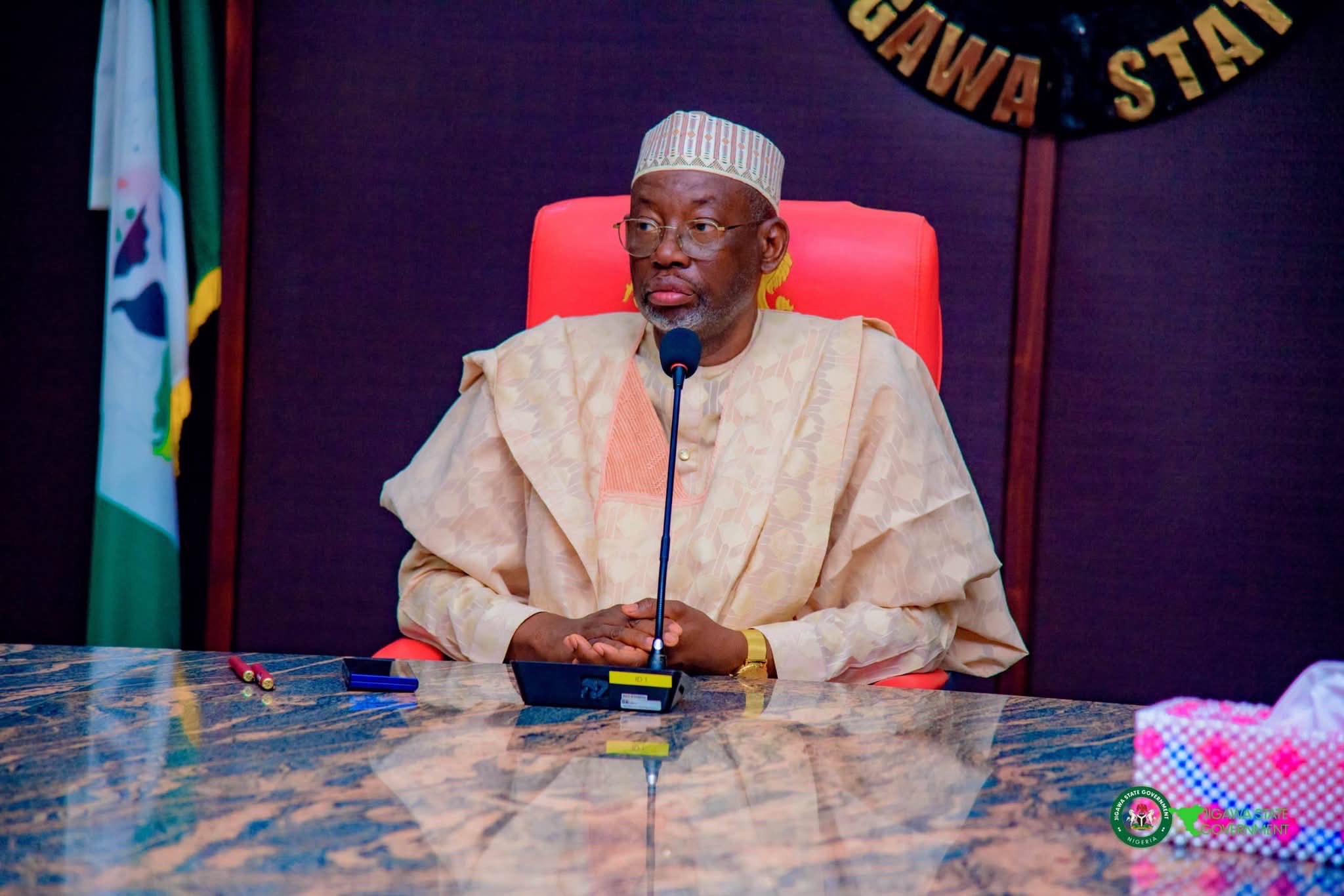
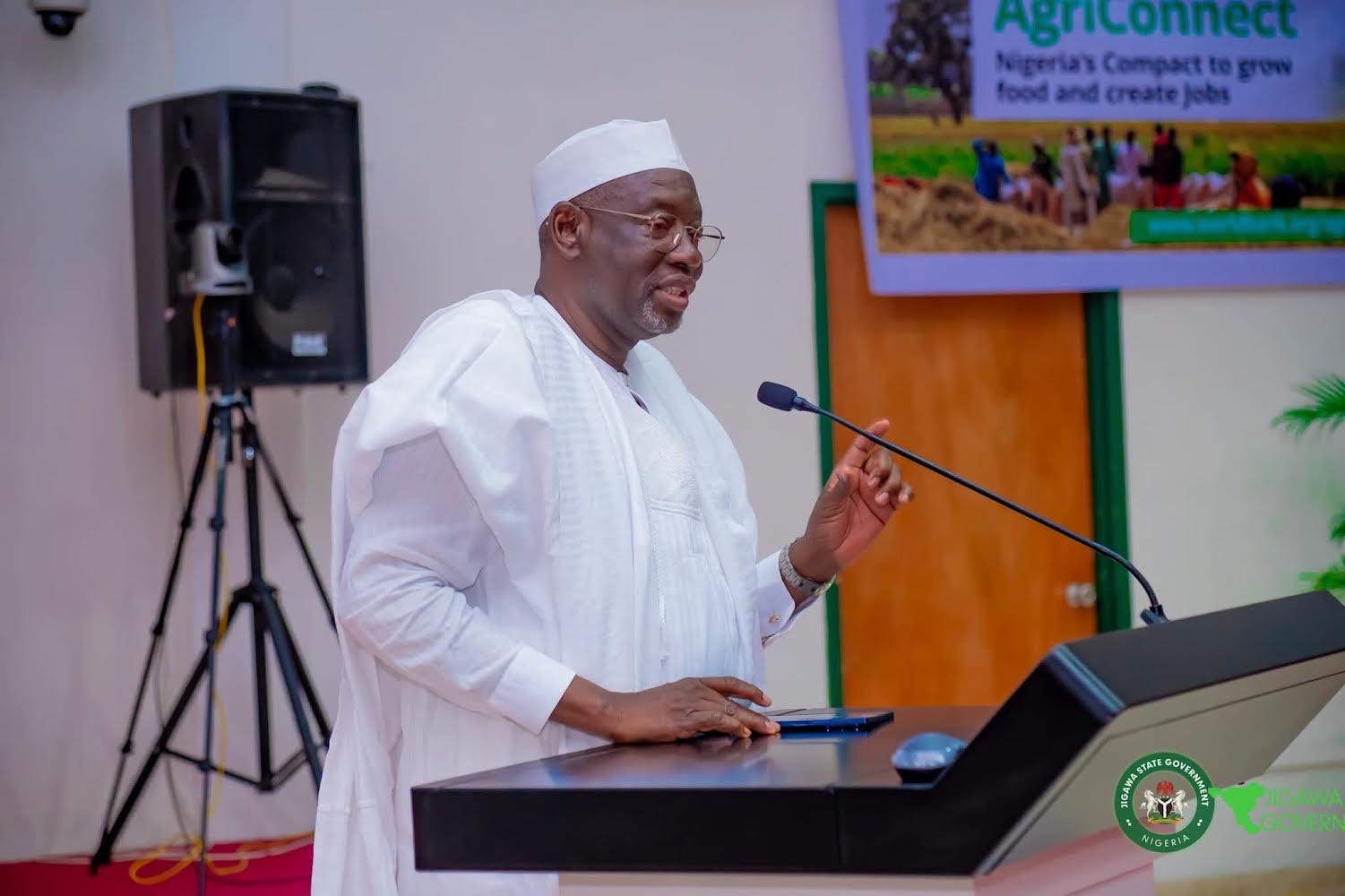
The information was presented in four major reports on Tuesday by Governor Umar Namadi. The event took place at the Banquet Hall, Government House, Dutse.
The reports include the 2024/2025 Annual School Census, Non-Formal Education Census, Agricultural Structure Survey, and Jigawa State Gross Domestic Product (GDP) Survey for 2019 to 2025. Governor Namadi stressed the importance of using accurate data to find gaps, allocate resources wisely, and measure progress in key areas.
At the event, Governor Namadi called the reports a big step in improving the state’s statistical system and making better decisions in the public sector.
"Statistics are not just numbers. They are the backbone of socioeconomic planning. They guide smart decisions and help assess performance and accountability for results," he said.
The 2024/2025 Annual School Census counted 1,320,770 pupils in both public and private primary schools. Of these, girls made up 752,921, or 57 percent. The census noted 999,130 pupils in public primary schools, 214,166 in public junior secondary schools, and 137,795 in senior secondary schools. It also found 167,975 children in one-year pre-primary education.
While 84 percent of public primary school teachers, 83 percent of junior secondary teachers, and 82 percent of senior secondary teachers had the right qualifications, the pupil-teacher ratios were still high at 96:1, 57:1, and 38:1, respectively.
Governor Namadi said the results highlighted the need for more teacher recruitment and better deployment. He mentioned ongoing efforts, including the recent issuance of appointment letters to 2,020 new teachers, to fill staffing gaps.
The first Non-Formal Education Census covered all 27 local government areas. It found 10,197 centers serving 1,116,289 learners in Islamiyya and Tsangaya schools, adult education, and vocational skills programs.
The report also looked into the living conditions of Almajiri learners. It showed that 66 percent relied on community support for meals. It highlighted serious accommodation issues, with 61.1 percent of sleeping facilities needing major repairs, and 3.5 percent considered unusable.
Women made up 71.1 percent of adult education learners. Female participation in vocational training was 1,804 out of 2,462 trainees.
The governor said these findings will help improve Tsangaya education, enhance learner welfare, and boost adult literacy and vocational training. He mentioned the establishment of the Tsangaya Education Board to push for reforms in this area.
The Agricultural Structure Survey looked at 955,410 farming households. It studied crop production, livestock, land ownership, irrigation, and access to agricultural support services.
The survey showed 943,563 households were into crop production and 705,952 were involved in livestock farming. Sadly, access to support services was low: only 7.1 percent had contact with extension services, 3.9 percent accessed credit, and 1.9 percent were part of cooperatives.
It also found that 91.1 percent of households did not keep farm records. The adoption rate for irrigation stood at 15.1 percent. In terms of food security, 25.2 percent of households were fully food secure, while 34.3 percent faced severe food insecurity.
Governor Namadi said these findings will help improve irrigation, strengthen extension services, increase access to agricultural finance, support cooperative farming, and encourage commercial agriculture.
The Jigawa State GDP Survey assessed the state’s economic performance. The state’s nominal GDP grew from ₦3.62 trillion in 2019 to ₦5.65 trillion in 2023, marking a 35.92 percent increase.
Governor Namadi said the findings will help with investment, economic diversification, job creation, and long-term planning.
To ensure the reports lead to real changes, he asked the Bureau of Statistics to collaborate with the Ministry of Budget and Economic Planning and relevant agencies. They will integrate the findings into sector reviews, strategies, and the state budget cycle.
The governor also told government agencies to involve the Bureau in all major data-gathering tasks. This includes everything from design to analysis so they can avoid duplication and save costs while ensuring data credibility.
"These reports must be used for action, not left on shelves. Their real value will show in better schools, more learning opportunities, improved agriculture, stronger economic growth, and better public services," he said.
Governor Namadi reiterated his commitment to using data for good governance, effective implementation, and accountability in delivering development for the people of Jigawa State.



Drop your comment
No comments yet — be the first to drop the gist 👇