The internal issues within the Kwara State All Progressives Congress have opened a door for the Peoples Democratic Party to plan a comeback after being out of power for seven years. DARE AKOGUN looks at how the changes among the political elite might turn into votes to change the political landscape created by the 2019 ‘O to ge’ movement.
In Kwara politics, a few slogans have carried the emotional weight of O to ge (enough is enough). This movement was not just an election slogan. It was a political coalition of various groups and individuals set on one goal: ending the long political control of former Senate President Bukola Saraki. This led to the rise of the All Progressives Congress in 2019.
But now, seven years later, there is clear unrest against the APC that cannot be ignored. Some of the key players who helped defeat the PDP are now in conflict with the political structure that came from that movement.
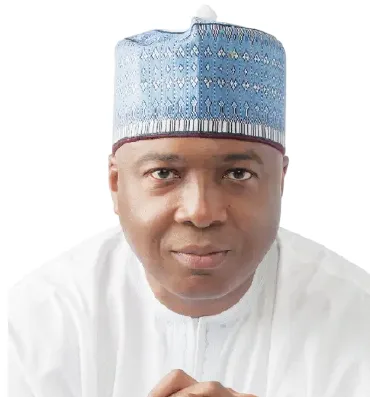
Keeping a close eye from the opposition is Saraki, whose political structure was the main target of the O to ge movement. The PDP is working to strengthen its base around Saraki and has allowed him to engage with unhappy APC members and other political players as they prepare for the 2027 governorship election.
This situation is more important because of the disagreement between the APC leadership and a group of politicians that started as the G15 but has now changed its name to The Otoge Progressives.
The first real test of this rebellion came on August 20. Senator Saliu Mustapha, who represents Kwara Central and is a leading voice in the G15/TOP, officially left the APC and took the PDP senatorial ticket for Kwara Central.
Mustapha said he made this choice after weeks of talks with stakeholders, supporters, and constituents in Kwara Central. He mentioned it was due to “recent developments within the party in the state.”
With Mustapha now on the PDP ticket, the opposition has a candidate with name recognition and a political structure to see if these elite shifts can actually translate into votes at the grassroots level.
In Kwara South, Hon. Saheed Popoola, a former ally of Governor Abdulrahman Abdulrazaq and ex-member of the Kwara State House of Assembly, will run on the PDP platform.
In Kwara North, the party has chosen Kolo Jiya, who ran for the NNPP in 2023 and just switched from the APC. These nominations show the PDP's plan to use recent APC defectors to challenge the ruling party's hold on power throughout the state.
From G15 to TOP
The current disagreement in the APC did not happen suddenly. In June 2026, a group of APC governorship hopefuls and key party members publicly expressed their worries about how the party was being run.
This group became known as G-10 and later G-15. Notable members include senators Saliu Mustapha and Yahaya Oloriegbe, Yahaya Seriki-Gambari, Bashir Bolarinwa, and Dele Belgore, among others.
At a town hall meeting in Ilorin, the group’s convener, Ibrahim Oloriegbe, said, “This change reflects the remarkable growth of our movement and our unwavering commitment to preserving the ideals that inspired the historic Ótógé movement of 2019: internal democracy, inclusiveness, fairness, accountability, and people-centered leadership.”
The PDP’s Chance and Its Caution
The PDP is clearly eager for this opening, but they also know that depending only on APC's problems could be risky. The PDP’s publicity secretary in the state, Olusegun Adewara, said they expect these internal disagreements in the APC to help them take over Government House. The PDP must show it is a strong alternative, not just take advantage of the ruling party's troubles.
“Elections are not won by the weakness of your opponent alone; they are won by the strength of your own organization, your message, your candidates’ connection with the people, and, most importantly, the all-around leadership failure of the current administration,” Adewara said.
While calling Saraki a key figure in the Kwara PDP, Adewara stressed that the 2027 election should not just focus on Saraki's return.
“2027 is about the future of Kwara; how to secure the state from the grips of bandits and kidnappers, not merely the return of an individual or political structure,” he said.
A former Kwara APC Publicity Secretary, Tajudeen Aro, also told Sunday PUNCH that these divisions could offer the opposition a chance to return to Government House if many of the unhappy politicians decide to join the PDP.
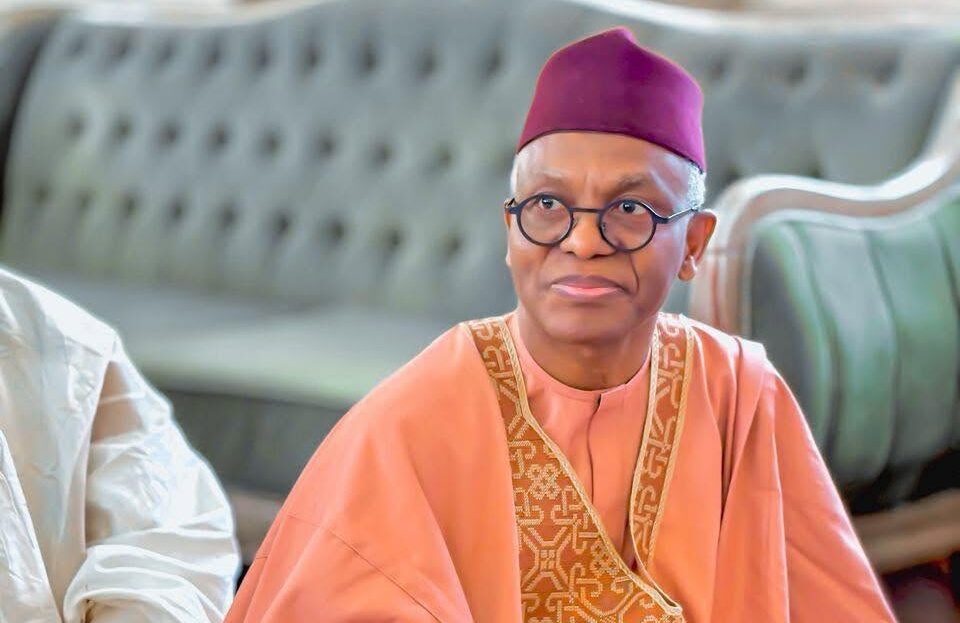
“It may not be possible to move with the whole G15, but most of them will share the same vision. That vision is the removal of AbdulRazaq from Government House,” he said.
He added that Saraki remains a key player in the new opposition strategy.
“Saraki has been loyal to the PDP and very strategic. He knows the value of local politics, and he is playing along,” Aro said.
APC Downplays Threat
But the ruling party is not ready to admit that the G15 or TOP could be a real threat.
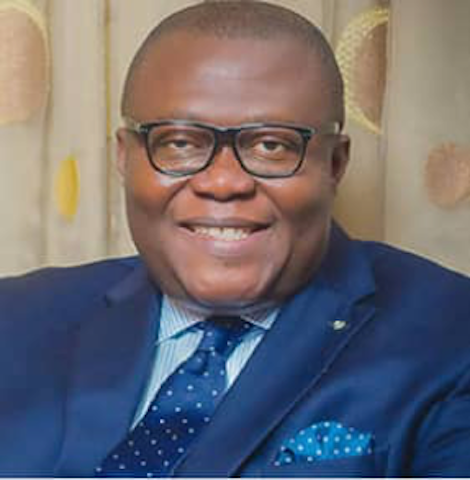
Mashood Alaka, the Senior Special Assistant to the Kwara State Governor on Party Affairs, told Sunday PUNCH that the disagreement is an issue they can resolve.
“I would not describe the G15 as a crisis or a threat to the Kwara APC. I believe the situation is an internal political disagreement that can be managed within the family of the party,” he said.
To him, the APC has strong grassroots support across the state and will approach the 2027 election from a strong position. He mentioned political leaders, ward structures, supporters, and many people who he said are happy with the government’s direction.
But he also acknowledged the need to engage unhappy party members, believing that discussions are always good in politics and that the APC is a family. “When there are disagreements among members, the right response is to sit down, talk, and find common ground,” he said.
While Alaka promotes reconciliation, he warned that this should not be seen as a sign of weakness.
Another APC leader, Sodiq Adio, told Sunday PUNCH that he sees the G-15 controversy as “mere white noise.”
He questioned how much electoral strength the G-15 members really have, saying, “If you look at their political weight individually, only a few can claim to have a strong grassroots base.”
Numbers Behind the Politics
The election figures show a clearer warning against easy conclusions. The APC's margin in 2019 was 216,792 votes. By 2023, it dropped to 117,934. That is a loss of 98,858 votes, even though the party still won all 16 LGAs.
But the margins in some areas also shrank. In Ilorin West, the APC's lead fell from 29,704 votes in 2019 to 14,096 in 2023. In Edu, it dropped from 20,631 to 5,080. In Ilorin East, the margin went from 20,633 to 9,425. In Offa, it fell from 17,702 to 7,991.
None of these figures means the PDP won, but together, they show that the political wall built in 2019 is not as strong four years later. This is the statistical connection between the “O To Ge” movement and the 2027 question. The APC cannot just assume its 2019 margin is safe.
At the same time, the PDP cannot think a smaller APC margin means victory is already theirs.
Saraki’s Challenge
Sunday PUNCH points out that Saraki has something many opposition politicians lack, deep knowledge of Kwara’s political landscape and a network built over many years. He knows elite alliances matter, but this strength can also be a weakness.
There is no doubt that the G15/TOP crisis has opened a political door for Saraki. It gives the PDP access to politicians who were once on the other side. It allows the opposition to challenge the idea that the “O To Ge” coalition is still united.
But Saraki and the PDP can bring in politicians without also getting their votes. The party can gain political structures without automatically getting the voters with them and take advantage of the APC's declining electoral margin without thinking it will completely disappear in 2027.
A PDP House of Representatives aspirant, Titilope Joseph, believes the party must create a new political message, even if Saraki is “a rallying political figure in Kwara.”
He feels the political situation in 2027 will be different from 2019. The party cannot just ask voters who participated in O To Ge to come back because the APC has let them down. The PDP must also explain why returning to them will not mean going back to the old ways.
However, political analyst Adebayo Abubakar warned against thinking that moving political elites will automatically move voters too. He believes Kwara’s political history shows that caution is necessary. Politicians have often switched alliances, parties, and relationships.
He also questioned how deep the grassroots influence claimed by some G15 members really is, arguing that their political strength varies and should not be seen as a single voting bloc.
“Most of them call themselves grassroots mobilisers, but many have no real roots, while those with roots do not have a wide reach.
“The number of these aspirants is uncertain. So counting them as if they are equal to Saliu Mustapha or others who have been around for a long time will be misleading. They don’t have the same level of popularity among voters,” he said.
But Sunday PUNCH notes that while the ruling party is weaker now than in 2019, it is still the main political force. The G15/TOP has stirred political chatter and may create a real coalition chance, but how well it can transfer votes remains untested.
The main question is not whether “O To Ge” can be undone. It is whether the political coalition that led to it has met the expectations that formed it and if voters believe the alternative now represents a real new beginning or just another cycle of the same political elite.


Drop your comment
No comments yet — be the first to drop the gist 👇