Lagos and Kano are the best states for rolling out Multiple Micronutrient Supplements (MMS) for pregnant women in Nigeria. This is according to a new study on market readiness and segmentation.
The study looked at how ready different states are based on factors like financing capacity, demand, supply systems, and how prepared they are to implement the program.
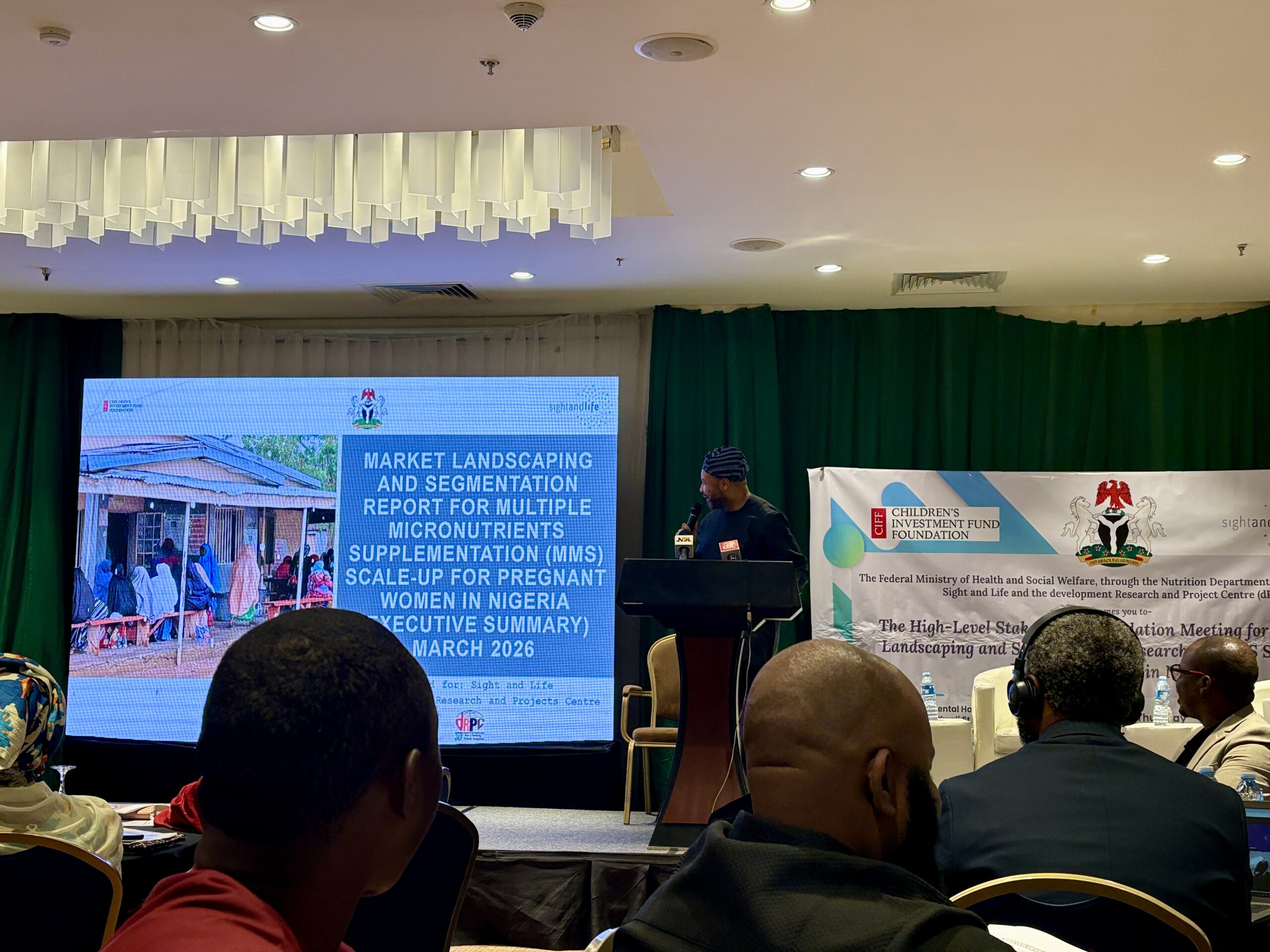
Stanley Ukpai, who is the Director of Projects at the development Research and Projects Centre (dRPC), shared the results in Abuja on Thursday. He said both states are classified as Tier One because they have strong antenatal care (ANC) use, good health systems, financing support, and readiness in logistics.
He mentioned that while both states ranked highest, they have different strengths in their health systems.
Lagos shines with private health sector
In Lagos, the researchers discovered that a strong private health system drives the readiness for MMS. A high number of women use antenatal care services in the state.
Private health facilities provide 82.5 per cent of health services in Lagos. This makes it the most privately driven maternal health market among the six states in the study.
The study pointed out that this setup, along with a good network of health facilities and well-organized logistics, helps Lagos expand MMS quickly.
Kano’s public health focus
Kano’s strong ranking comes from its public health system and the government's commitment to maternal nutrition.
In this state, primary healthcare centres (PHCs) provide 75.6 per cent of health services, showing their reliance on public health for maternal care.
Despite this, Kano matched Lagos in readiness because of ongoing political support and good public funding for nutrition programs.
It is the only state studied that has specific budget lines for both Iron-Folic Acid (IFA) and MMS. Kano also secured ₦500 million in co-financing from the Community and Nutrition Financing program, plus N144 million specifically for MMS procurement.
Other states’ rankings
The study ranked Bauchi and Imo as Tier Two states, while Niger and Bayelsa were placed in Tier Three due to challenges affecting service delivery.
Bauchi showed the highest PHC dominance at 93.7 per cent but struggled with low antenatal care coverage and dependence on donor funding.
Imo has a 49.7 per cent PHC mix and a balanced public-private health system. Even so, access to MMS mainly relies on private pharmacies and retail distribution.
Niger State has 81.2 per cent PHC dominance but faces issues like insecurity, long travel distances, and low ANC uptake, which limit effective MMS coverage.
Bayelsa, with 60 per cent PHC coverage, struggles because of its riverine geography and frequent flooding. This disrupts supply chains and makes MMS availability more of a campaign effort than a regular routine.
Details of the study
The assessment was done in 2025. The Federal Ministry of Health and Social Welfare led the study through its Nutrition Department. They collaborated with Sight and Life and dRPC.
The study included Lagos, Kano, Bauchi, Imo, Niger, and Bayelsa. It used various methods to examine both demand and supply factors.
In total, 162 people were interviewed, including government officials, health workers, development partners, HMOs, Patent and Proprietary Medicine Vendors, facility managers, and pregnant women. 70 of these respondents were pregnant women from the six states and the Federal Capital Territory (FCT).
High pregnancy rates and anaemia issues
Mr Ukpai mentioned that Nigeria has a big problem with maternal nutrition. There are about seven million pregnancies each year.
He referred to the 2024 Nigeria Demographic and Health Survey (NDHS), stating that about 50 per cent of pregnant women suffer from maternal anaemia. This means around 3.5 million cases annually.
He noted that this situation shows the urgent need for public health action and a big opportunity for maternal supplementation programs.
Transition to MMS



Nigeria is moving from IFA to MMS, backed by global evidence and the World Health Organisation (WHO) recommendations.
The federal government first approved MMS in 2021 through a ministerial directive. They later reinforced this policy with the National MMS Roadmap 2025, 2029.
The roadmap aims for 40 per cent coverage in the first phase and 60-70 per cent by 2039.
Mr Ukpai explained that MMS offers wider nutritional benefits and is usually better tolerated than IFA because it causes fewer side effects, like nausea.
But he cautioned that successful implementation will need sustainable financing, strong demand from consumers, and dependable supply systems.
"Scale will only work if the market works," he said.
Funding challenges
The study identified three main ways to fund MMS: public funding, donor support, and Drug Revolving Fund systems.
Federal funding for MMS grew from N20 million in 2024 to N172.6 million in 2025. Donor commitments to maternal nutrition have exceeded $100 million.
At the state level, funding varies greatly. Kano has specific budget lines for both IFA and MMS, while Bauchi set aside N600 million for MMS in its 2025 budget.
Researchers noted that while IFA remains the most used supplement, there is no dedicated federal budget for its purchase.
They warned that long-term sustainability will need stronger domestic funding as donor support decreases.
Awareness and supply issues
Even though many support maternal supplementation, awareness of MMS is low among pregnant women.
Out of the 70 women interviewed, many could not name the supplements they received during ANC visits.
About 40 per cent reported getting IFA, while around 35 per cent did not know the name of the supplement they were taking.
The study found that awareness was much higher among women who received proper counselling during ANC visits.
More than 60 per cent of respondents earned less than N30,000 monthly, and most paid for their healthcare out of their own pockets.
Although MMS is generally preferred for its wider benefits and fewer side effects, cost is a major barrier.
Frequent stockouts also forced many women to buy supplements from private pharmacies or stop using them altogether.
On the supply side, the report showed that MMS availability relies heavily on imports, government procurement, and donor-supported distribution.
More than 10 MMS brands are available in Nigeria, most of which are imported.
Local manufacturers mentioned weak demand guarantees and competition from imports as big obstacles to local production.
Suggestions for improvement
The study suggested dedicated MMS budget lines at both national and state levels. It also called for better procurement systems, stronger supply chains, and incentives for local manufacturing.
It proposed a phased rollout that focuses on high-readiness states like Lagos and Kano while working to improve weaker systems in lower-ranked states.



Drop your comment
No comments yet — be the first to drop the gist 👇