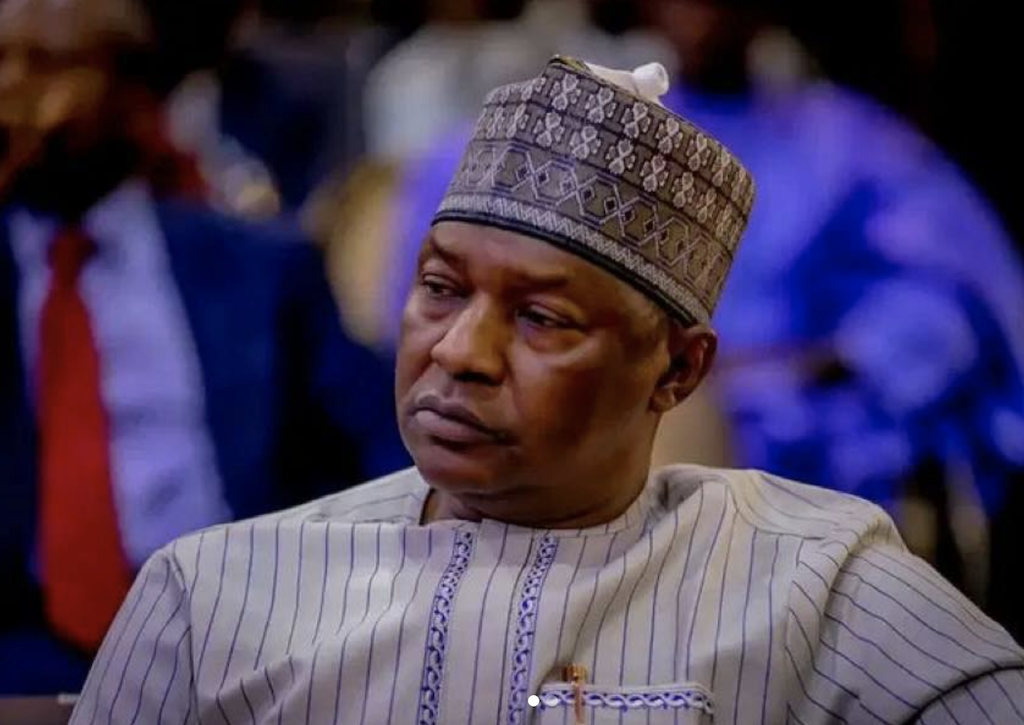
Former Attorney-General of the Federation and Minister of Justice, Abubakar Malami, has rejected the finding from an International Chamber of Commerce (ICC) tribunal. The tribunal said he made a corrupt deal with Leno Adesanya, the promoter of Sunrise Power and Transmission Company Limited, about the Mambilla Hydroelectric Power Project.
In a statement on Tuesday from his Special Assistant on Media, Mohammed Bello Doka, Mr Malami said the tribunal's findings should be seen with the complete evidence and not treated like a criminal conviction against him.
He welcomed Nigeria's win in the arbitration. The tribunal dismissed Sunrise's claims against the Federal Government and ordered the company and Mr Adesanya to pay Nigeria for legal costs.
"The protection of Nigeria from substantial financial exposure is an outcome every patriotic Nigerian should welcome, irrespective of political affiliation," the former AGF stated.
The ICC tribunal, in its final ruling on 16 September, found that a "corrupt deal" was made between Mr Malami and Mr Adesanya over a settlement agreement. This agreement could have put Nigeria at risk of losing up to $400 million in damages.
The issue started with a Settlement Agreement signed on 2 January 2020, where Nigeria was supposed to pay Sunrise $200 million. An addendum signed on 25 March 2020 added a $200 million default penalty, raising Nigeria's potential loss to $400 million.
The tribunal ruled that these agreements were not valid for the Federal Government as they did not have the needed presidential approval. Mr Adesanya testified that Mr Malami and then-Power Minister Saleh Mamman asked him to pay 50 percent of the settlement as bribes.
He claimed they told him Nigeria would pay the first half and that he would get the second half after completing "what is needed." Mr Adesanya said he refused this demand and claimed to have audio and video recordings of their talks, but he did not provide them.
The tribunal said the agreements were based on corruption and could not be enforced under Nigerian law. Mr Malami countered that the Mambilla issue started more than ten years before he became Attorney-General. It has been through many administrations and officials.
He said the problem began in 2003, while his predecessors, including former Attorney-General Michael Aondoakaa, tried to resolve it. According to him, the Federal Government entered a General Project Execution Agreement with Sunrise and Sinohydro in November 2012, long before he took office.
"The Mambilla contractual controversy did not originate during Malami's tenure as Attorney-General. The relevance of this history is straightforward: Malami did not create the Sunrise dispute, introduce Sunrise to the Mambilla project, or start the Federal Government's efforts to settle the issue. He inherited a long-standing dispute that passed through earlier administrations," the statement noted.
Mr Malami stated that he got involved after a presidential directive in April 2016 aimed at resolving disputes around the project. He said his job was to advise the Federal Government on legal risks and options to solve the issue.
He added that the unresolved Sunrise arbitration was blocking financing talks for the Mambilla project, including talks with China Exim Bank. He mentioned a September 2019 meeting with former President Muhammadu Buhari and Yang Jiechi, a representative of Chinese President Xi Jinping, which also discussed resolving the arbitration.
"The records available to the former Attorney-General's office show that the unresolved arbitration was seen as a block to financing discussions with China Exim Bank. Settlement talks did not happen in isolation. They were part of a larger government effort to settle an old dispute and remove a legal barrier to a major national power project," he explained.
Mr Malami defended the $200 million settlement, saying the government aimed to resolve claims worth billions while removing a legal block to financing and implementing the Mambilla project. He noted that Sunrise initially wanted $500 million as a full settlement in negotiations in London in November 2019, while the Federal Government offered $100 million before landing on $200 million.
"The government thought if a multi-billion-dollar risk, ongoing court battles, and financing delays could end with a much smaller negotiated deal, it was worth it. Whether every term ultimately helps that goal is another matter," he said.
Reports say Mr Malami sometimes could not convince the late Mr Buhari to approve the renegotiated agreement. A handwritten note from the tribunal dated 20 April 2020 noted that Mr Buhari withheld his approval because "FG hasn’t got USD 200m to pay (Sunrise)."
The tribunal stated that Mr Malami "failed to provide President Buhari with the correct information," as the late President repeatedly rejected the settlement agreements. Mr Malami acknowledged that former President Buhari refused to approve the $200 million payment.
He stated Buhari indicated in April 2020 that the Federal Government lacked the funds to pay Sunrise, which he communicated to the company. He also mentioned that a later request for approval in January 2021 was turned down by Buhari, who wrote: "Not approved."

The former AGF clarified that he did not order that Sunrise be paid after the president's rejection. Instead, he instructed lawyers representing the Federal Government to oppose Sunrise's efforts to enforce the settlement terms and to protect Nigeria's legal stance.
"Sunrise's attempt to force Nigeria to accept the claimed US$400 million liability was therefore resisted on behalf of Nigeria," he stated. However, the tribunal viewed Mr Malami's actions differently after Buhari's refusal.
It found that he repeatedly sought presidential approval despite the president's rejection of the settlement. The tribunal looked into communications between Mr Malami and Mr Adesanya, including WhatsApp messages about the $200 million. They decided that these interactions were not in line with the roles they were supposed to represent.
The tribunal concluded that a corrupt agreement was made, where Mr Malami was promised a share of the money Sunrise would receive. This arrangement made the settlement agreement and its addendum a product of corruption.
"In conclusion, regarding the corruption claims related to the Settlement Agreement and the Addendum, the Tribunal believes that a corrupt deal was reached between Mr Adesanya and Mr Malami, making the Settlement Agreement and the Addendum a product of corruption," the ICC ruling stated.
In response, Mr Malami dismissed the corruption allegations, saying they should be checked against all records. He questioned if he ever got any money or benefits from Sunrise, Mr Adesanya, or anyone linked to them due to the alleged deal.
He also pointed to evidence from audio and video recordings that Mr Adesanya claimed to have but did not show to the tribunal. "Malami rejects any claim that his official actions were done under a corrupt agreement or for personal gain. These claims must be examined based on the entire evidence," the former AGF said.
The tribunal noted that the recordings of talks between Mr Malami, Mr Mamman, and Mr Adesanya could have been key evidence to support the alleged solicitation. Still, they were withheld by Sunrise and Mr Adesanya. The tribunal made its finding based on other evidence presented.
Mr Malami also rejected the idea that the tribunal's ruling was a criminal conviction against him. An international commercial arbitration tribunal looked at the contractual claims and related issues.
"Malami was not on trial in a Nigerian criminal court, and the arbitration ruling is not a criminal conviction against him," Mr Malami said. He mentioned that he was not part of the arbitration and could not present his own case before the tribunal.
Mr Malami added that this difference did not mean the tribunal's negative findings should be ignored. Still, he insisted that any claims of criminal wrongdoing should follow proper legal channels. The Mambilla Hydroelectric Power Project has been in development for many years and has faced various contractual, financial, and legal problems.
In 2003, the then Minister of Power and Steel, Mr Agunloye, gave Sunrise Power a build-operate-transfer contract to create a 3,050MW Mambilla hydropower plant at an estimated cost of about $6 billion. The agreement expected Sunrise to finance and develop the project, with repayment from electricity sales over many years.
The legality of the award became a key issue in the dispute. In court proceedings in 2025, an EFCC investigator testified that former President Olusegun Obasanjo and the Federal Executive Council had not approved the contract and that Mr Agunloye awarded it on 22 May 2003, just after an FEC meeting where the proposal was said to have been withdrawn.
Mr Agunloye has pleaded not guilty to the criminal charges related to this matter. Sunrise then started arbitration against Nigeria at the ICC on 10 October 2017, seeking about $2.354 billion for an alleged breach of the 2003 agreement.
A settlement was eventually negotiated where Nigeria agreed to pay Sunrise $200 million, with a 10 percent penalty if there was a default. Sunrise later filed another claim for $400 million related to the settlement, which grew to about $680 million with interest.
On Thursday, the ICC ruling denied the related claims, removing a potential combined exposure of over $3.38 billion. The ICC tribunal dismissed Sunrise's claims against Nigeria, including its request for $400 million under the 2020 settlement arrangements. It ordered Sunrise and Mr Adesanya to pay Nigeria about $11.8 million for legal fees and arbitration costs.
Mr Malami is currently facing trial for various alleged financial crimes and misappropriation.
Drop your comment
No comments yet — be the first to drop the gist 👇