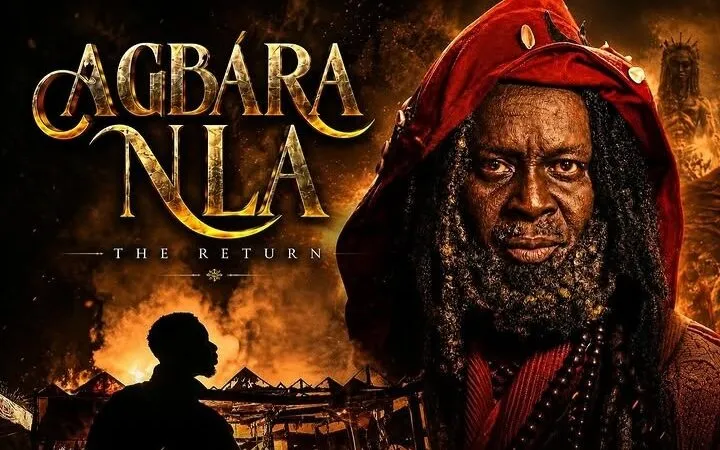
A unique kind of fear comes from classic Nollywood villains of the late 1990s. This fear makes people laugh nervously, pray in fear, and still keep watching.
More than thirty years after he first played Isawuru, veteran filmmaker Mike Bamiloye returns as the scary villain in a film that shaped Nigerian gospel movies.
What stands out in this remake is not just that Mr Bamiloye is back in an iconic role. It is that a movie about spiritual battles, demonic influence, and God's power has become one of Nollywood's biggest hits outside December.
Directed by Damilola Mike-Bamiloye and his brother, Joshua “Jay Mikee” Bamiloye, the film opened on 1 October, Nigeria’s Independence Day. PREMIUM TIMES reported that it made around ₦71.4 million from preview screenings and another ₦99.2 million in its opening weekend. This brings its total to about ₦170.6 million. It recorded the biggest non-December opening for a Nigerian film and the highest opening for a faith-based Nollywood production. So far, it has made ₦307.2 million.
But does the film's success mean it is a good watch? More importantly, what drives its success? Is it just nostalgia?

Bamiloye as Isawuru
From 1993
To understand the ambition behind Agbara Nla: The Return, it helps to know what the original meant to viewers.
The first ‘Agbara Nla’ came out in 1993 as a Mount Zion Film Productions television series written by Mike Bamiloye. The English version, ‘The Ultimate Power’, followed in 1994, helping the story reach a wider audience beyond Yoruba-speaking areas. The production became a defining work for Mount Zion and helped build its reputation for sharing Christian teachings on screen.
The story itself has a fascinating history. Bamiloye once shared that the original idea dates back to 1987, when a project called ‘Agbara To Ju Agbara Lo’ was filmed but abandoned after the cameraman disappeared with the tapes. The project revived in 1993 after Mount Zion gained more filming experience and eventually reached television viewers across western Nigeria.

A scene from Abgara Nla
Plot
In the village of Muwonleru, the people suffer under the rule of Isawuru, a feared occult figure whose power goes beyond ordinary fear.
Isawuru challenges Oba Adetunji, the village king, demanding that he bow to him and pay respect as previous kings did. When the king refuses, Isawuru follows through with his threat by destroying the royal household and killing the king.
Before he dies, the king writes a letter to his cousin, Kola, who lives in Ibadan. This letter becomes a call to bring the Christian message to a village trapped in spiritual darkness.
Kola and Bose, played by Damilola Mike-Bamiloye and Aanu Kolade Abiodun, initially try to avoid the task. Kola gets a job promotion that takes him to Lagos, which he sees as a way out of the challenging mission.
Eventually, the task falls to Olaboye and his wife, Olatomi, played by Philip Olubakin and Remilekun Mosiko. The couple must leave the comfort of city life to face the evil haunting Muwonleru.
Olaboye's journey becomes more meaningful after he meets Engineer Ojo, whose family experienced what the film shows as a miracle of childbirth after many years of being childless. This meeting encourages Olaboye to accept the mission.
What follows is a familiar but engaging Mount Zion clash between light and darkness, featuring marine spirits, forest witches, occult practices, and a series of encounters that raise the central question: whose power is truly greater?

Kola
Mike Bamiloye owns the screen
One of the most satisfying parts of Agbara Nla: The Return is its main performance.
As Isawuru, Mike Bamiloye doesn’t just step back into an iconic role; he fully understands why the character lasted in the original movie. Beyond the scary costume, Mr Bamiloye brings life to Isawuru, giving the villain a strong presence even when he is not in the spotlight.

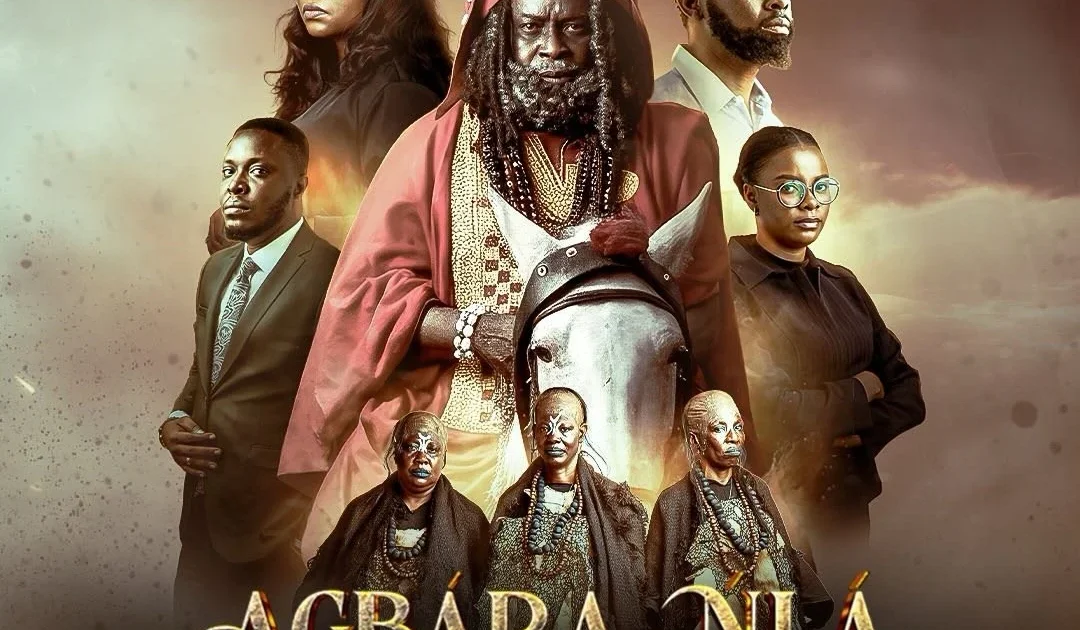
There is also a surprising entertainment factor to his wickedness. Isawuru seems to enjoy his fearsome reputation, and Bamiloye portrays that enjoyment with a conviction that draws nervous laughter from the audience.
Aanu Kolade Abiodun also shines as Bose. Her performance gives the character a relatable vibe. Even after she gets possessed due to her bad friendship with Paulina, she shows both fierce horror and vulnerable pity convincingly.

Mike Bamiloye
Review
The plot is clear in its moral lesson. Evil exists, spiritual battles have real effects, and faith needs more than personal belief; it needs action and sacrifice.
The more intriguing conflict, though, is not just between Isawuru and the Christian characters. It is between the wish for personal comfort and the duty to confront a community’s pain. Kola’s reluctance gives the story a human touch that sometimes feels more relatable than the supernatural elements.
The film’s production design and costumes show that remaking a classic doesn’t mean repeating all the visual limits of the original. Isawuru’s look, the forest coven, the marine queen, and the new Ologosodudu remind viewers of older Nigerian supernatural films while benefiting from improved production.
The film also shows a willingness to keep the narrative tied to Mount Zion’s earlier works. Instead of hiding the film’s origins, the directors build on them, maintaining the strong performances and dramatic showdowns that made the original unique.
The commercial success of Agbara Nla: The Return is more than just a good number. It challenges the idea of when Nigerian viewers will support local films and what types of stories they are ready to pay to see.
For years, December has been a prime time for Nollywood releases, benefiting from holiday travel, family gatherings, and more cinema attendance. Given this, the remake’s October release stands out.
Agbara Nla: The Return shows that nostalgia, faith, and theatrical display come together for commercial success.

Agbala Nla
But even with its strengths, Agbara Nla: The Return has its weaknesses from the tradition it comes from.
Its runtime, which is about two hours and 40 minutes to three hours, is a lot to ask from viewers. The chapter-like structure provides some relief, but the film sometimes confuses long length with dramatic effect.
Some scenes last longer than they should, especially when the story pauses to emphasize a spiritual lesson that the earlier action has already shown.
The film has a clear religious message, and its ending should be viewed partly within that context. But viewers who are not used to Mount Zion’s style may find the ending less convincing than the earlier conflict.
Agbara Nla: The Return does not treat the supernatural as a metaphor to explain away; it takes the existence of spiritual forces as a given and builds its drama around the results of that belief.
For viewers who share its religious views, this method may enhance their enjoyment of the film. For others, some of its claims and dramatic choices may raise doubts or discomfort. This is important because the film is not just trying to entertain general audiences. It also engages viewers whose faith shapes how they interpret what they see.
These issues do not take away from its success. Agbara Nla: The Return has made an old story feel fresh again, even if it sometimes takes longer than needed to make its point.
Overall, Agbara Nla: The Return shows that a good story that resonates with viewers remains relevant when told with an understanding of what audiences want today.
Verdict: 8/10
Agbara Nla: The Return is showing in cinemas across Nigeria.


Drop your comment
No comments yet — be the first to drop the gist 👇