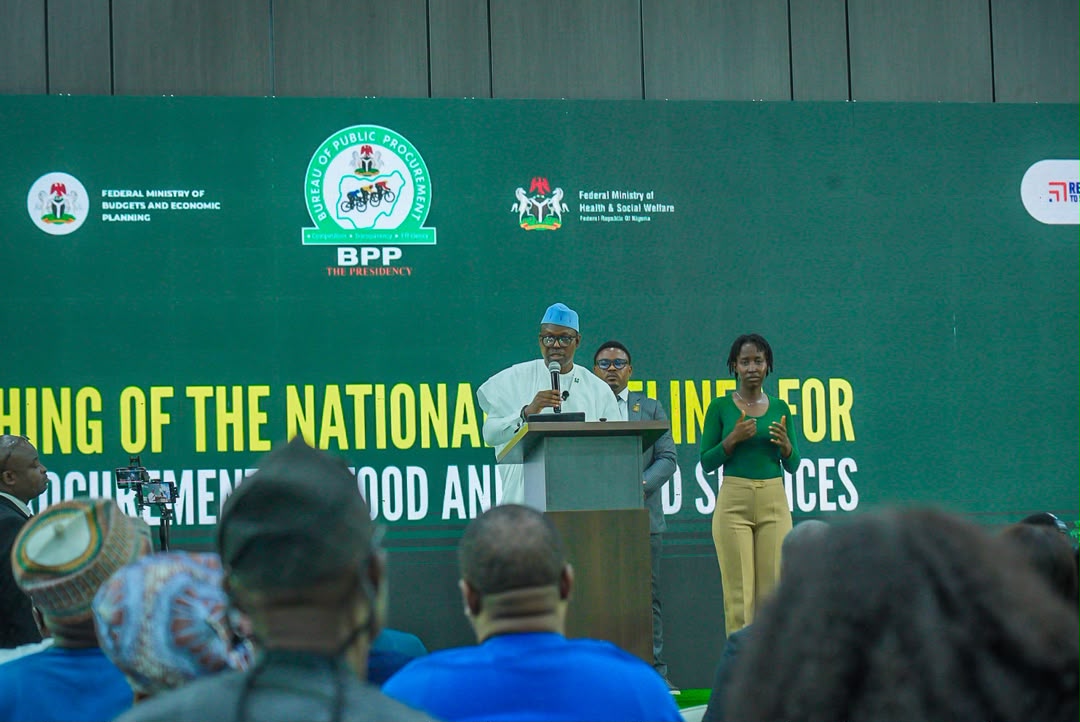
The federal government has launched the National Guidelines for Public Procurement of Food and Related Services.
This framework brings in nutrition standards for food bought with public money. The aim is to reduce unhealthy diets and fight the rising number of non-communicable diseases in Nigeria.
The guidelines were launched on Monday in Abuja at an event called “Public Procurement of Food: Promoting a Culture of National Wellness Through the Food Value Chain.” They are expected to change the food served in public places like schools, hospitals, correctional centres, and military establishments. The focus is on evidence-based standards for nutrition, food safety, and quality.
In his keynote speech at the event, the Minister of State for Health and Social Welfare, Iziaq Salako, said this initiative is a change in how public procurement is viewed. It will now be seen as a tool to boost public health and national development.
“When the government demands healthier, safer, and more nutritious food, it creates incentives for the entire food system to innovate, improve quality, and align with higher public health standards,” he said.
Why it matters
Mr Salako pointed out that the government is the biggest buyer of food in the country. This means their buying choices can shape food production, how people eat, and nutrition standards throughout the food value chain.
He explained that the guidelines set limits on sodium, sugar, and unhealthy fats in food bought by public institutions. They also encourage balanced and nutritious diets.
He mentioned that these guidelines support existing national policies, including the National Guideline for Sodium Reduction, the Trans Fat Regulation, and the 2023 National Policy on Food Safety and Quality.
Rising burden of unhealthy diets
Mr Salako noted that unhealthy diets lead to about 7.2 million deaths globally every year. This is mainly because of too much salt, sugar, and unhealthy fats, along with not enough fruits, vegetables, and whole grains.
He shared that the average Nigerian adult takes in between 3.9 grams and 4.9 grams of sodium each day. This is nearly double the World Health Organisation’s (WHO) recommended limit of 2 grams.



Mr Salako added that the rising intake of sugar-sweetened drinks has led to more cases of obesity and diabetes. This is why the sugar-sweetened beverage tax was introduced. He also noted that industrial trans fats have been limited under Nigeria’s Trans Fatty Acid Regulation.
“These measures are designed to control eating habits that lead to the rising burden of non-communicable diseases. They put a lot of pressure on health systems, the economy, and household incomes,” he said.
Child malnutrition remains a concern
Mr Salako also highlighted ongoing nutrition issues in the country. He said malnutrition directly or indirectly causes nearly half of the deaths in children under five.
He pointed out findings from the Nigeria Mini Demographic and Health Survey, which show that about four in every 10 Nigerian children under five are stunted. Nearly two million children suffer from severe acute malnutrition every year.
“These are not just numbers. They represent serious human capital challenges that affect education, work productivity, household income, the nation's competitiveness, and long-term economic growth.”
Implementation key
Mr Salako stressed that the success of these guidelines will depend on how well they are put into practice, not just on their launch.
He urged procurement and accounting officers in government institutions to ensure they follow these guidelines. He noted that their buying choices affect health outcomes, productivity, and public trust in government.
He added that the Federal Ministry of Health and Social Welfare will continue to promote disease prevention through healthier public policies. This is part of the effort to achieve universal health coverage.




Drop your comment
No comments yet — be the first to drop the gist 👇