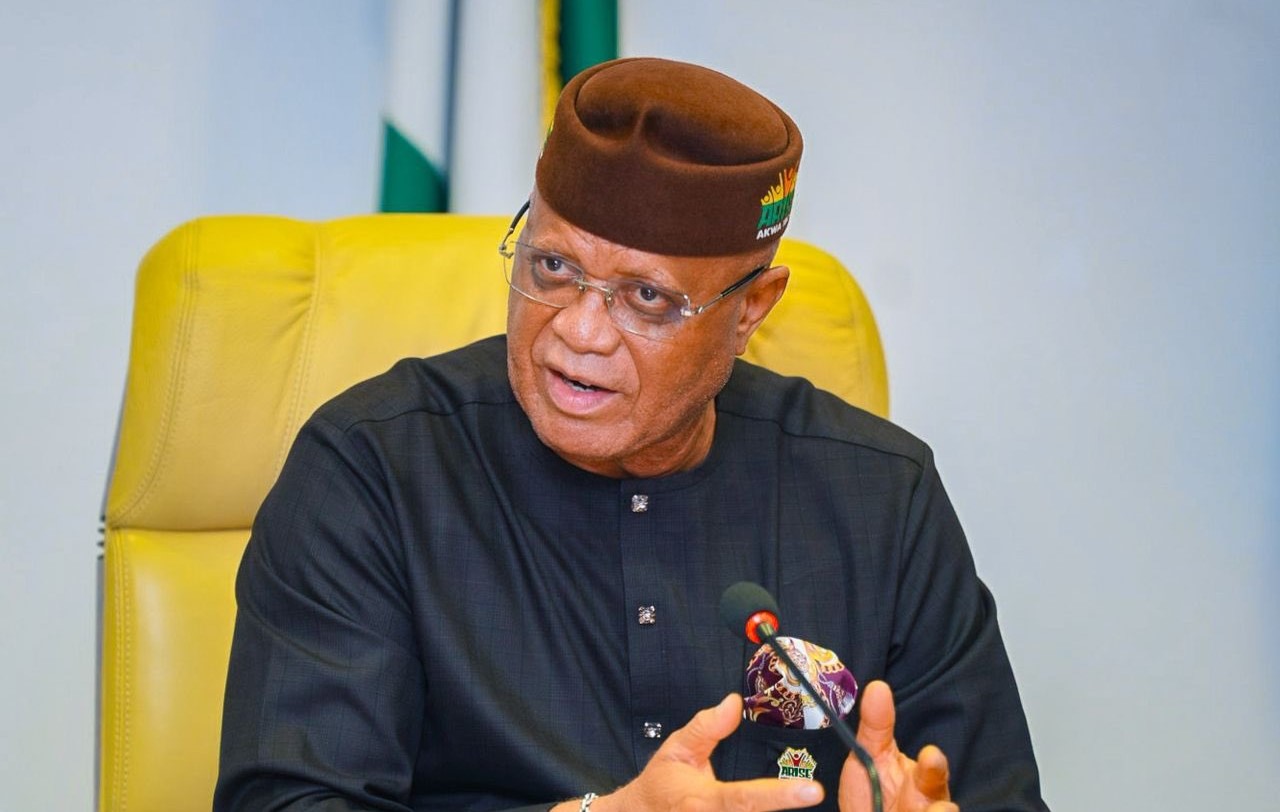
The Akwa Ibom State Government has released N60 million for family planning commodities. This marks the end of over ten years where funds were budgeted but not released for the program.
The funding announcement was made on Wednesday during a Pulse Check Meeting in Uyo. The meeting focused on Family Planning and Adolescent Sexual and Reproductive Health programs.
The Akwa Ibom State Government organized the meeting with support from The Challenge Initiative, Johns Hopkins Center for Communication Programme, and the Bill & Melinda Gates Institute for Population and Reproductive Health.
At the meeting, government officials and partners discussed the state’s progress. They looked at how Akwa Ibom is doing after moving to a self-reliant stage with help from donors.
They reviewed if the state is keeping the progress made during years of external support from The Challenge Initiative. They also identified key areas needing government investment to improve maternal and reproductive health outcomes.
A PREMIUM TIMES review of Akwa Ibom State’s financial records and budget reports from 2015 to 2024 showed no releases for family planning commodities. This was despite budget allocations in some years.
The recent funding follows a promise by the Commissioner for Health, Ekem Emmanuel, during a visit from the initiative in May 2025. He assured that the state would contribute to the National Basket Fund after previous budgets, including the 2025 budget, did not allocate funds for the program.
The National Basket Fund is a pooled financing system that helps with buying and distributing family planning commodities in participating states. This ensures continued access to reproductive health services.
First funding in over 10 years
Enobong Eshiet, the state’s Family Planning Coordinator, called the funding release a landmark achievement after years of advocacy.
"We have been able to contribute to the National Basket Fund for procurement of family planning commodities. A sum of N60 million has been contributed. It is something we have been begging for over 10 years.
"We have not had releases for family planning. Even when we included it in the budget, there had been no releases. This year is different," she said.
Ms Eshiet credited the progress to the support of Governor Umo Eno of Akwa Ibom and the health commissioner. She said better access to family planning services could raise the state’s contraceptive prevalence rate and lower unintended pregnancies and maternal deaths.
She added that Akwa Ibom currently has a 23 percent unmet need for family planning. She also pointed out that unsafe abortions lead to many maternal deaths. Improved access to contraceptives could help solve this issue.
Commissioner confirms payment
When contacted by PREMIUM TIMES, Commissioner for Health, Mr Emmanuel, confirmed the N60 million contribution.
He said the government made the first payment into the National Basket Fund in January. The final payment was made in June to the United Nations Population Fund for direct procurement of family planning commodities.
This funding comes after ongoing maternal health issues in the state. According to the District Health Information Software 2 (DHIS2), Akwa Ibom records a maternal mortality ratio of 774 deaths per 100,000 live births.
PREMIUM TIMES has shown how pregnant women and children die in Akwa Ibom due to poorly equipped health facilities while billions are wasted on cars for government officials. Health experts have said that voluntary family planning is one of the best ways to reduce maternal and child death rates by preventing unintended pregnancies and promoting healthy birth spacing.
More funding needs identified
While stakeholders welcomed the funding, they said just buying contraceptive commodities is not enough. There needs to be more investment in consumables, training, and service delivery.
Obase Sam, the Regional Programme Manager of The Challenge Initiative, praised the state government for its contribution but stressed that the state must invest in other inputs needed to provide family planning services.

"Now that we have enough commodities, every hand has to be on deck," he said.
"There must be consumables. You cannot administer those commodities without consumables. There will also be strong need for capacity building because health workers must be ready to provide the services."
He called for more investment in public awareness campaigns, media engagement, community outreach, and male involvement to boost acceptance and use of family planning services.
He pointed out that just increasing the availability of commodities won't automatically improve the state’s modern contraceptive prevalence rate.
"It is the use of the commodities that will move the numbers," he said.
Mr Sam mentioned that about 20 states have already contributed to the National Basket Fund, with more states expected to join.
Uptake improving
Mr Sam shared data showing that the use of modern contraceptives has steadily increased between 2022 and 2025.
According to the data, the number of women using modern contraceptives in Akwa Ibom reached 121,131 in 2025, the highest in four years.
Also, new family planning acceptors rose to 89,447 in 2025. He noted that new acceptors increased by 68 percent from 2022 to 2025, while the number of women using modern contraceptives went up by 65 percent in that same time.
LGA performance
Data presented at the meeting showed differences among the state’s 31 local government areas.
For women using modern contraceptives in 2025, Mkpat Enin contributed 11 percent of the state’s total, followed by Eket with six percent. Onna, Ikono, and Ibesikpo Asutan each recorded five percent. Uyo, being the state capital and one of the largest populations, contributed only four percent. Mr Sam noted this was low for its population size.
Obot Akara, Oruk Anam, and Ika had the lowest performance with one percent each. For new family planning acceptors, Mkpat Enin again ranked first with nine percent, followed by Onna with six percent.
Uyo only accounted for one percent, while Ika had no new family planning acceptors during the review period.
Gaps state government must address
Stakeholders pointed out several challenges that could affect the benefits from the new funding.
These include underreporting of family planning data into DHIS2, lack of funding for important interventions, staff turnover from retirements, and workforce fatigue. Some health facilities are relying on one officer to manage multiple health programs.
To make the most of the commodity procurement, participants suggested the state government use resources from the Basic Health Care Provision Fund to buy essential family planning consumables needed for service delivery.
They argued that while getting funds for commodities is a big step forward, continued funding for consumables, training for health workers, and community mobilization will determine if the investment leads to better maternal health outcomes across Akwa Ibom State.



Drop your comment
No comments yet — be the first to drop the gist 👇