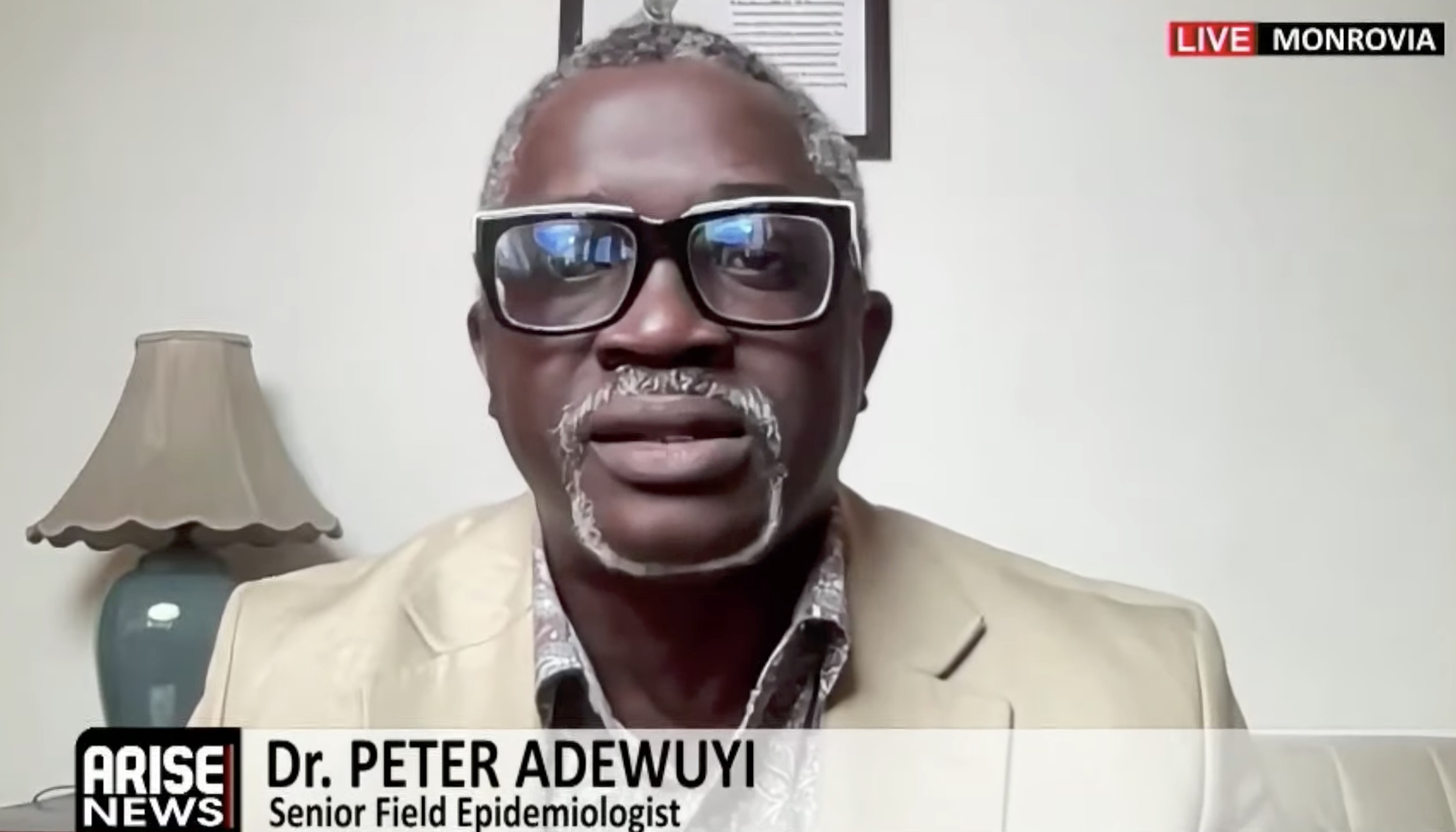
A senior field epidemiologist, Peter Adewuyi, has urged the Nigerian government to put the country’s trained epidemiologists in charge of handling the confirmed Ebola case. He noted that Nigeria has around 500 specialists ready to assist in the response.
Mr Adewuyi, who led contact tracing during Nigeria’s 2014 Ebola outbreak, emphasized the need to use local public health experts instead of relying on foreign epidemiologists. “We have about 500 epidemiologists in the country and the government should just allow them to do their work,” he said during an interview on ARISE TV Morning Show on Thursday.
His remarks came just two days after Nigeria confirmed an imported Ebola case in a woman in the Federal Capital Territory. This raised worries about the risk of further spread and the country’s ability to detect infections early.
The World Health Organisation reported that the patient’s symptoms started on 7 October, four days after she arrived in Nigeria. She sought treatment at a private health facility in Abuja on 11 October, and laboratory tests confirmed the infection on 20 October.
The patient is now receiving treatment in isolation. Health authorities have identified 44 people who had contact with her and are monitoring them for possible symptoms.
Mr Adewuyi stated that the response to the case began early but raised concerns about how long it took to detect the infection. He mentioned the “717” surveillance performance indicator, which says suspected cases must be detected within seven days, reported within one day, and followed by a response within seven days.
“We are supposed to detect within seven days, report within a day and then respond within seven days. Response is okay, reporting is okay, but the detection took about eight to nine days and that is the fear as far as the response that we are given right now,” he said.
Local Experts Should Lead the Response
Mr Adewuyi argued that Nigeria does not need foreign epidemiologists to take charge. He pointed out that there are trained professionals already in the country. “Nigeria does not need people to come from outside,” he said.
He mentioned the African Field Epidemiology Network, which is supporting the Nigeria Centre for Disease Control and Prevention to send more epidemiologists into the field. He also highlighted Nigeria’s Integrated Disease Surveillance and Response system, which tracks diseases from health facilities and local government areas to the national level.
He explained that this system helps identify and report infections and coordinate responses across the country.
Contact Tracing is Key
The epidemiologist stressed that contact tracing must include everyone who may have been around the infected woman before she was diagnosed, including health workers and others who were in the facilities where she received treatment.
“So in this case, all the people that treated this person from day one till the time she was diagnosed, all of these people are contacts. Whether the person that came to sweep the room, whether the person that came to make the bed, every one of them,” he said.
He warned that the number of identified contacts might rise as investigations continue. He urged anyone who might have been exposed to provide accurate information to health authorities.
Contact tracing is essential in Ebola control because it helps health officials find possibly exposed people. This allows them to monitor for symptoms and isolate suspected cases quickly.
Nigeria’s Experience in 2014
Nigeria successfully managed its 2014 Ebola outbreak after an infected traveler from Liberia reached Lagos. The country confirmed 19 laboratory cases and one probable case, with eight deaths.
The WHO announced Nigeria was free of Ebola transmission on 20 October 2014, after 42 days without new cases.
PREMIUM TIMES reported that the federal government had improved its Ebola readiness ahead of the latest case, following outbreaks in the Democratic Republic of the Congo and other African countries.
The current case is linked to the ongoing regional outbreak of Ebola Bundibugyo virus disease, a strain without an approved vaccine. The federal government has activated its response plans, while the WHO and other partners are helping to control the infection and prevent further spread.


Drop your comment
No comments yet — be the first to drop the gist 👇