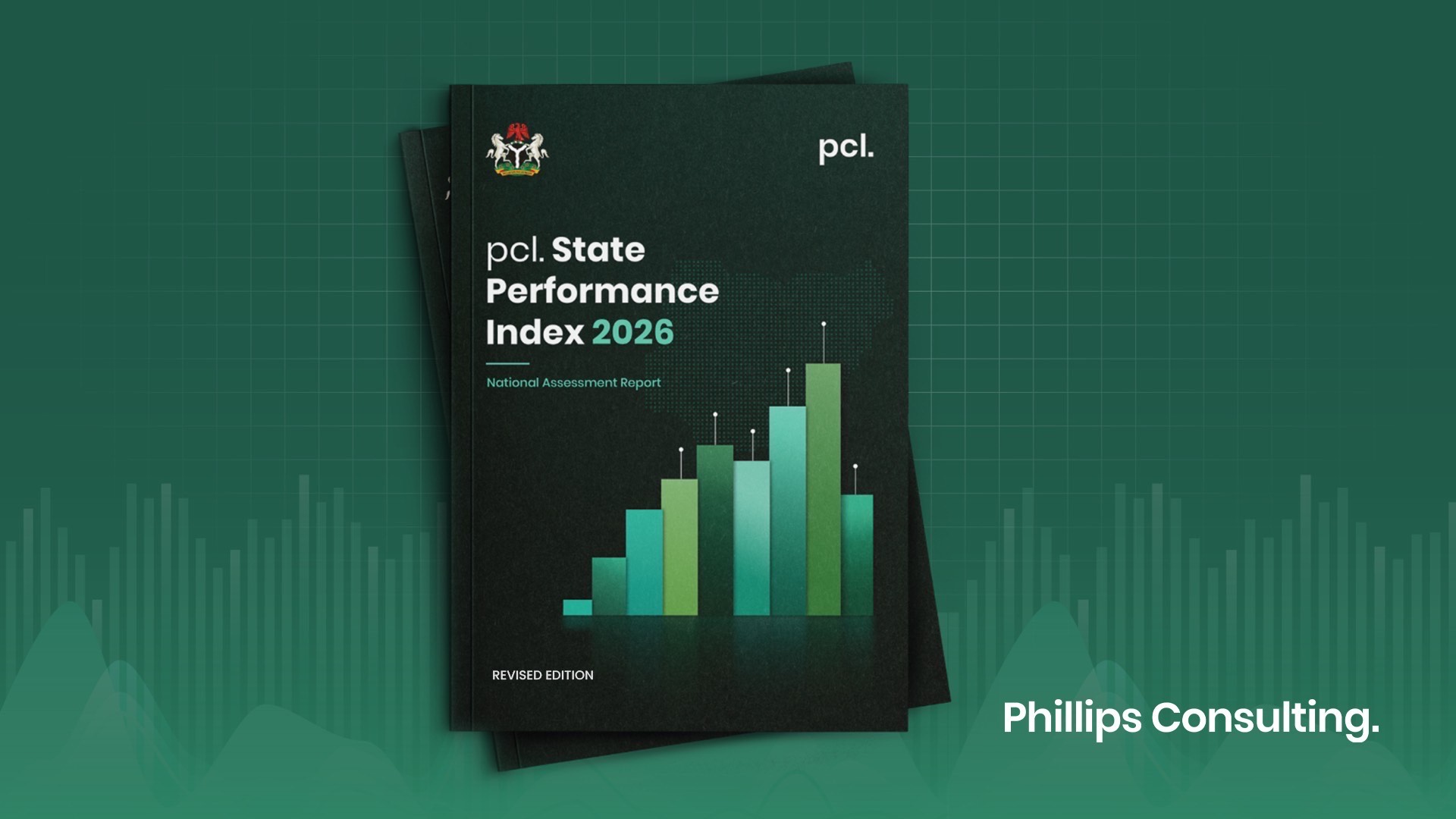
Phillips Consulting Limited has released an updated version of the 2026 State Performance Index (pSPI). This new edition uses the latest audited financial statements from the fiscal year 2025. It aims to improve how state performance is measured across Nigeria.
The new version replaces the first 2026 pSPI released on July 23, 2026. This updated index now serves as the official version for 2026.
This revision shows pcl.'s dedication to keeping its research and reports up-to-date with relevant evidence. The first edition of 2026 used financial statements from FY2024, which were the latest at that time. After FY2025 financial accounts were released, pcl. reviewed the Index to include this new data and improve the methods used for interpreting the results.
The first 2026 National Assessment Report was launched on July 23, 2026. It used a single Momentum Index to rank states based on a blended score. A review later showed that the methods and result interpretations needed improvement. The model was audited closely, the issues were fixed, and the results were recalculated. This new edition shares those corrected results.
The updated 2026 pSPI has made several method improvements to give a clearer view of state performance.
Two measures replace the single Momentum Index. The updated assessment now separates how states are performing now from how their performance is changing over time. A Performance Snapshot shows each state’s current standing, while the Rank Trajectory shows how this has changed in the 2024, 2025, and 2026 editions.
Movement is now tracked by changes in performance rank instead of score differences. This change acknowledges that the three editions used different score scales. It helps to understand how state rankings change over time better.
The financial assessment has also been updated to use FY2025 audited accounts, replacing the FY2024 figures from the first edition. When evaluating debt sustainability, the new method looks at both debt per person and debt compared to state revenue. This gives a more balanced view of state debt levels.
The Index also improves its evaluation of financial transparency. Instead of just checking if audited accounts are available, the new method looks at when each state published its accounts compared to the deadline. States without qualifying audited accounts are not scored, so missing data does not negatively impact their performance.
These changes aim to make the Index more comparable and easier to understand while keeping its goal of providing evidence-based insight into state performance.
Foluso Phillips, Chairman of Phillips Consulting, spoke about the release. He stressed that good research needs discipline. “Credible research requires more than publishing findings; it requires the discipline to interrogate the evidence behind those findings. When new audited information became available, we needed to review it thoroughly and share the improvements. This shows the standard we set for our research and the trust stakeholders put in our work.”
Olawanle Moronkeji, Chief Operating Officer of Phillips Consulting, noted that the revision boosts the Index's value for those who depend on it. “The value of the pSPI is in helping stakeholders see beyond a single ranking. Governments, investors, development organizations, researchers, and citizens need clear evidence to understand where states stand and how their positions are changing. The updated edition offers a clearer view for stakeholders.”
Victor Mba, Senior Managing Consultant for the Public Sector at Phillips Consulting, talked about the technical reasons for the changes. “The updated method highlights the difference between performance at a single point and changes over time. It also aligns financial assessments more closely with the realities of state finances by using the latest audited accounts and looking at debt against both population and revenue. These changes help to interpret the results better and avoid misreading differences in data scales as differences in state performance.”
The revised 2026 pSPI does not change the purpose of the Index or how important it is to measure state performance in different ways. Instead, it enhances how the evidence is presented and understood.
The 2024 and 2025 editions remain the same. The revised 2026 edition only applies to the 2026 assessment and replaces the earlier version.
As part of the updates, pcl. will also start a new publication cycle for the pSPI.
In the future, the Index will be published after July 31 each year. This will allow the assessment to use audited financial statements from the previous fiscal year when they are available. This new cycle aims to provide a more steady and complete evidence base for future editions.
The pSPI is part of pcl.'s wider commitment to creating research that helps improve decision-making in Nigeria’s public and private sectors.
The revised 2026 pcl. State Performance Index can be found at www.pspi.com.ng.
Phillips Consulting updates 2026 State Performance Index for better state assessment in Nigeria
Sponsored — In Article
Sponsored — Mid Article
Did you enjoy this gist?
C
Chioma Eze
Founder & EIC. Lagos-based.




Drop your comment
No comments yet — be the first to drop the gist 👇