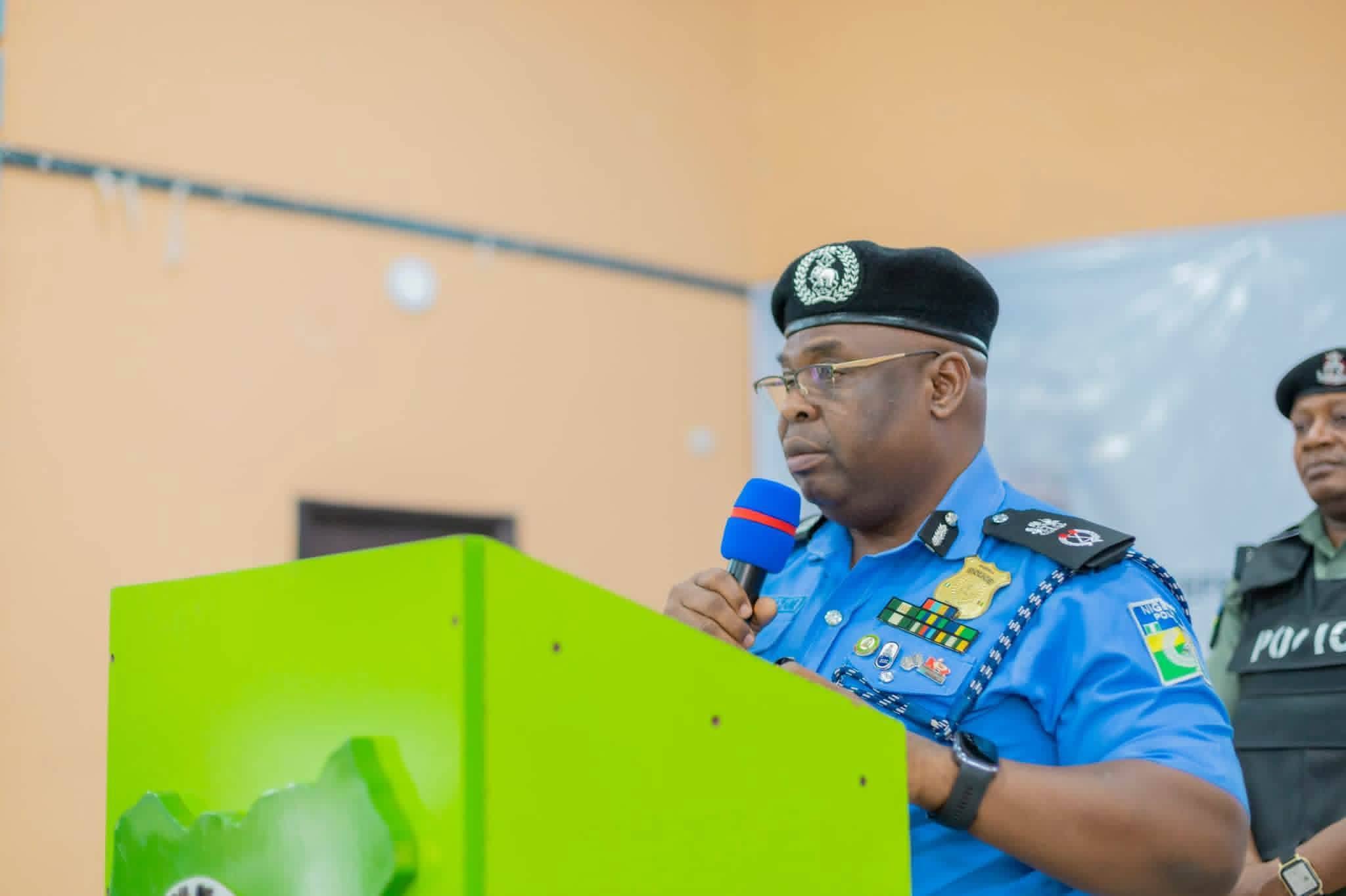
The Commissioner of Police in Akwa Ibom State, Baba Azare, has urged journalists in the state to be more thorough in their crime reporting to prevent contempt issues.
Mr Azare spoke at a symposium on effective crime and court reporting. The event was organized by the Nigeria Union of Journalists (NUJ), Akwa Ibom Council, with funding from the Akwa Ibom State Judiciary.
He said the symposium was a chance for the police, judiciary, and media to look at their roles in the criminal justice system.
“It provides an opportunity for the police, judiciary and media to examine their respective responsibilities within the criminal justice system.
“More importantly, it will help us to explore how to work together without compromising our constitutional and professional obligations,” Mr Azare stated.
The police commissioner added that justice does not just happen in the courtroom; it involves several institutions working together.
He explained that each institution has its own role but they are all connected.
“The police and other law enforcement agencies investigate offences, prosecutors present cases, and lawyers represent the interests of parties.
“The courts determine guilt, innocence, rights, and liabilities; correctional institutions implement lawful sentences, while the media inform the public about these processes,” Mr Azare said.
He emphasized that journalists covering court cases need to understand the law, procedures, and rules of evidence that govern the courtroom.
“The media occupies a strategic position between the institutions of justice and the public.
“This is because the public depends on the media for their understanding of crime, policing and the justice system,” he explained.
Mr Azare pointed out that crime and court reporting should not just focus on being the first to report a story. Instead, it should prioritize accuracy, fairness, responsibility, legality, and respect for the justice system.
He urged journalists to clearly differentiate between the terms suspect, accused person, defendant, and convicted person.
The commissioner warned that trial by media should never replace a court trial.
Cletus Ukpong, the South-east/South-south editor at Premium Times, gave a lecture titled “Balancing the Desire for Breaking News and Factual Reporting.” He told journalists to verify, publish, and update information.
He charged them to hold the government accountable, criticizing it when it fails and praising it when it performs well.
“If you miss a breaking story today, there will be another story tomorrow. If another journalist beats you by a few minutes, there will be another competition tomorrow.
“But if you destroy someone’s reputation with a fake allegation, expose a witness to danger, identify a vulnerable victim or publish a false death, you cannot simply press delete and make the harm to disappear,” he cautioned.
He also urged organizations to quickly release information to journalists to cut down on media speculation.
Nsibiet John, the NUJ chairman in Akwa Ibom, said the symposium was important to help reporters understand crime and court reporting better.
“A lot of journalists report crime and the judiciary, but some do not have in-depth knowledge of the sector; this is what makes this event most expedient.
“Journalism activities concern the public, while the activities of other professionals may be private to the people concerned,” he noted.
Mr John thanked the resource persons and encouraged participants to use the program to boost their professional growth.
Chris Ekong, a professor and vice-chancellor of the University of Uyo, said that journalists must focus on truth, accuracy, and objectivity in their reporting.
He urged them to tell apart allegations and convictions, as well as to identify the sources of allegations and other key facts.
He stressed that reporters must be thorough, verify all information, and avoid media trials and sensational headlines.
“Journalists must be familiar with contempt and defamation laws and not interfere with judicial proceedings,” he said.
The News Agency of Nigeria reports that participants came from all the chapels of the NUJ in the Akwa Ibom Council.
Drop your comment
No comments yet — be the first to drop the gist 👇