Public office in Nigeria often means living large for politicians. They make big money while in office and enjoy even more when they retire after four or eight years. Meanwhile, civil servants who help run the government for 35 years often retire into poverty because their small benefits are not paid.
Recently, many Nigerians were shocked to see elderly retirees protesting for their pensions and gratuities in Lagos State, only to be met with tear gas from the police.
In local terms, this situation is summed up as "Monkey dey work, baboon dey chop." George Orwell captured it well when he said, "All animals are equal but some are more equal than others." This reflects how leaders claim everyone is equal while enjoying special treatment. It shows how bad governments use clever language to justify unfairness and keep power.
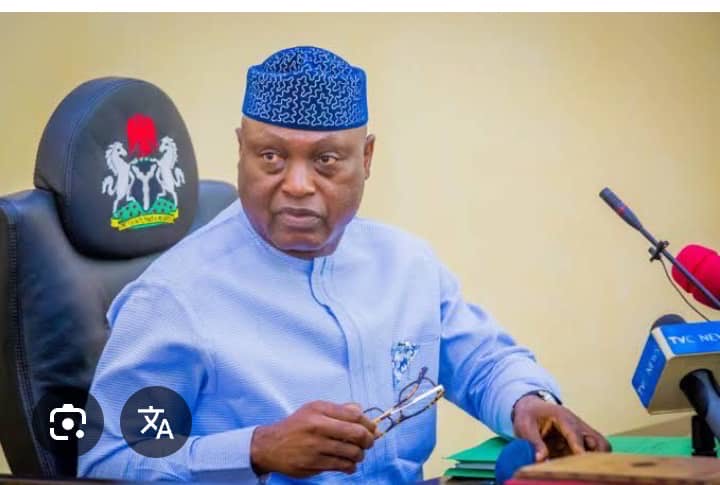
Samuel Ortom, the former governor of Benue State, brought this issue to national attention. He is in a public disagreement with the state government over his severance package after serving as governor for eight years.
"After I left office, vehicles that were legitimately allocated to me by the government were seized by the administration in a manner that was unbecoming," he said. "I went to court, defeated them, and the court ordered them to pay ₦5 million in damages in addition to returning the 23 vehicles that were initially seized… It is a tradition that when you are appointed in office or elected, and when you are leaving, you leave with those vehicles," he added. He explained, "By government rules, when vehicles are used for four years, they become more of a scrap, and they are given out."
Ortom also mentioned that this arrangement applies to other officials from his administration, like his deputy and advisers. The court ordered the government to return all 23 vehicles and pay him ₦5 million in damages. But the current Governor Alia has not appealed the judgment nor returned the vehicles. Ortom accuses the government of being lawless.
He expected some sympathy from the public but was met with backlash. Many Nigerians criticized him, saying he represents the corruption that allows people like him to continue living off the state after what they see as years of exploitation.
Now, people are asking if it is right for a former governor to leave office with 23 government vehicles while many citizens struggle to survive. Pensioners who worked in the state civil service often wait years for their small gratuities.
This situation shows that we need to pay more attention to what is happening at the state and local government levels. The federal government controls 52.68 percent of national earnings. State governments get 26.72 percent and an additional 13 percent from mineral-producing states. Local councils receive 20.60 percent.



State and local governments, which are closest to the people, have become places where leaving office means enjoying paid leisure for life. A look at other states shows Ortom's case might be just the beginning.
In 2007, many voiced their anger over the Lagos State Governor and Deputy Governor Pensions Law, which many thought was outrageous. The original 2007 law included:
- A house in Lagos and another in Abuja.
- Six new cars (three for the ex-governor, two backup cars, and one pilot car) replaced every three years.
- 100 percent of annual basic salary.
- Furniture allowance of 300 percent of the annual basic salary, paid every two years.
- House maintenance, utility, entertainment, and car maintenance allowances.
- Unlimited domestic staff, including cooks, stewards, gardeners, drivers, and personal assistants.
- Free medical treatment for the former governor, spouse, and dependents.
- Extensive security details, including DSS operatives and police officers.
States like Akwa Ibom, Rivers, Lagos, and Kano have passed laws giving ex-governors millions in annual payments, luxury homes, free medical care abroad, and fully funded staff. Some states with fewer resources give 100 percent pension matching for the governor's salary but do not include luxury properties.
Public protests, economic pressures, and legal actions from groups like SERAP have pushed states like Zamfara, Kwara, Imo, Abia, and Lagos to repeal or reduce these pension laws. They now limit former leaders to basic statutory RMFAC severance. While some states keep life pensions with many perks, many are moving towards one-time gratuities.
Citizens and civil society activists need to focus more on what is happening at the state and local levels. The federal government is not the only level of governance. We should not let states and local governments get away with eating our resources and risking our future.
Ex-Governor Samuel Ortom's complaints highlight the unfairness of our system. While many retired civil servants struggle to keep one car, politicians like him expect 23 vehicles for just staying in office for eight years. They act as if they are doing us a favor.
Greed is a grave danger that takes and gives nothing back. To have any chance at fairness, we need to change the system that allows politicians to exploit the people. Otherwise, we risk greater unrest.
Drop your comment
No comments yet — be the first to drop the gist 👇