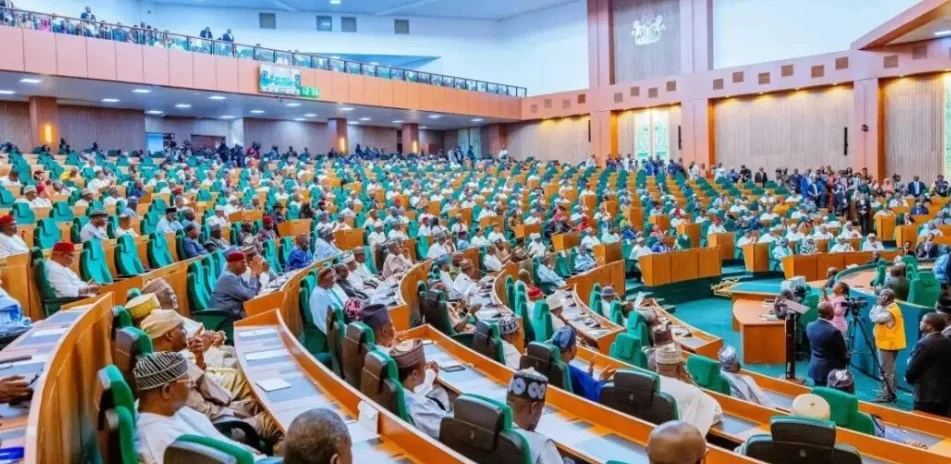
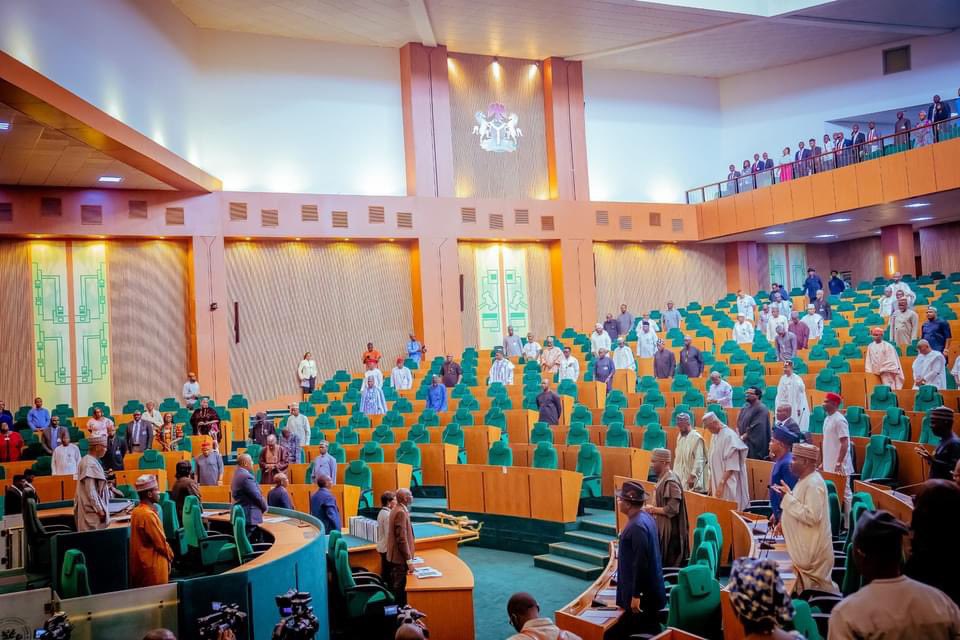
The House of Representatives on Wednesday set up a committee to look into the legality of the Presidential Foreign Investment Promotion Council. This follows claims that this body was falsely presented as a federal agency and that over N1.3bn was included in the 2026 budget for it.
The committee will be led by Yusuf Gagdi, the Chairman of the House Committee on Navy. It is tasked with finding out how this alleged agency got into the federal budget and if any government procedures were ignored.
This ‘fake’ agency is also facing a legal fight, with its Director General, Adeyemi Adeniyi, expected to go to trial soon.
Adeniyi has accused Femi Gbajabiamila, the Chief of Staff to the President, of helping to set up the ‘fake’ agency in exchange for money.
But the Presidency has denied these claims, calling Adeniyi a fraudster.
The House took this action after adopting a motion of urgent national importance sponsored by Gagdi and supported by Kafilat Ogbara from Lagos.
While moving the motion, Gagdi claimed that the entity known as the Presidential Foreign Investment Promotion Council acted as if it was a government body, even though it had no legal basis.
He mentioned that the group worked from the Federal Secretariat Complex in Abuja between November 2024 and October 2025. They interacted with government bodies, even though the Federal Government has said that no such agency was ever properly set up.
Gagdi said, "The House notes that between November 2024 and October 2025, an entity styling itself as Presidential Foreign Investment Promotion Council operated at the Federal Secretariat Complex, Phase 3, Abuja and interacted with various organs of government, although the Federal Government has since declared that no such agency was ever lawfully established."
He pointed out that claims of forgery and impersonation involving this entity are already under investigation and are in court in Abuja.
The lawmaker stressed that this House inquiry would not interfere with the ongoing court case. "This motion neither prejudges nor seeks to pre-empt the probe ordered by the President," he said.
Gagdi told fellow lawmakers that the supposed council used documents that claimed it was set up under a law called Chapter N2117 of the Laws of the Federation of Nigeria. But he noted that the National Assembly has no record of any law creating such a body.
He explained that the closest thing to this is Chapter N117, which relates to the Nigerian Investment Promotion Commission Act. He suggested that the alleged council might be trying to copy an existing body.
He stated, "The nearest designation to this chapter is Chapter N117, being the Nigerian Investment Promotion Commission Act, the very statute whose mandate the entity purported to duplicate, such that the falsification of purported instruments is apparent on the face of public statutory records."
Gagdi raised concerns about reports that more than N1.3bn linked to this entity made it into the 2026 budget, asking how an organisation without any valid establishment law could be included in the government budget.
He said, "The House observes that reports indicate that the purported provision in excess of N1.3bn attributable to the entity found its way into the 2026 appropriation framework, raising fundamental questions of how a body without any authentic instrument of establishment would enter a federal budget."

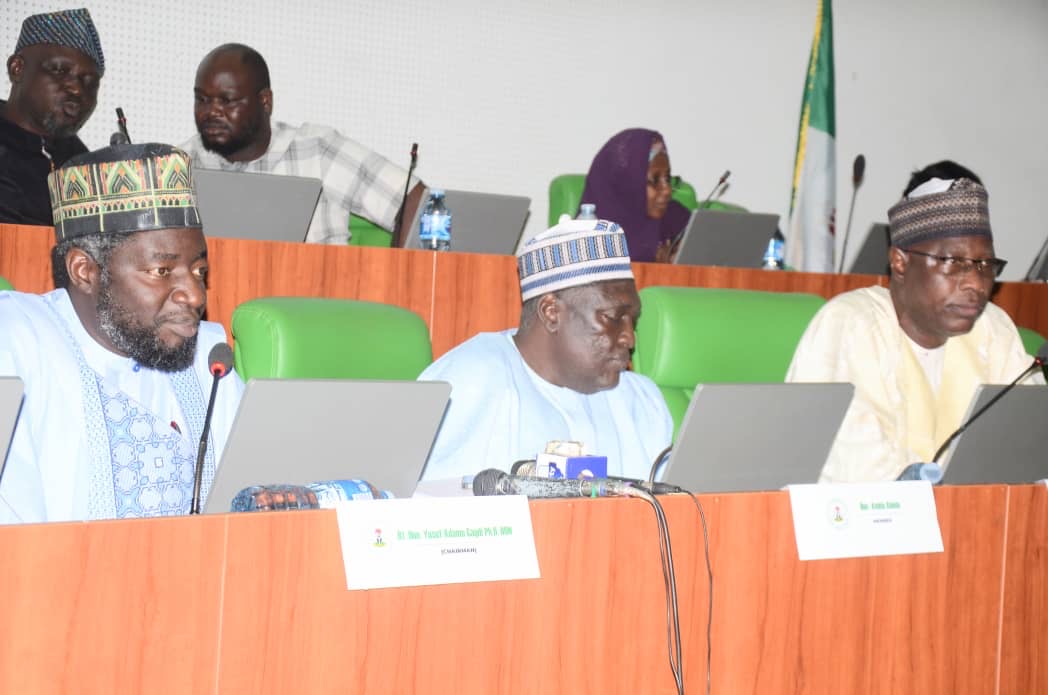
The Plateau lawmaker warned that this situation could reveal weaknesses in Nigeria’s budget process. He argued that this might not be a one-time issue.
He added, "The ease with which a single unestablished entity was processed through official processes suggests a systematic vulnerability rather than an isolated lapse, and it cannot be excluded that other fictitious entities are equally reflected in the past or current budget framework."
Gagdi said this issue threatens the credibility of the Appropriation Act and the National Assembly's duty to oversee public funds.
He cited parts of the Fiscal Responsibility Act, 2007, and Sections 80, 81, 88, and 89 of the 1999 Constitution (as amended), which give the legislature power to check public spending and look into government finances.
The House decided that the ad hoc committee should trace the alleged budget provision from the start of the executive proposal through legislative review and find out how it got in.
The committee will also invite the Minister of Budget and Economic Planning and the Director-General of the Budget Office to explain how they verify new entities in the national budget.
Additionally, the committee will check all ministries, departments, agencies, and other bodies listed in the 2025 and 2026 budgets against their legal establishment documents and will get updates from security and anti-corruption agencies.
The House told the Accountant-General of the Federation to confirm that no money has been released and no warrant given for any provision linked to this alleged entity until the investigation is done.
They also decided that the Budget Office must submit a complete list of all ministries, departments, agencies, and other funded bodies with their legal establishment documents with every budget proposal.
Supporting the motion, Satomi Ahmad, Chairman of the House Committee on National Security and Intelligence, said this issue threatens the trust in Nigeria’s democratic institutions and budget system.
"Gagdi has brought in a very important issue, which we must confront with a very loud voice in this chamber because it has affected the very integrity of our democracy and the sanctity of our budgetary process," Ahmad said.
The Deputy Speaker, Benjamin Kalu, backed the investigation and shared that he had seen the actions of the alleged fake agency first-hand.
The House asked the committee to present its findings in four weeks for further action. This investigation comes at a time when there are renewed worries about checking government agencies and people included in Nigeria’s annual budgets.
Under current financial laws, only entities with recognized legal backing should get public funds through budget allocations.


Drop your comment
No comments yet — be the first to drop the gist 👇