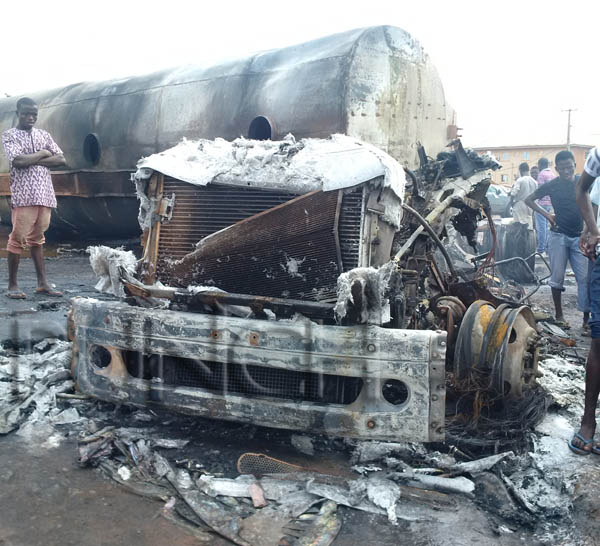
The President of the Institution of Safety Professionals of Nigeria, Timothy Iwuagwu, has called for mandatory checks and certification of tanker trucks before they leave the ports. He raised concerns about truck designs, mechanical issues, and safety standards.
Iwuagwu also advised people to stay away from fallen fuel tankers and not to scoop spilled fuel. He warned that being near highly flammable materials could lead to deadly explosions.
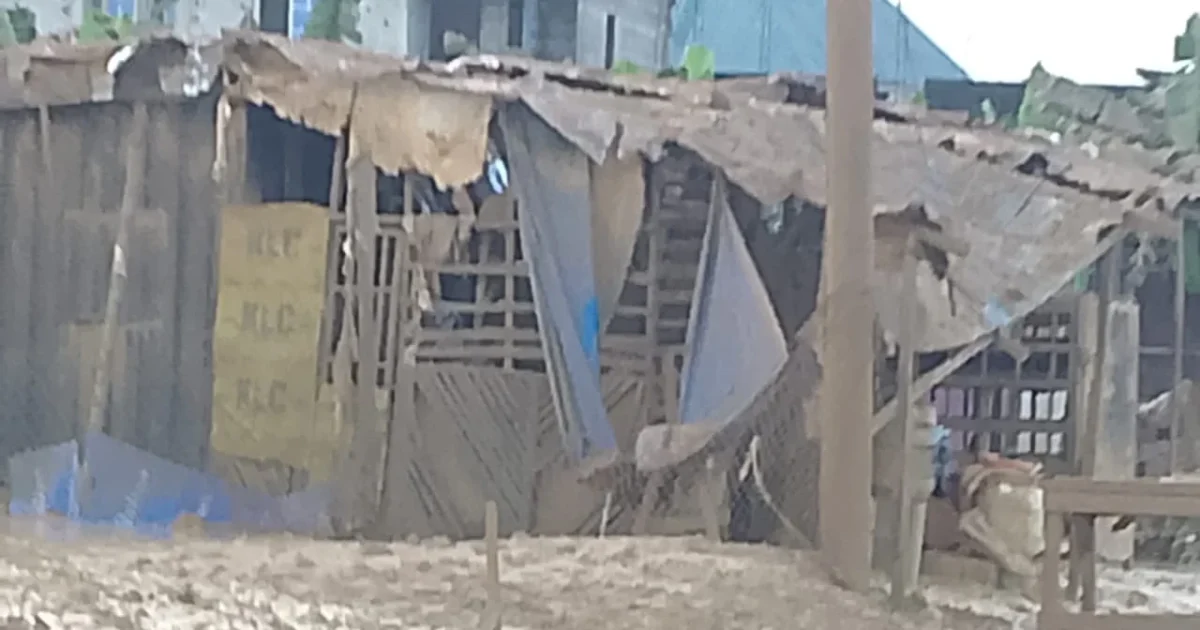
His warning follows a tanker explosion at Oluku Market in Benin City, Edo State. The incident injured several people and damaged property, including two buses, an Audi car, a truck, and parts of the market.
Iwuagwu stated, "Whenever a tanker truck that is laden with volatile organic material falls, the first thing, the first reaction by people within that environment, is to keep away. Keep away from that; they are not to go closer to it."
He continued, "And we have seen situations where people are going close and they want to take from this spilled material without giving cognizance to its high-risk nature. Exposure to such could be very, very dangerous and sometimes fatal."
"So, the first thing to tell people is: keep away, keep away! And if possible, cordon that environment so that people cannot come close to it. Where it is an organic, volatile, flammable material like the premium motor spirit, we expect that the people who are around should know that an explosion could occur by just even an electrostatic source or a spark."
Iwuagwu also warned that going near fallen tankers to scoop spilled fuel is very risky. He urged authorities to stop people from getting near accident scenes.
"And we have a whole lot of things happening around there. So, the first thing is, stop the people from getting close to that place. So, the issue of people going to scoop the material that has spilled is the most foolhardy of all decisions."
He pointed out that tanker accidents often happen due to poor safety practices, bad truck designs, lack of checks, bad road conditions, and issues with vehicle parts like tyres, suspension, and steering systems.
"The root causes can be traced to the design, because safety and security issues must be addressed from the design and construction stages of infrastructure, equipment, and components. But I think the issue is about safety compliance."
Iwuagwu explained, "The design of a truck, whether it is imported from Europe or the United States or anywhere, it must be inspected. A lot of companies are even reluctant to allow safety professionals to look into some of these conveyances."
He added, "If you look at the truck, as soon as it fell, it spilled its content. It shouldn’t be so. It is designed in such a way that the content will remain intact. So, that, I will say, is the first stage in a root cause analysis. Beyond that, we look at the nature of our roads."


He talked about the importance of the suspension system and steering. "Because you are talking of vehicular equipment that is moving, it has tires that are in contact with the road surface, and this tire is just the first stage of the suspension system."
"It is supposed to help in absorbing shock and cushioning the effect of such shock on the entire truck and the head that is pulling it along. So, that is the next point to look at. If the tires are having uneven pressures, then there will be imbalance," he stated.
To reduce tanker accidents, Iwuagwu called for stricter checks, mandatory safety inspections, and certification of tanker trucks before they can clear customs.
He emphasized that vehicle inspection officers and road safety officials should focus on how well trucks work mechanically and their road safety, not just on paperwork.
The safety expert said, "These trucks must be inspected and certified safe enough before the custom can give or get it cleared from the port from wherever it came in."
He added, "And we look at this: up till now, we have not seriously addressed this issue of trucks of different configurations and designs coming into the country."
Iwuagwu also said that the vehicle inspection officers and road safety officers have a lot of work to do. "Because a vehicle that is moving on the road, there could be other problems."
He suggested using rail transport for petroleum products across Nigeria. He believes this would cut down the number of fuel tankers on the roads and lower the risks of transporting such flammable materials.
"The best way to move these things is by rail. It’s by rail. The pipeline is a good method, is the newest of the transportation systems or modes."
"Now, we move them by train, they don’t have to interface with the human environment. Because if you are moving these things, you must ask yourself: is there any insurance cover?"
Iwuagwu concluded, "These things are high-risk material, highly volatile, and when they leak, the vapor can attract flame from far away and bring it to the source where the leakage started. So, the railway should be the means."



Drop your comment
No comments yet — be the first to drop the gist 👇