Sometimes, a nation's future doesn't arrive with loud celebrations. It shows up quietly, in a classroom, on a football field, in a workshop, behind a computer screen, or in a child's sketchbook.
And sometimes, all it takes is for someone to notice.
The sad truth is that talent often goes unnoticed. More often than not, talent exists but is unsupported and fades away due to tough circumstances. This is why the story of 12-year-old Ogun State artist, Master Morenikeji Ebunoluwa Joshua, is more than just a nice tale. It should be celebrated and understood as a lesson in what real philanthropy can do.
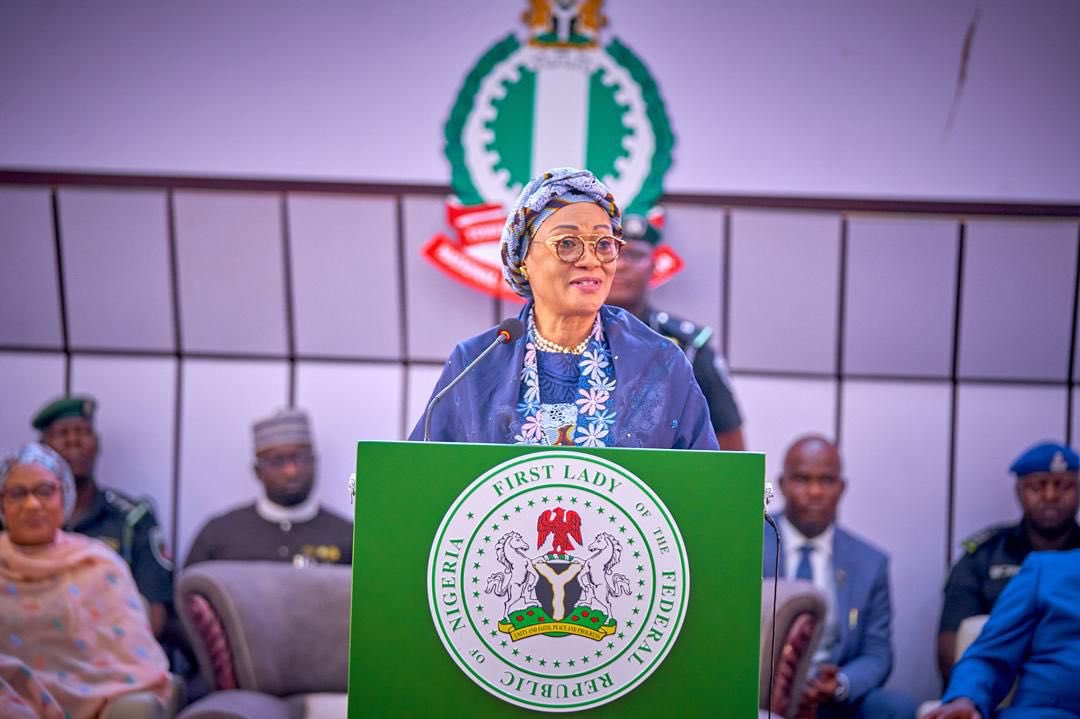
On 18 August 2026, during the launch of the South-West Zonal National Food Bank Programme at the Cultural Centre, Kuto, Abeokuta, young Joshua showed a portrait he had carefully painted of Nigeria's First Lady, Senator Oluremi Tinubu.
The painting caught her eye.
But beyond the painting was a child with a special talent, and the First Lady did something powerful: she stopped to notice him.
She called the young artist to the podium and promised ₦10 million for his education.
Less than a month later, that promise became real.
The First Lady kept her word by setting up an Education Development Trust Fund to help Joshua through university, with an account opened just for his educational needs.
This shows the difference between a promise that gets applause and one that truly changes a life.
The importance of this act is not just in the ₦10 million. It is in how quickly and purposefully the promise was kept.
In a society where public promises can sometimes lose their meaning, Senator Tinubu has shown that compassion is most meaningful when actions follow intentions.
A promise made to a child is not just a ceremonial statement.
It is a moral duty.
But there is another important part of Joshua’s story.
His journey did not start on that August day. Three years earlier, Ogun State Governor, Prince Dapo Abiodun, saw Joshua’s work at an exhibition. When he found out the talented artist was still in primary school, the Governor awarded him a scholarship for his primary and secondary education.
That support built the first bridge between talent and opportunity.
The First Lady’s support has now extended that bridge to university education. This is how a chain of good deeds is made.
One person spots a talent. Another person helps it grow. An institution gives it structure. And a child who might have faced difficulties is given a chance to dream bigger.
Governor Abiodun deserves praise for spotting Joshua early and investing in his education. Senator Tinubu also deserves praise for recognizing the same potential, responding generously, and most importantly, keeping her promise.
There is something powerful about that sequence. It tells a child that his talent matters. It shows him that his situation doesn’t have to decide his future.
And maybe most importantly, it shows him that society has not forgotten him. That is the deeper meaning of real philanthropy.
We should not treat Joshua’s story as just a heartwarming tale to enjoy today and forget tomorrow.
Nigeria has many Joshuas.
They are in classrooms in rural areas. They are in crowded neighborhoods and underfunded schools. They are on football fields, in music studios, at roadside workshops, and behind makeshift computers. They are young inventors without tools, bright students without school fees, athletes without equipment, musicians without instruments, artists without materials, and exceptional kids whose potential is threatened by tough circumstances.
Their biggest challenge may not be a lack of skill. It may just be that no one has noticed them. Or that someone did see them but did nothing.
Real philanthropy changes that.
It is not about randomly giving out money. It is about turning personal resources into public hope. It finds real needs, sees potential, and creates a way for the beneficiary to grow with dignity.
The Education Development Trust Fund for Joshua is a great example because it goes beyond a cash gift. It creates a way to ensure the help continues and leads to lasting outcomes.
A cheque might open a door.
But education, mentorship, monitoring, and continued support help a young person walk through that door and see what lies ahead.

Not everyone can give ₦10 million.
But everyone with some influence, knowledge, access, or resources can do something.
One person can pay for a child’s WAEC or JAMB fees. A business can equip a school lab or fund vocational training. A lawyer, doctor, engineer, artist, or retired public officer can mentor a promising young person. Alumni groups can set up scholarship funds. Religious groups can help struggling families. Nigerians abroad can adopt schools, clinics, or community projects.
Sometimes, it doesn’t even need money. A word of encouragement. A lesson. A referral. A helpful introduction. An opportunity to showcase a talent.
Opening one door can change an entire life.
Companies should go beyond occasional donations for publicity and make talent development a serious part of their social responsibility. Traditional leaders, political figures, professionals, philanthropists, and community groups can create real platforms to find exceptional children and connect them with sponsors.
Imagine if every successful Nigerian supported one deserving child. Think about the impact if every professional mentored one young person.
What if every strong institution adopted one school, one community project, or one talent-development initiative?
The combined effect would be huge.
This is where philanthropy goes beyond charity and becomes nation-building. There is also a security angle to this.
A society that gives its young people education, recognition, dignity, and a genuine path to success strengthens their sense of belonging. It reduces the hopelessness that can make young minds vulnerable to crime, drugs, extremism, and other dangers.
Every properly supported child is more than just an improved life. It adds resilience to society. It means one less young mind lost to despair. It means one more citizen ready to contribute positively to the future.
Philanthropy cannot replace government. The government is still responsible for education, healthcare, welfare, and equal opportunity.
But philanthropy can support public policy by responding quickly and creatively to individual needs that might need special help.
The best results often happen when the government, private citizens, and institutions support one another.
Joshua’s story is a great example.
Governor Abiodun saw the talent and provided the educational base. Senator Tinubu met the young artist, saw his promise, and extended the support into university. The result is not just two acts of kindness.
It is a continuous opportunity.
And that might be the greatest gift of all. The portrait painted by young Joshua captured a face.
The generosity it inspired may now help reshape his future.
There is beauty in that.
A child picked up a brush to paint a portrait, and in doing so, painted a new chapter of his own life.
That is the lasting power of philanthropy.
It sees possibilities where others may see only need. It recognizes potential before the world fully notices it. And it turns privilege into opportunities for others.
Senator Oluremi Tinubu has uplifted one gifted child. Her actions can inspire the uplifting of thousands more. Let those with resources look around their communities. Let them find a Joshua waiting to be noticed.
A dream waiting to be protected. A talent waiting for support. A life waiting for one crucial intervention.
Because when generosity is combined with understanding, structure, and loyalty to promises, philanthropy becomes more than just charity.
It becomes an investment in human potential.
And when human potential is intentionally nurtured, a nation does not just help one child succeed. It helps build the future.


Drop your comment
No comments yet — be the first to drop the gist 👇