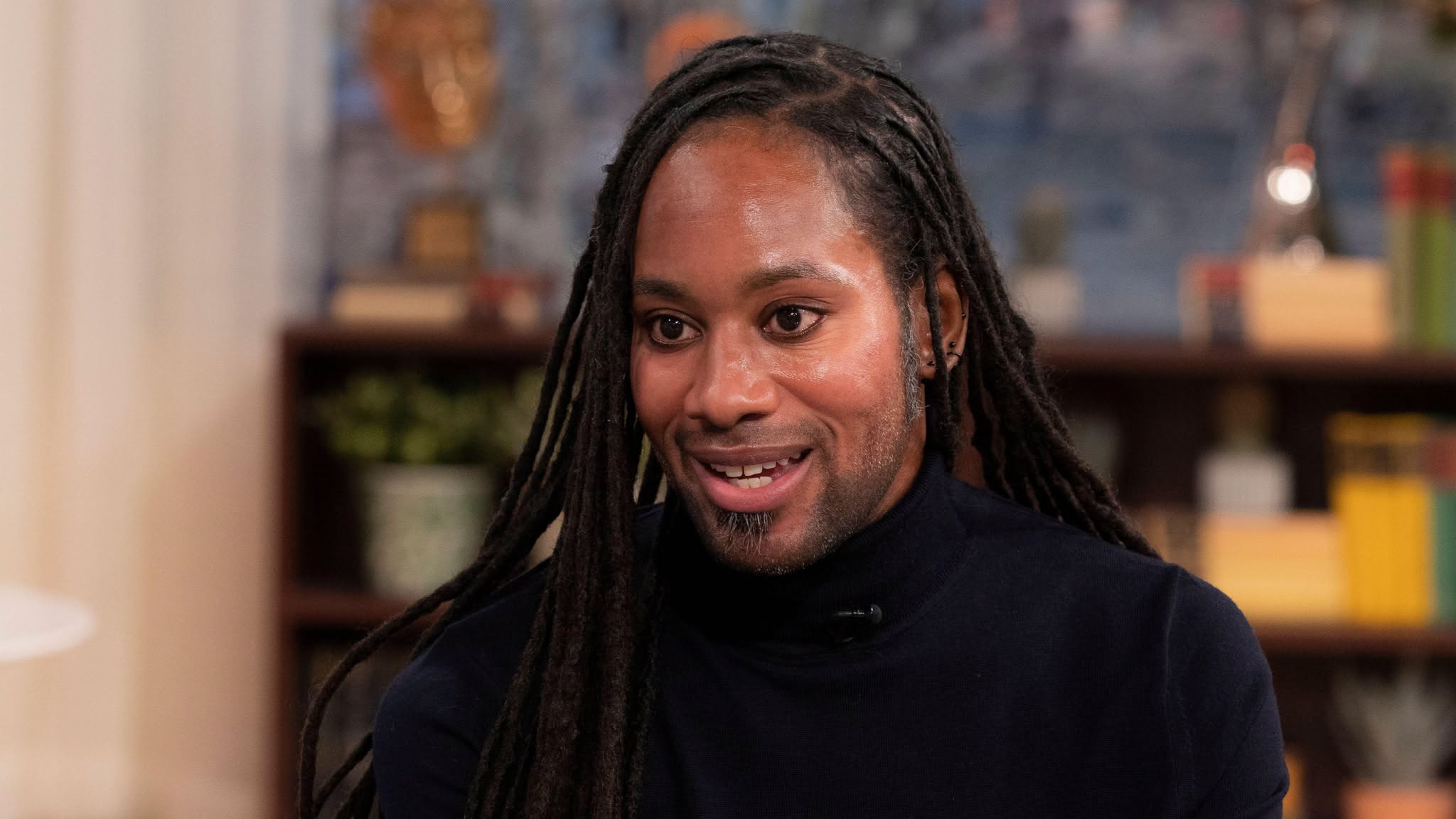
Sometimes, what a person achieves overshadows who they are. They might get into a school due to their scholarship, research, or promise. But those credentials can become more important than the person. Their appointment can symbolize progress. Their success can show diversity. If they fail, it can justify why people like them shouldn’t have been there to fail in the first place. This is one of many hard questions raised during a talk about Jason Arday. When Jason Arday became a Professor of Sociology at the University of Cambridge in 2023, he became the youngest black professor there. His research focuses on race, inequality, higher education, and mental health. His rise meant more than personal success. It happened during centuries of racial exclusion in UK universities and alongside their modern push for inclusivity.
But being visible comes with challenges often ignored in discussions about diversity. The more a person’s presence stands out at a school, the more unusual that presence seems. This makes it easy for that person to become a symbol of the school. Jason Arday was no longer just a scholar, researcher, and teacher. His position was seen as proof that Cambridge was changing. It could also be used as evidence by those who oppose such changes, suggesting that Cambridge has lowered its standards. I call this the "representational burden." Representational burden happens when a scholar becomes more than themselves in the eyes of a school. Their success becomes a symbol for a whole group. If they fail, they also fail as that representative. The burden begins when we value or criticize a scholar not just for their actions, but for what their presence says about the school. Do universities celebrate their success as a scholar or as proof of diversity? Do critics judge them as an individual or as a representative body?
This leads to the topic of academic scrutiny. Scrutiny is necessary. Universities need it. Scholarly work needs criticism, evidence, and questioning of claims. If a scholar comes from a historically oppressed group, they cannot expect protection from valid criticism just because they are marginalized. Yet, just because valid standards exist does not mean they are always applied fairly or without bias. The tough part is not whether academic integrity should be protected. It is whether it is protected fairly, without double standards, and in a way that can tell the difference between an allegation and a fact.
This was especially relevant in the discussion about Arday’s academic record and the investigation into his background. Professor Lester separated the talk about Arday’s academic conduct from the later scrutiny of his personal history. He confirmed that mistakes were made in Arday’s academic attributions but said claims about Arday’s PhD thesis had already been looked into by the awarding body. According to Prof. Lester, that investigation found citation errors but deemed them forgivable. He also said that some extraordinary claims about Arday's life had later gained evidence, while others were hard to prove. His main point was that questions about a person’s biography should not automatically reflect on their academic work.
This distinction matters more than it seems. It makes us think about what happens when a public figure’s biography becomes part of how their credibility is judged. A scholar may have an imperfect story. They might distort events in their mind, exaggerate situations, or recount their life in a way that is hard to verify later. None of this invalidates their scholarship. Academic claims and personal stories belong to different categories and need different evaluations. If those categories get mixed up, suspicion can grow. A question about citations can turn into a question about biography. A question about biography can turn into a question about character. A question about character can then raise doubts about professional achievements. Allegations can reinforce each other even when they don’t have the same evidence.
The media becomes very important here because public scrutiny does not stay within the university. According to Professor Lester, after Nathan Cofnas published a blog accusing Arday of plagiarism, 274 British press articles appeared within 22 days. Professor Lester said 23 of these were linked to the Free-Speech Union network associated with Toby Young. He mentioned that 19 appeared after Arday's resignation, and 21 were published in The Spectator. He argued that the initial plagiarism claims had not been proven and that scrutiny later expanded into Arday’s character and life story. These figures and interpretations are part of Professor Lester’s argument about the controversy.
The larger media question is significant beyond the accuracy of any single figure. When an allegation is repeated often, what happens? Repetition has a strange effect. When an allegation starts as a claim needing evidence, repeated mentions in newspapers, websites, and social media can turn it into familiar information. Familiarity can replace proof. It is more likely that people remember the allegation than any qualifications made about it. This does not mean that media scrutiny is illegitimate. The media plays an important role in raising questions about powerful organizations. But the frequency of scrutiny matters when an identifiable person is being examined.
This brings up another question from the talk: who gets to judge an academic? A university has rules for investigating misconduct. External examiners have expertise. Academic colleagues know their fields' conventions. Journalists may look into matters of public interest, while the wider public cares about institutions that get public support. But these forms of authority are not the same. A newspaper allegation is not a university finding. A social media campaign is not a disciplinary investigation. Public suspicion is not the same as academic judgment. Once these distinctions blur, the authority to judge spreads among people who may lack the same evidence or responsibility.
Professor Shose Kessi pushed this question further by highlighting how institutional processes work. She did not oppose investigations. Instead, she stressed the need to examine how they are conducted: who is on committees, what criteria are used, how complaints are handled, and how conclusions are reached. A procedure can seem neutral but may contain hidden practices that lead to different results for different groups. When many complaints repeatedly involve a specific demographic, she argued that the institution must examine its practices rather than treating each case as a separate issue.
This shifts the question from whether rules exist to how they operate. Institutions can have neutral procedures while applying them unevenly. The existence of a rule does not create equality by itself. What matters is how the rule is understood, who is subjected to it, who is protected by it, and whose situations are deemed relevant when judgments are made. This is crucial in academic institutions because universities do not just judge scholarship. They also judge people. They decide who gets appointed, promoted, funded, supported, and recognized as authoritative. The procedures for these decisions become part of how academic legitimacy is produced.
The difference between critique and attack is important for the same reason. Sabelo McInziba noted that there is a difference between engaging critically with a scholar’s work and turning criticism into personal attack. He said the engagement with Arday had moved beyond normal scholarly criticism and involved organized interests. Yet his argument returned to the importance of process. Different groups may help test allegations, but their involvement must be based on a fair process. The integrity of the process is as important as the result. The issue is not whether criticism should happen. An academy without criticism would not be an academy. The issue is whether criticism is connected to evidence and fairness. Academic integrity cannot be defended by abandoning the procedures that establish it. If the process is detached from evidence, consistency, and fairness, then academic integrity itself is at risk. What starts as an effort to uphold standards can turn into an exercise of institutional power. The difference between critique and attack is not just a wording issue. It is a difference between challenging knowledge and discrediting a person.

There is another challenge when a Black scholar reaches an extraordinary position. As the story becomes more remarkable, it is easier for the institution and society to turn that person into an inspirational figure. Arday’s life has already been framed as a story of human potential: a person who faced many challenges but reached a top position in British academia. There is power in such a story. But there is also a risk in making the inspirational narrative the main meaning of the person. When a scholar becomes a symbol of possibility, they may lose the chance to be seen as human and imperfect.
This is where the idea of Black excellence becomes complicated. Excellent achievements are important, but the need for outstanding work hides an uncomfortable truth. If Black academics must prove their exceptional talent to be accepted, then glorifying such exceptionalism may reinforce the barriers they faced. An exceptional individual becomes proof of how well the system works, while the structures that made their success exceptional are overlooked. One person succeeded, and the institution uses that success to claim openness. The question of how many equally talented people never got the chance to succeed remains unanswered.
To be clear, the story should not be simplified to a triumph over adversity. Such a view can hide the structures that shape whose potential is recognized and supported. The remarkable individual can become the focus while the institutional conditions surrounding them fade from view. A better question is not just how one person overcame barriers, but how many people with potential never got the chance to show what they could achieve.
Professor Christine Vogt-William tackled this issue through invisibility and hyper-surveillance. For black and minority ethnic academics, there can be an awkward balance where they are not recognized enough as intellectuals but are heavily scrutinized when things go wrong. Good news may seem like an exception, while bad news gets exaggerated. This leads to a paradox of visibility: a scholar can be seen as a representative of diversity without being recognized as an intellectual individual. This helps explain why the Arday controversy cannot simply be seen as a question of racism or academic misconduct. These issues must remain separate but still allow us to examine how they interact.
Professor Vogt-William also raised the question of consistency. She wondered how universities like Cambridge can hire academics whose views she believes are problematic, while there is much focus on hiring and researching Arday. She raised this point about consistency within institutions: If academic legitimacy is strongly argued in one case, is it not fair to raise similar questions in another? This brings up a broader issue of whether principles like merit and academic integrity mean the same thing for different people.
This is where the individual case opens into a larger structural question. Jason Arday’s story matters not just for what happened to one scholar but also for examining the conditions that allow certain people into positions of authority. Who is seen as having intellectual potential? Who gets the resources to develop that potential? Who is supported when they struggle? Who is scrutinized when they succeed? Who gets to make mistakes without those mistakes reflecting on a whole group? These questions shift the focus from the individual to the institution that decides how individuals are recognized in the first place.
The academy needs standards and criticism. Accountability is also necessary, but it should not confuse fairness regarding whom it applies to, what evidence is, who gets to judge, and how judgment is made. Without this clarity, accountability becomes a performance, scrutiny turns into punishment, and academic integrity becomes a tool for institutional power. The real question is not whether Jason Arday was perfect. He was human. The question is whether an academy committed to equality can let its Black scholars be human while still holding them to high intellectual standards. An equal academy is not one where Black scholars are shielded from criticism. It is where criticism is guided by the same rules of evidence, balance, and fairness as anyone else's. It is not an institution that celebrates Black intellectuals just for being Black or makes their Blackness the reason for more skepticism. It is an academy where they are recognized as scholars first.
The controversy around Jason Arday leaves us with a tough question. It is not just about who gets into the academy but what happens to them once they join. Inclusion cannot just be about how many Black scholars hold powerful positions. We must consider the type of scrutiny they face, the mistakes they can make, and the support they receive. We also need to see if they can live their lives as individuals or symbols. Once we ask these questions, it is not just about one person’s story. It is about what the academy does. How it recognizes intelligence, offers opportunities, and constructs ideas of merit for people who were once marginalized.
The Arday issue does not end with the controversy. It starts there. His story pushes us to look beyond the individual and examine the environment he entered. We need to ask why some academics carry representation, why some must be exceptional to be seen as ordinary, and how criteria for academic legitimacy can become problematic regarding race and power. The second question is unavoidable: Since the Arday affair was not just about one person’s actions but about the processes that shape academic authority, how are those processes determined? What gives the appearance of neutrality in a university that creates inequalities in recognition, scrutiny, and opportunity?


Drop your comment
No comments yet — be the first to drop the gist 👇