
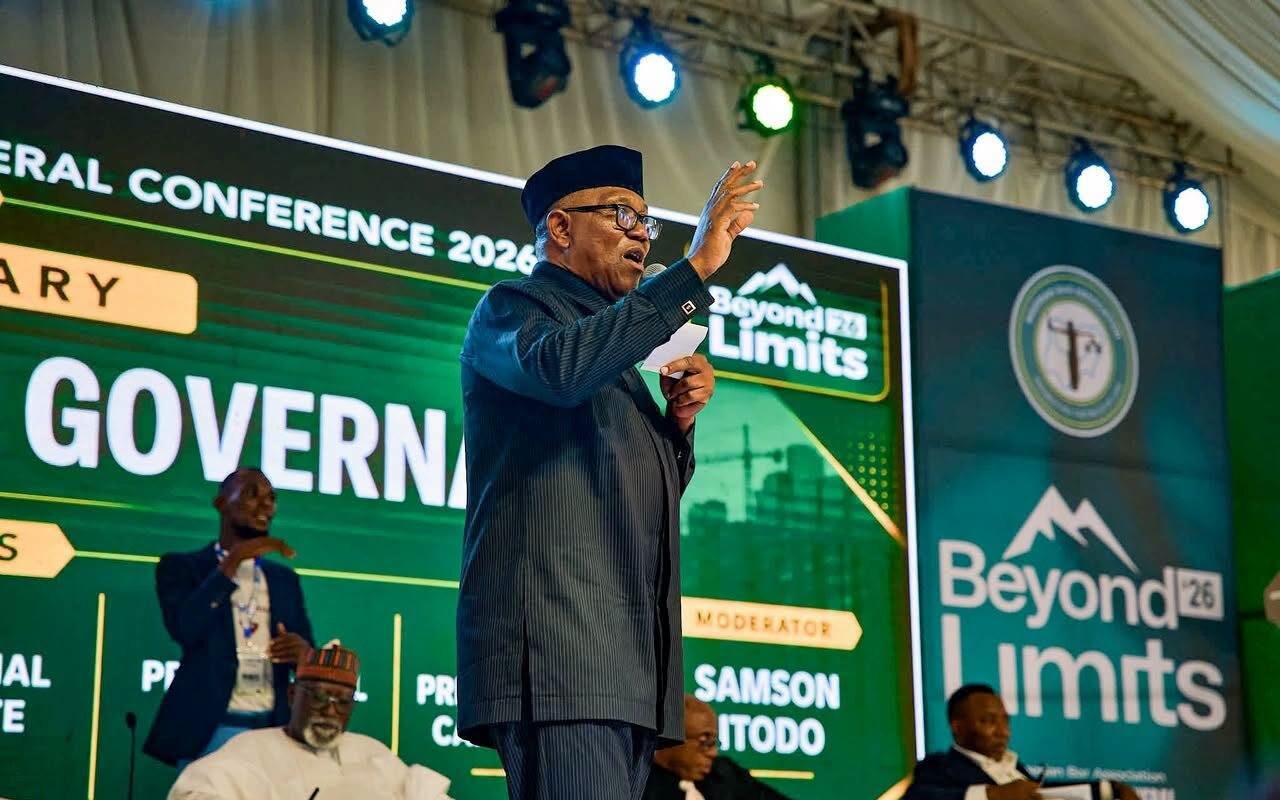
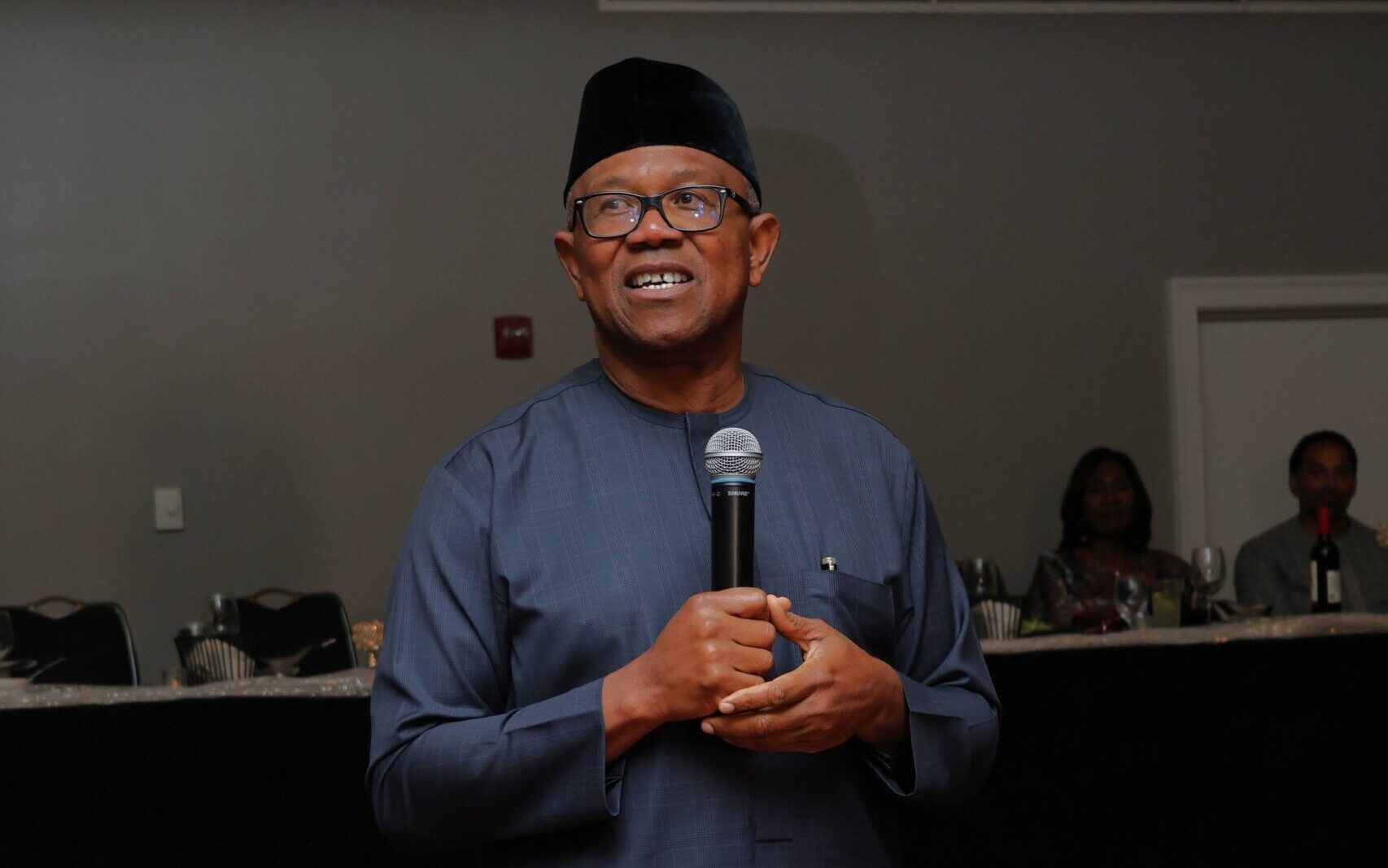
NDC presidential candidate, Peter Obi.
Peter Obi has won back for the Igbos some political dignity and respect. For years, Igbos were mocked for not having a candidate for the highest office in Nigeria. But Peter Obi proved that a good candidate with integrity from the South-East could win votes across the South-East, South-South, Lagos and North-Central.
Anyone who knows a bit of Nigerian history understands how the South-East, especially the Igbos, played a part in Nigeria’s politics. From before independence to after, and through the civil war from 1967 to 1970, the Igbos had a significant role. Though they were not the first to embrace Western education, they soon excelled, some would say even surpassing their South-West counterparts. Dr Nnamdi Azikiwe, who became Nigeria’s first president in a ceremonial role, championed education in the South-East after studying at Lincoln University in Pennsylvania. His success opened doors for many from the region. You may have heard of the Eight Argonauts, which included Mazi Mbonu Ojike, Dr Nwafor Orizu and Dr KO Mbadiwe.
Thanks to Azikiwe’s push for education, the Igbos produced many activists during the fight for independence, with Zik being the key figure. To cut it short, before the civil war, Igbos were not just present but were key players in Nigerian politics, the economy, and the military. One day, an uninformed politician might ask: What did Azikiwe do for the Igbos?
Then, the civil war happened.
The civil war changed everything for the Igbos in Nigeria. They lost millions of people, especially young men and children suffering from kwashiorkor, as they defended themselves for three years. They also lost their wealth. Most importantly, they lost their status as a key part of Nigeria’s political structure. But they kept their heads high. As I noted in a previous piece, Igbos have been praised for how quickly they rebuilt their land, society, and economy after the war. But this came at a high cost. Igbos often have to work much harder than people from other regions just to earn a little money. They have had to deal with federal systems and buy jobs meant for others because their presence is often unwelcome. It became so bad that an Igbo person might have to beg someone from the North to be the face of their business to make it appealing to the Nigerian system.
The civil war hit the Igbo political structure hard. They lost their ability to act independently due to the post-war policies in Nigeria. This is why most political decisions made in Igboland today have been taken from outside the region. This is to ensure that the political elites serve interests that do not align with Igbo interests.
So, when you hear some governors, lawmakers, ministers, and business people making statements that upset most Igbos, understand where they are coming from. Many of them, especially those who claim to be successful, know the struggles they faced to reach the top. With the odds stacked against them, they have had to serve Northern and South-West politicians who might not be as capable as they are. Any idea that challenges these people becomes a threat to their positions. People remember how a South-East governor used to bow to the late President Muhammadu Buhari, and now he does the same with President Tinubu. This is how they play survival politics.
David Umahi has taken it upon himself to attack Peter Obi, the NDC presidential candidate. Of course, Umahi does not have to support Obi just because they are both Igbos. They belong to different political parties. But many are annoyed by the vicious lies Umahi tells about Obi. Even President Bola Ahmed Tinubu must sometimes wonder why his Igbo allies are attacking Obi. If Umahi is not challenging Obi to a debate, he is accusing him of changing a street name in Anambra, which happened long after Obi left office, or of firing an Ebonyi man as vice chancellor of Nnamdi Azikiwe University, a federal institution where the president makes appointments, not Obi.
Before Peter Obi came into the national politics, Igbos were seen as not mattering in Nigerian politics, unable to agree on any political stance. Since 1999, the South-East has mostly supported the PDP, from Olusegun Obasanjo to Goodluck Jonathan. In 2019, they backed the PDP ticket of Atiku Abubakar, with Obi as his running mate.
Let’s ignore Umahi’s childish attacks on Obi for now and focus on a more important matter about democracy and development.
In his latest call for a debate with Obi, Umahi asked the NDC candidate to explain what he has done for the Igbos to deserve their votes in 2027. Umahi is not alone in this. He has support from Anambra’s current governor, Chukwuma Soludo, a respected professor. While Soludo’s criticism is almost comical, Umahi seriously questions Obi’s contributions to the Igbos. He boasts about how he transformed his community in Ebonyi while claiming Obi’s area remains a village after his eight years as governor. But Umahi has not answered why Ebonyi State lagged behind in areas like unemployment and education during his time in office.
Sadly, reducing democracy to how a governor develops his own community is dangerous. It shows a narrow mindset. A governor is elected to serve everyone, not just his community. If Obi focused on developing all of Anambra, even if it meant his own community got less, he would be seen as fairer than Umahi. The minister, despite his love for debate, cannot call for one on that.
Most importantly, it is people like Umahi who have made the link between democracy and development weak. Umahi’s view of democracy as just roads and flyovers misses the real meaning of governance. Soludo and Umahi have strangely missed the point. By thinking democracy is about infrastructure like roads and flyovers, they have fallen into a trap and missed the core meaning of democracy: a system that allows individuals to reach their potential through freedom. Even if Soludo fixes all the erosion issues in Anambra but people cannot express themselves, democracy has failed. Similarly, even if Umahi turns Uburu into a mini-London, his idea of democracy is flawed.
This is where Peter Obi stands out.
Before Peter Obi entered national politics, Igbos were seen as not important and unable to agree on political matters. Since 1999, the South-East has mostly backed the PDP, from Olusegun Obasanjo to Goodluck Jonathan. In 2019, they supported the PDP ticket of Atiku Abubakar with Obi as his running mate. As 2023 approached, there was a belief it was time for the South-East to have a president. Interestingly, some Igbos who now say it is not their turn used to think 2023 was their moment and even ran in the presidential primaries. Senator Anyim Pius Anyim and Mazi Sam Ohuabunwa contested and lost the PDP ticket to Atiku Abubakar. In the APC, the late Ogbonnaya Onu, Dave Umahi, and Rochas Okorocha lost to Tinubu.
Let’s be clear: Obi’s place in Igboland is not based on future election results. His position is already assured. It does not matter if he wins or loses in 2027. His presence on the ballot is already a sign of victory, given the many attacks against him since 2023. The attacks have come from all sides.
In a clever political move that changed Nigerian politics, Peter Obi left the PDP for the Labour Party. Obi’s performance was remarkable. Despite court rulings, many believe he actually won the 2023 presidential election. Obi might not have reached Aso Rock, but he won the hearts of many Nigerians, especially the youth looking for good governance. Peter Obi restored some political respect and dignity to the Igbos. For years, they were ridiculed for not having a candidate for the highest office. But Peter Obi showed that a strong candidate with integrity from the South-East can win votes across various regions.
Peter Obi has also made enemies among politicians, both in Nigeria and among his own people. Some Igbo politicians and business people prefer to sit at the table rather than lead it. For them, politics is a game of winners and losers. Soludo insists there is no reward for second or third place. Other politicians enter politics, as noted by American political scientist Richard Fenno, to pursue personal interests. For them, as long as their families have privileges, democracy works. They do not care if the South-East suffers politically as long as they are seen as important.
Let’s be clear: Obi’s place in Igboland is not based on future election results. His position is already assured. It does not matter if he wins or loses in 2027. His presence on the ballot is already a sign of victory given the many attacks against him since 2023. The attacks have been relentless and come from all sides. The moral standards in the country have lowered if it means discrediting Obi. Today, being financially prudent in governance is seen as bad, while collecting huge pensions after serving poorly is viewed as a good act. Not being corrupt enough to become a godfather is now seen as a weakness because Obi has allowed democracy to thrive. Integrity no longer matters in public office as long as Obi is in the discussion.
Even so, Peter Gregory Obi has nothing to prove to the Umahis who are surrounded by scandals. He has already done for the Igbos what a thousand Umahis could not in ten lifetimes. Umahi himself acknowledged this in a statement in Ebonyi, saying that Obi’s stand was making it hard for politicians like him from the South-East.
About three years ago, I went to a town hall meeting with Governor Soludo and Anambra people in Abuja. All the federal lawmakers from Anambra were there, and the governor asked for their help in developing the state. Most spoke carefully to avoid angering Soludo, except one man. When it was his turn, Senator Tony Nwoye told Soludo that there was nothing wrong with setting aside party differences to develop Anambra State. But he added that the governor could not ask everyone to work together while employing over 13 aides to insult Peter Obi, the man the Igbos owe their current respect in Nigeria. What more can anyone say except to ask: Who really needs to know what Peter Obi has done for the Igbos?
Drop your comment
No comments yet — be the first to drop the gist 👇