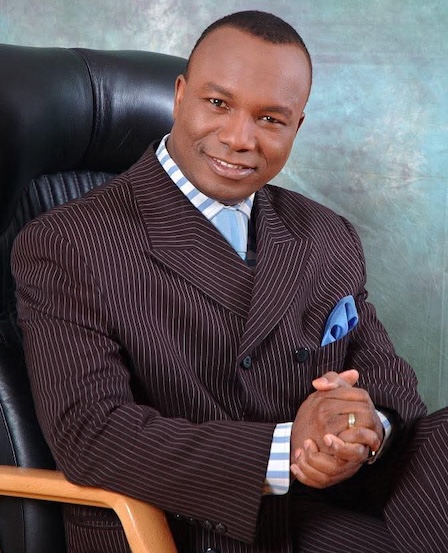
In my last article, I called Nyesom Wike the El-Terrible of Nigerian politics.
In this article, I want to discuss the three most important political figures in Nigeria today.
Peter Obi, whether you like him or not, has made a strong mark on Nigeria’s political scene. The third person in this trio is the master of the game himself, Bola Tinubu, who is also the current President of Nigeria.
Nyesom Wike’s Rainbow Coalition, Peter Obi’s Obidient movement, and Bola Tinubu’s long-term political strategies show three different ways to gain political power in Nigeria.
Nigeria’s political landscape is a great study in what makes these leaders different:
- Popularity, shown by Peter Obi.
- Coalition-building, shown by Nyesom Wike.
- Political machinery, shown by President Bola Ahmed Tinubu.
Obi proved that a politician can gain a large following outside the usual political system.
Wike showed that a politician can build connections across party lines and form a solid coalition of support.
Tinubu has, over many years, shown how to create a political machine that moves from local influence to national power.
The rise of Wike’s Rainbow Coalition offers an interesting way to look at the political shift around Obi in 2023.
OBI: The Gladiator
Peter Obi entered the 2023 presidential election representing the Labour Party and turned a small party into a major contender.
The official INEC results showed 6,101,533 votes for Obi, while Bola Tinubu had 8,794,726 votes and Atiku Abubakar got 6,984,520 votes.
The importance was not just in the number of votes.
Obi’s campaign united:
- Young voters and professionals,
- Former PDP supporters,
- Labour Party activists,
- Christian communities,
- South-East voters,
- Parts of the South-South,
- Voters looking for an alternative to APC and PDP.
The Rainbow Coalition could have been Obi’s if he understood the political skills of Wike and Jagaban.
After the 2023 elections, Obi was the strongest politician in Nigeria. He had significant influence and could have easily built a coalition similar to the Rainbow Coalition.
That difference is important.
Obi had something very valuable in 2023: millions of energized Nigerians who felt a personal connection to him, not just to the Labour Party.
The question is what happened to that political strength afterward.
WIKE: The Gladiator
Wike represents a very different approach.
His main strength has never been social media hype. Instead, it has been:
- Relationships,
- Institutional knowledge,
- Political negotiation,
- The ability to stay relevant across different political groups.
Wike and four other PDP governors refused to back Atiku Abubakar, the PDP presidential candidate, even though other PDP governors did.
This was a bold political move.
Wike showed that a politician does not need to lead the biggest party to have real political power.
The G5 gave him bargaining power because the governors controlled state political systems and resources.
Wike’s Rainbow Coalition now builds on that idea.
He says the coalition will support Tinubu’s 2027 presidential campaign while staying independent from the APC. He argued that parties in the coalition should be free to choose their candidates for governorship and legislative elections.
This is significant because it separates support for the presidency from loyalty to the party at other levels.
This is why some APC governors are worried.
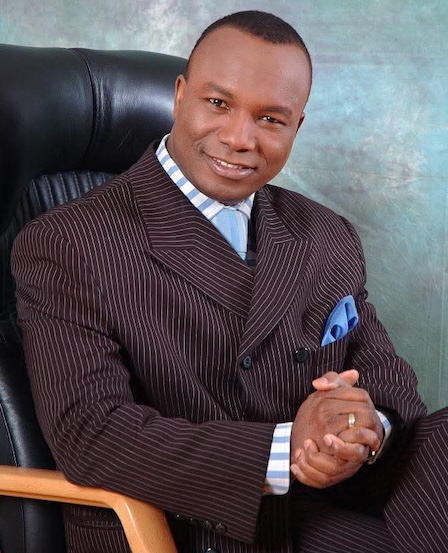

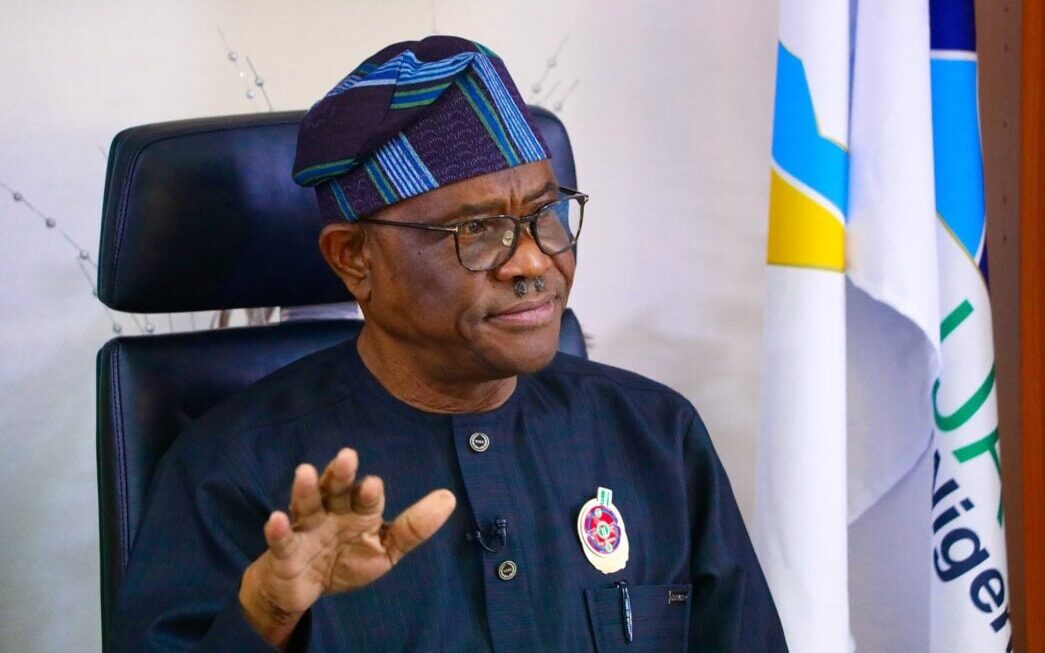
The Progressive Governors’ Forum has turned down political setups that could weaken APC candidates or party structures.
Wike’s response has been clear:
You cannot ask politicians to support your presidential candidate and also dictate all their other political decisions.
Whether one agrees with this is a political choice. But as a strategy, it’s clever because it uses the fact that Nigerian voters can choose differently for different offices.
WHY THE RAINBOW COALITION IS CAUSING CONCERN
The key point is that the Rainbow Coalition is not yet a proven national electoral machine.
That should not be overstated.
But the concerns among some APC governors make sense from an organizational view.
Governors typically work through:
- State party structures,
- Local government systems,
- Ward organizations,
- Legislators,
- Political appointees,
- Traditional political ties,
- Candidates and aspirants.
A presidential campaign can gain support from a cross-party network that does not rely entirely on the formal APC structure.
This could create a new way of mobilizing political support.
Recent reports describe the disagreement as a battle for political power and influence, not just about whether to back Tinubu.
Some APC politicians are also looking at new alliances to counter Wike’s network.
TINUBU: THE GLADIATOR
Tinubu’s political success must be seen over decades, not just one election.
He built his influence in Lagos, developed a network for successors, helped transform the Alliance for Democracy into the Action Congress of Nigeria, and played a key role in forming the APC.
His influence was not just about: “Tinubu ran for president and won.”
It was:
- Building political infrastructure,
- Developing political ties,
- Maintaining influence,
- Engaging in a national coalition,
- Becoming a national power broker,
- Finally seeking the presidency.
This was shown by Muhammadu Buhari, who struggled until he formed alliances with other political groups that helped him win.
I remember a similar situation in the U.S. when Obama was very popular like Peter Obi today, but that popularity alone did not win him the election until he built a grassroots movement that swept across the country, making him the first minority black President in American history.
Al Jazeera’s report on Tinubu’s political career highlights his role in the APC merger that helped bring Muhammadu Buhari to power in 2015 and his earlier development of a Lagos-centered political network.
The 2015 APC victory was crucial because it showed that Nigeria’s opposition could beat the PDP’s long dominance through a political merger.
Tinubu was not just a candidate in an existing machine.
He was one of the key figures who helped build the machine.
That difference is important.
In this article, I highlight the personalities shaping Nigeria’s political scene. They are called gladiators, and I pointed out why they hold power.
Popularity, shown by Peter Obi. Coalition-building, shown by Nyesom Wike. Finally, political machinery, shown by President Bola Ahmed Tinubu.
In conclusion, I see that Wike is already forming a coalition that could lead to national power. Peter Obi has the popularity that Wike lacks, but to win national elections, you also need a strong structure.
If Obi could combine this with his popularity, he would be unbeatable in any Nigerian election. In my next article, I will discuss the lessons these great sons of Nigeria can learn from one another. For The Love of God, Church, and Nation.
Drop your comment
No comments yet — be the first to drop the gist 👇