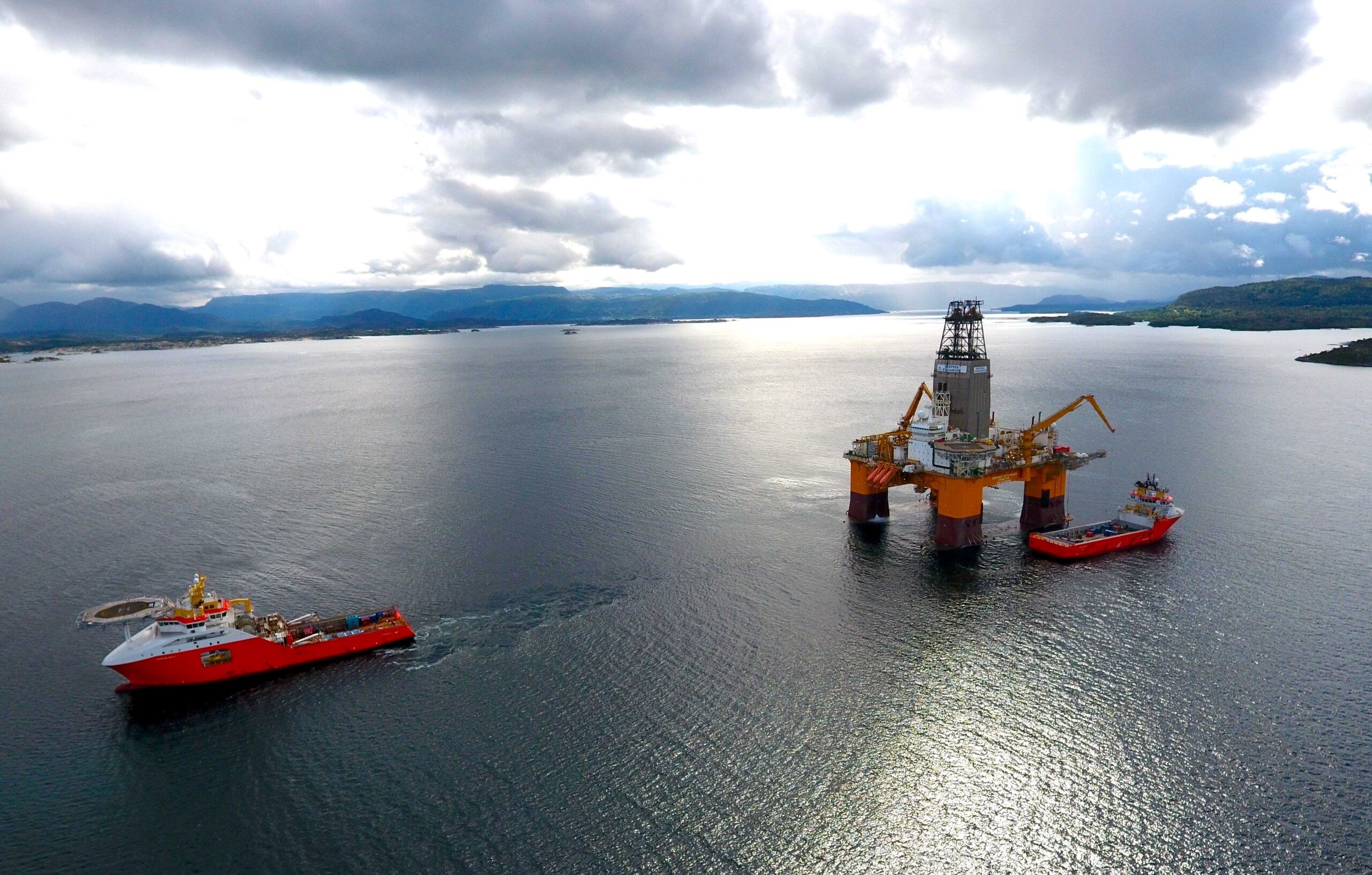
Malawi, Kenya, and Madagascar are the first African nations to speak up about deep-sea mining. At the 11th Our Ocean Conference in Mombasa in June, they joined 40 countries worldwide in supporting a precautionary pause on deep-sea mining in international waters. These waters cover 64 percent of the Earth’s ocean surface.
The international seabed lies beyond any country's control. It supports ecosystems, various species, and biodiversity. It also helps with nutrient cycling and carbon storage, which are vital for Earth’s climate balance.
While the ocean covers 70 percent of the Earth’s surface, less than 30 percent of the seafloor has been mapped. Humans have explored less than 0.001 percent of the deep ocean floor, which is about the same area as Cairo.
But this hasn’t stopped countries and companies from trying to exploit this fragile marine environment. The United Nations Convention on the Law of the Sea (UNCLOS) calls this area the 'common heritage of humankind.' This means the international seabed should benefit everyone and cannot be controlled by a few powerful nations. It is meant for peaceful use only.
Deep-sea mining has been presented as essential for the green energy transition. Metals like copper, cobalt, manganese, and nickel used in batteries and renewable energy come from deep-sea nodules found 4,000 to 6,000 meters below the ocean's surface. Yet, new evidence shows that recycling and better material design can meet these needs without starting a race to exploit the deep seabed.
The reasons for deep-sea mining are changing. It is no longer just an environmental or economic issue. It has become a security challenge too. Africa will be affected and needs to help shape global rules before powerful nations turn the seabed into a battleground.
Reports show that deep-sea mining is being used to gather military intelligence. In March, an investigation by Mongabay and CNN found that eight Chinese state-owned vessels spent less than 10 percent of their time in designated International Seabed Authority (ISA) exploration areas. The ISA, set up by UNCLOS, regulates all mineral activity on the international seabed.
In the last five years, these ships, which have ties to the Chinese Navy and dock at military ports, have traveled mostly in military-sensitive waters around Guam, Taiwan, and other strategic locations. They often turn off their Automatic Identification System transponders. Mapping the seabed and collecting data could help these civilian vessels gather military intelligence. They could identify submarine routes and enhance anti-submarine warfare capabilities.
This could help locate rival submarines and critical undersea infrastructure, like cables that carry over 95 percent of all internet traffic. These cables sometimes transmit classified military communications.
These developments mix deep-sea mining with military spying. This raises concerns that the push for deep-sea mining is also a push for control of the underwater battlefield. Deep-sea mining risks becoming a harmful industry that enables surveillance for both civilian and military purposes. It is turning into a battleground for great power competition.


In April 2025, a US executive order called for quick exploitation of the seabed outside the ISA framework. The stated reason was to 'counter China’s growing influence over seabed mineral resources' for national security and other reasons.
Deep-sea mining is becoming a maritime security issue. It threatens the multilateral governance system Africa helped build. The continent's sea routes are already areas of geopolitical competition. There has been an increase in foreign naval deployments and bases. Iran's attempted missile strike on the US-UK military base on Diego Garcia in March posed a threat to Mauritius and East African coastlines. This shows Africa's vulnerability in global conflicts.
Neither the ISA nor African maritime rules were set up to deal with deep-sea mining's hidden aspects. This creates big gaps in regulations. Global discussions on deep-sea mining mainly focus on environmental and economic issues. The security risks remain overlooked, giving powerful nations and companies a lot of freedom with little global control.
Africa has many reasons to speak out on deep-sea mining. From a security angle, the main focus should be on confronting the dual-use risks. The ISA Secretariat wants to finalize the mining code in 2026. African countries must act quickly while there is still a chance for change.
First, the African Group at the ISA should raise a formal agenda item on the security impacts of deep-sea activities at the ISA Assembly from July 27 to 31. They should push for mandatory disclosure of military links to contractors and research vessels.
This should go along with independent research on how using deep-sea mining vessels for military purposes or finding minerals for weapons conflicts with the rule of using the seabed for peace only. No mining should happen until such an assessment is done.
The African Union and African Group at the ISA must call for a continental review of the economic risks of deep-sea mining for African mineral exporters and coastal states. They should work out a united African stance, consulting continental maritime experts to view deep-sea mining as a legal, development, climate, and security issue.
This stance should focus on a precautionary pause to delay deep-sea mining until it is scientifically proven that it won’t harm the marine environment. It should also ensure that fairness, governance, and security questions are answered.
Forty-seven African countries are part of UNCLOS, which includes principles on sharing benefits and common heritage that come from the contributions of developing countries, many of which are in Africa. The question is no longer if Africa has power, but whether it can make that power count.


Drop your comment
No comments yet — be the first to drop the gist 👇