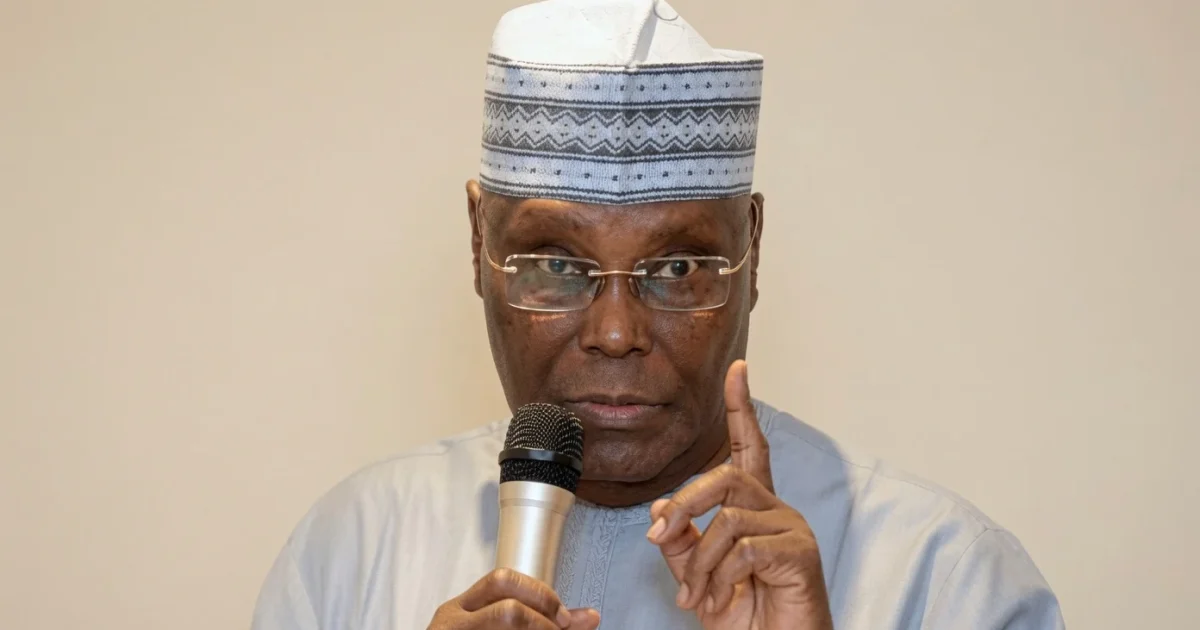
Former Vice President Atiku Abubakar has slammed the Federal Government for the drop in Nigeria’s agricultural trade balance. He says the country is losing money from exports while farmers and manufacturers face insecurity and high production costs.
Atiku stated that Nigeria's agricultural trade changed from a ₦740.27 billion surplus in the first half of 2025 to a ₦56.13 billion deficit in the same period in 2026. This is a ₦796.40 billion drop.
He blamed this situation on what he called failures in the government’s agricultural and industrial policies. He argued that Nigeria is exporting raw agricultural products without making enough money from processing them.
Atiku shared his views in a statement on Wednesday by Mr Phrank Shaibu, the Director of Strategic Communication for the ADC Presidential Campaign Council.
The National Bureau of Statistics releases quarterly foreign trade data, which includes agricultural exports and imports. The 2026 foreign trade statistics can be found on its official data portal.
Atiku pointed out that agricultural exports fell by 33.3 percent during this period. Imports also dropped, but at a slower rate.
“Tinubu cannot call this reform when the people who grow our food and the businesses that should process it are being squeezed from both sides,” he said.
He insisted that the government cannot blame the decline only on increased imports. The bigger issue is how much Nigeria is earning from agricultural exports.
“The excuse that Nigerians simply imported too much will not stand. Tinubu’s government must answer for the collapse in what Nigeria sold to the world. The country is losing export earnings, and the President owes farmers, workers and businesses more than another speech about prosperity,” Atiku said.
He mentioned insecurity, high production costs, and poor conditions for local processing as challenges facing farmers and manufacturers.
“What has his administration done to make it safer to farm, cheaper to move produce, easier to keep a processing plant running or more profitable to sell a finished Nigerian product? Farmers cannot cultivate promises. Manufacturers cannot power factories with speeches,” he said.
Nigeria’s agricultural exports still include items like cocoa beans, cashew nuts, and sesame seeds. Previous NBS data have shown that cocoa and cashew are among the country’s key agricultural export products.
The ADC presidential candidate said that exporting mainly unprocessed goods means Nigeria is missing chances to create jobs and keep more value at home.
“We grow the crop. Someone else does more of the processing, builds a business around it and earns the larger return. Then Tinubu speaks of jobs while Nigerian factories struggle to compete,” he said.
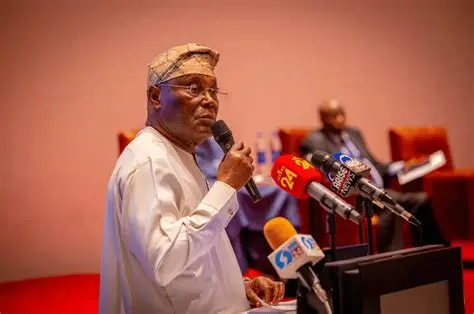
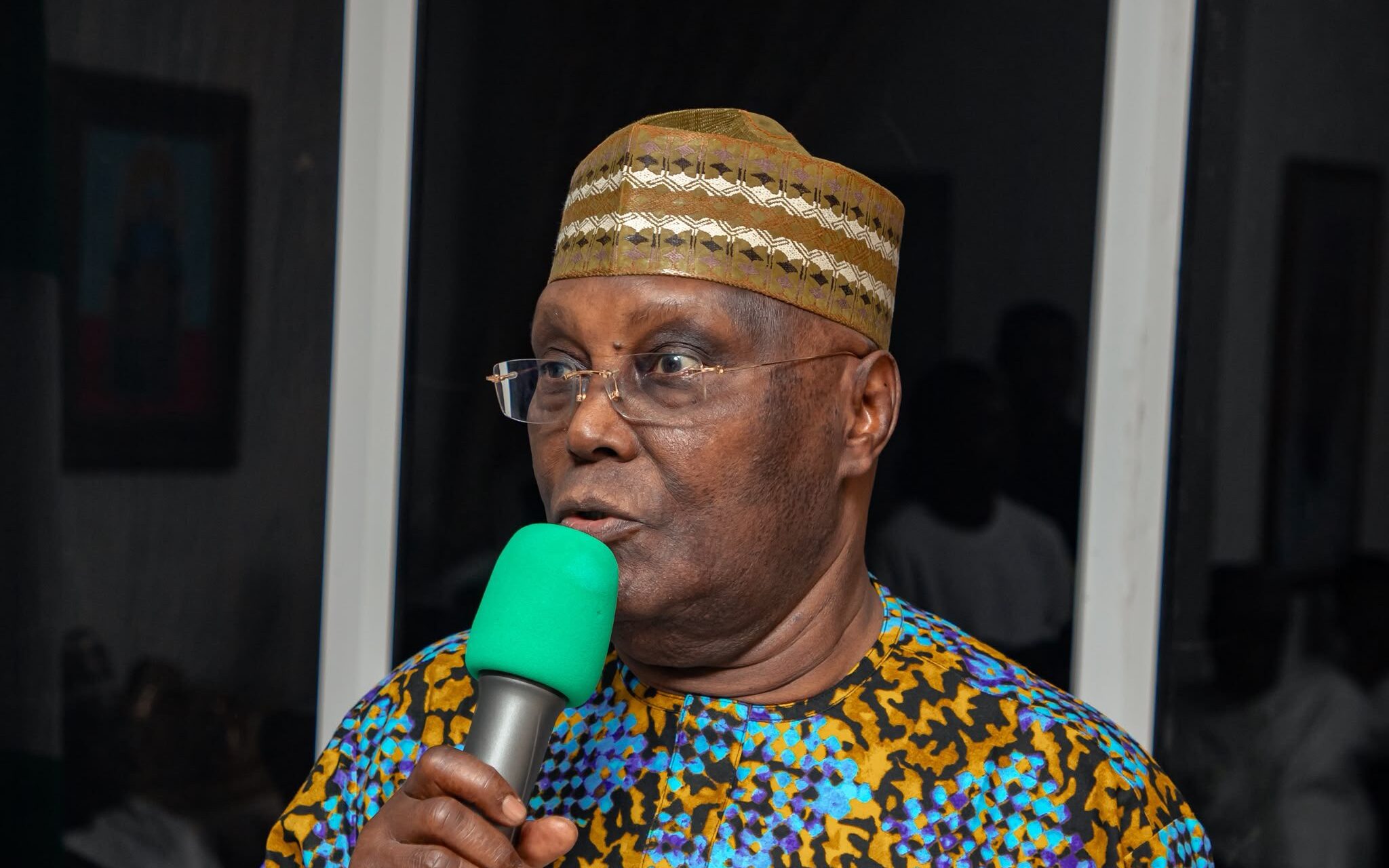
He recognized that the trade balance alone does not explain all the issues in the sector. But he believes the government should take responsibility for the policies it has put in place.
“A trade deficit alone does not explain every problem on our farms. But after more than three years in office, the President owns the decisions that have left farmers exposed and producers burdened,” Atiku said.
Atiku also connected his criticism of the agricultural sector to his plan for a production subsidy for locally refined petroleum products.
He said products refined in Nigeria, including those from modular refineries, would get support while imported products would not.
He explained that the subsidy would be capped, budgeted, and independently audited. There would also be checks to see if savings reached consumers and businesses.
Atiku criticized the Federal Government’s compressed natural gas initiative. He said the cost and availability of conversion kits have limited its benefits for many Nigerians.
“Local refining is about more than the price at the petrol pump. Aviation fuel affects fares. LPG affects the cost of cooking. Petroleum products and feedstocks affect industries and the people they employ,” he said.
He promised that an ADC government would focus on boosting domestic production and processing in agriculture and energy.
“My administration will begin restoring a transparent production subsidy from Day One. We will back farmers and processors with the same determination. Grow it here. Process it here. Refine it here. Create the jobs here. Make life affordable here,” he said.
Atiku further accused the Tinubu government of making Nigeria too dependent on raw commodities and crude oil. He said consumers continue to pay high prices for finished products.
The Federal Government has said that its economic reforms aim to strengthen local production, attract investment, and create conditions for sustainable growth.
Recent NBS data also show that Nigeria’s real GDP grew by 3.89 percent year-on-year in the first quarter of 2026. Manufacturing grew by 3.29 percent in real terms during the same time.
Atiku still believes that the agricultural trade figures should make the government rethink its policies and give stronger support to farmers, processors, and manufacturers.


Drop your comment
No comments yet — be the first to drop the gist 👇