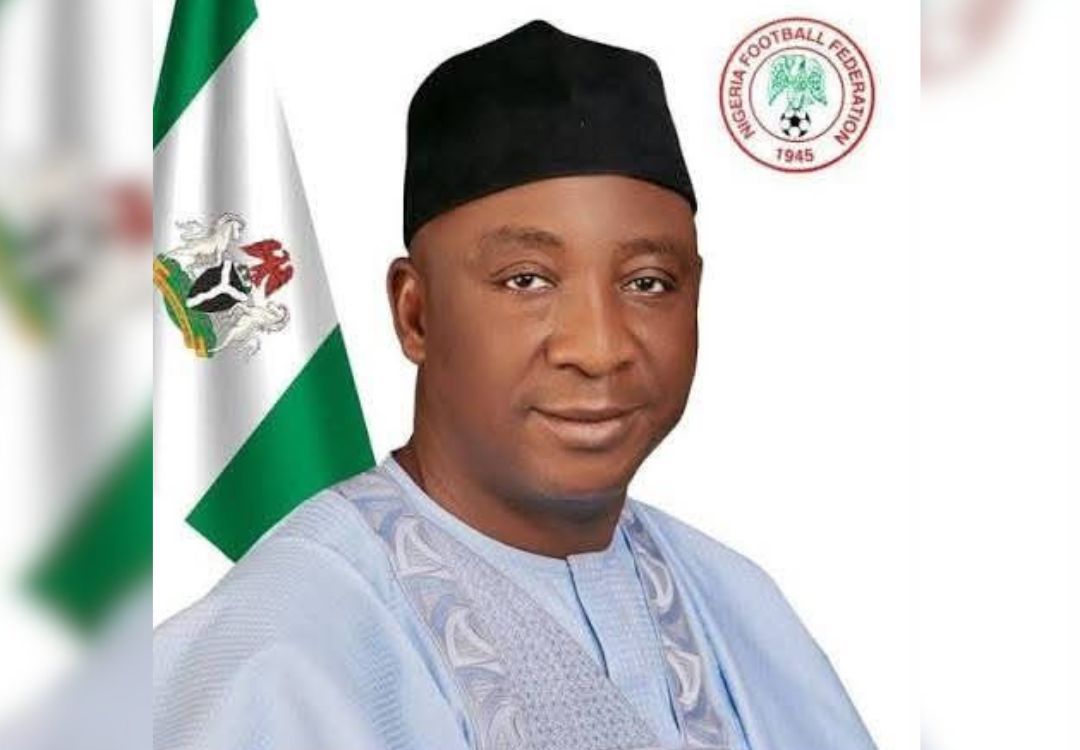
The calls for Nigeria Football Federation President Ibrahim Gusau to resign have increased after the Super Falcons failed to qualify for the 2027 FIFA Women’s World Cup.
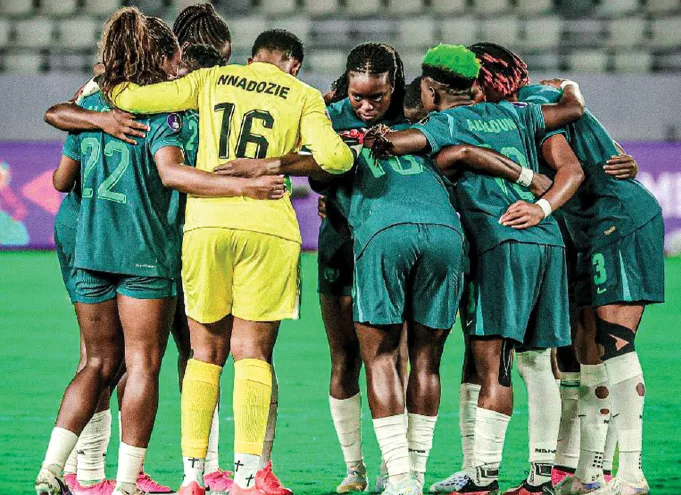
Many Nigerian football fans see the 2-1 loss to South Africa in Thursday’s crucial playoff in Morocco as more than just a disappointing match. It raises concerns about the future of football administration in the country.
This defeat ended Nigeria's impressive record of qualifying for every Women’s World Cup since the tournament started in 1991.
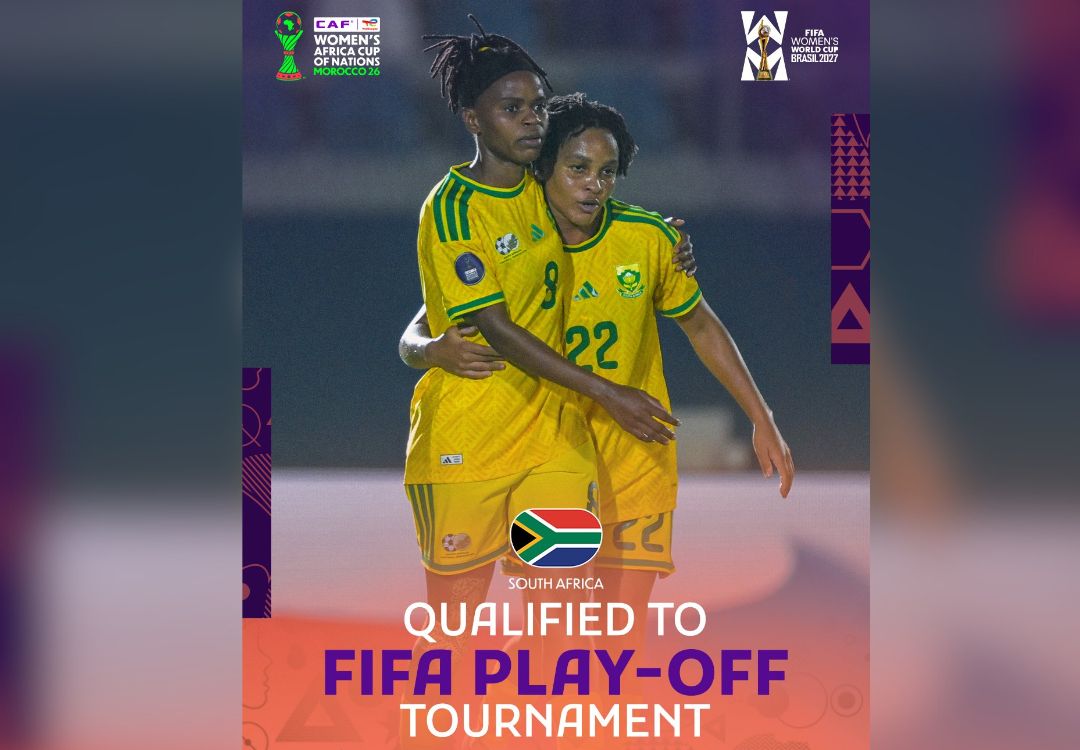
South Africa and Ghana will now play in the FIFA Inter-Confederation Play-Off Tournament, while Nigeria’s qualification campaign has come to an end.
With the NFF election just under two months away, focus has shifted from the game itself to the leadership of Nigerian football.
On social media, many fans have urged Mr Gusau to step down instead of running for another term. One fan using the handle @SarkinFoto said Gusau should submit a resignation letter, not just an apology.
“The NFF President needs to tender a resignation letter before daybreak and NOT an apology letter,” the fan wrote.
Ben Marke also expressed strong views.
“In a sane society this guy ought to resign and apologize for wasting our time,” he posted.
Another fan, @Weirdmaskman NG, questioned why Mr Gusau would remain in office after this latest failure.
“You don’t even have to clamour for his resignation. A responsible person would read the room and call it quits while he’s behind,” he said.
Some reactions were even harsher.
“He should face jail time not just resign, very corrupt and incompetent NFF president,” wrote @Martins7906202. The Beautiful Bald Man also criticized Gusau, calling him “grossly incompetent” and demanding he leave.
Olatunji Balogun was blunt in his comment.
“If FIFA wants to ban Nigeria the time is Now Because Gusau Must Go,” he stated on Facebook.
These sentiments reflect the frustrations of many Nigerian football fans after a series of disappointments in the sport.
For the second time in a row, Nigeria's men’s team also failed to qualify for the FIFA World Cup, losing to DR Congo on penalties in the African playoff final in November 2025.
This means Nigeria will miss both the men’s and women’s World Cups at the same time for the first time ever.
For a country that usually expects its senior national teams to be at major tournaments, this double failure has become a hot topic.
Before the match against South Africa, Mr Gusau faced criticism about the NFF’s preparations for the Super Falcons.
Speaking with reporters in Morocco, he defended the federation’s efforts to give the team competitive matches.
“Well, we are doing our best. You know, sometimes people just like to talk anyhow,” he said.
Mr Gusau mentioned the Falcons’ friendly games against Cameroon as proof of the federation’s preparations.
“If you can remember, between November and March this year, we made the Super Falcons have a friendly match with the Cameroonian national team in Nigeria and in Yaoundé. And then, just about two months ago, we tried to organise a friendly match for them against the Senegal national team,” he explained.
He also justified focusing on African teams instead of arranging matches against European sides.
“We are coming for an African tournament. Nobody should expect us to go and arrange a match for the Super Falcons against Norway or Sweden or what have you. We need to look at a competitive team from the African continent because we expect that along the line we can meet them and see what happens. At the end of the day, we met Cameroon,” he said.
According to Mr Gusau, setting up international friendlies for women’s teams in Africa has its own challenges, especially the costs involved.
He cautioned against what he called uninformed criticism.
“So, people can talk anyhow, not mindful of what they are saying. But, as I have said earlier, we just want you to be patient with us. By the grace of God, the girls have now gained their strength and they will make a squad, and we’ll take it from there.”
The loss to South Africa has put those earlier comments in a new light, with critics now wondering if the preparations were enough.
Criticism of the NFF leadership goes beyond the two senior teams.
The Golden Eaglets have failed to qualify for three successive FIFA U-17 World Cup editions, despite being five-time world champions.
With the Flying Eagles set to miss the next Africa U-20 Nations Cup, hopes of appearing in the next U-20 World Cup are also at risk.
The Super Falcons’ World Cup failure came just days after a disappointing WAFCON campaign.
Nigeria entered the 2026 tournament as defending champions and one of the favourites but suffered a shocking 3-2 defeat to debutants Malawi in their opening match.
The Falcons reached the quarter-finals but lost 1-0 to Cameroon, ending their hopes of defending the title and forcing them into the World Cup playoff route, where South Africa knocked them out.
The outcome has turned what could have been a tough tournament into a bigger leadership issue.
Amid this, Mr Gusau is getting ready to seek another four-year term.
The NFF’s Elective Congress has been moved to 27 September in Lafia, Nasarawa State. The congress will elect the federation’s Executive Committee for the next four years. The date change was made because the Super Eagles are playing Madagascar in a 2027 Africa Cup of Nations qualifier on 25 September.
The NFF had previously set up its Electoral and Electoral Appeals Committees, promising that the process would be free, fair, and credible. Mr Gusau told the committees to do their jobs without fear or favour.
This situation presents a stark contrast for the current president.
While Nigerians demand his resignation, Mr Gusau is preparing to ask the NFF Congress for another term.
His administration can highlight achievements in coaching education, competitions, and football development as part of its record.
But fans can rightfully question if these actions have led to stronger national teams and a better football system.
Despite the anger, there is a difference between asking for a resignation and legally forcing an NFF president out of office.
FIFA requires its member associations to run their affairs independently without outside influence. Article 14 of the FIFA Statutes specifically mandates this and outlines penalties for violations.
This principle is why the Nigerian government cannot simply remove an elected NFF president just because fans or officials are unhappy with his performance.
The NFF leadership must ultimately be challenged through the federation’s governance and electoral processes, according to applicable laws and the NFF Statutes.
This makes the September election very important.
The NFF Congress, not the wider Nigerian football fan base, will decide who leads the federation for the next four years.
So while thousands of fans may call for Gusau’s resignation, the final decision about his future will be made through the federation’s electoral system.
Shooting Stars Sporting Director Tobi Adepoju pointed out a key reality for those wanting change: the NFF election will not be decided on social media.
“The NFF election does not have voters on social media. Sadly,” he wrote.
Mr Adepoju also raised concerns about whether the government can bring change in Nigerian football without breaking FIFA's rules on interference and if there are capable people willing to take over.
He recognized the tough political landscape in football administration.
“Who are the people with capacity that deserve to lead the football ecosystem? Do we have options better than what we have now? Are they interested in playing the football politics?” he asked.
For Mr Adepoju, these questions remain unanswered as the September election comes closer.
“In politics across board, power is not given, power is taken through political strategies,” he concluded.

Drop your comment
No comments yet — be the first to drop the gist 👇