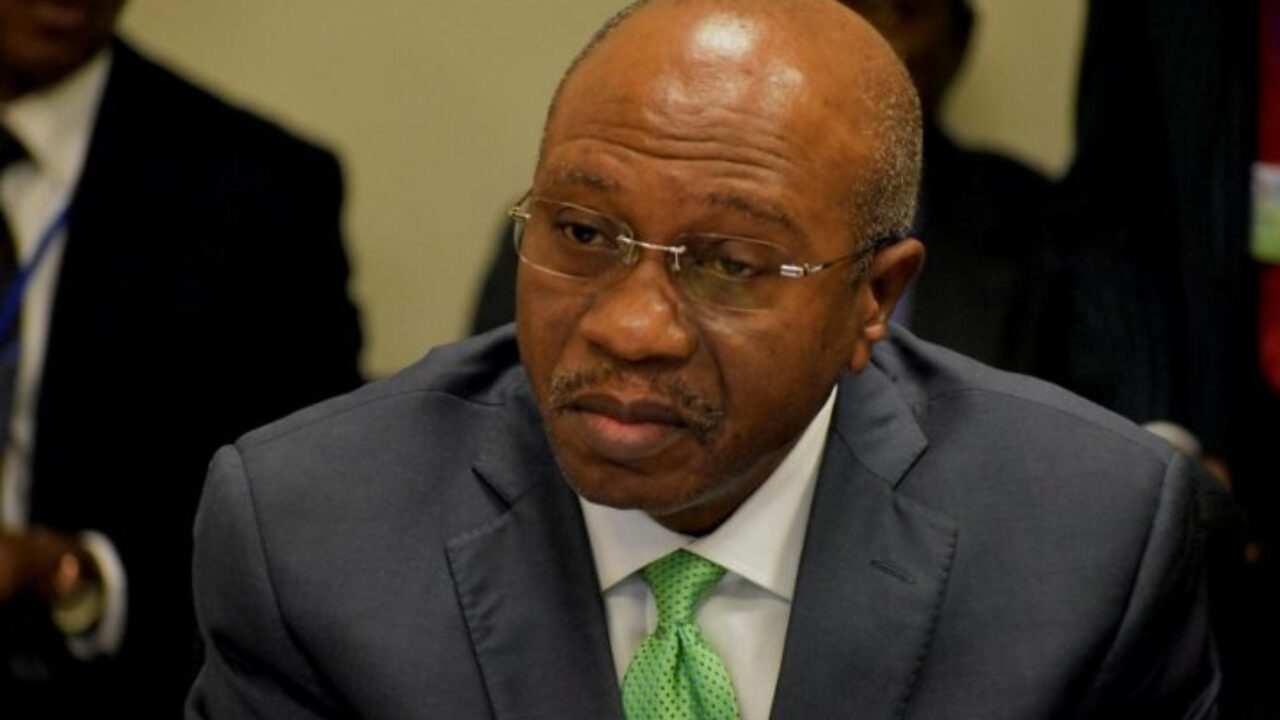
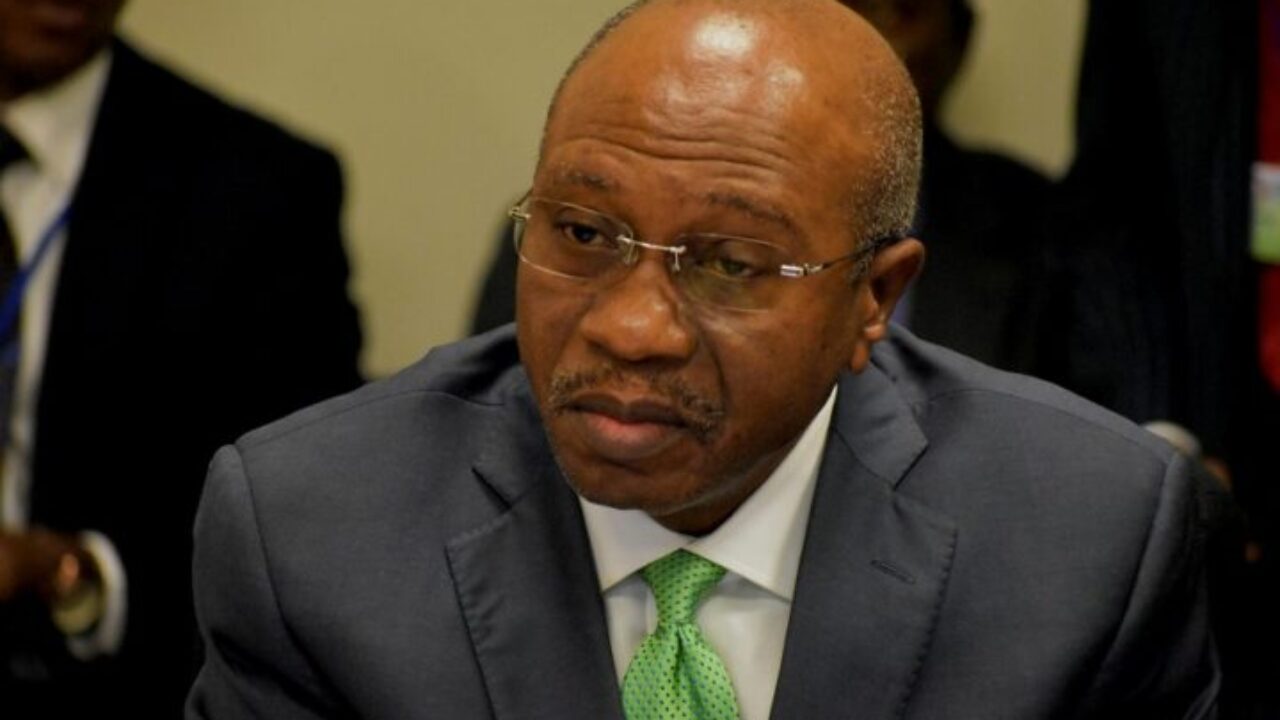
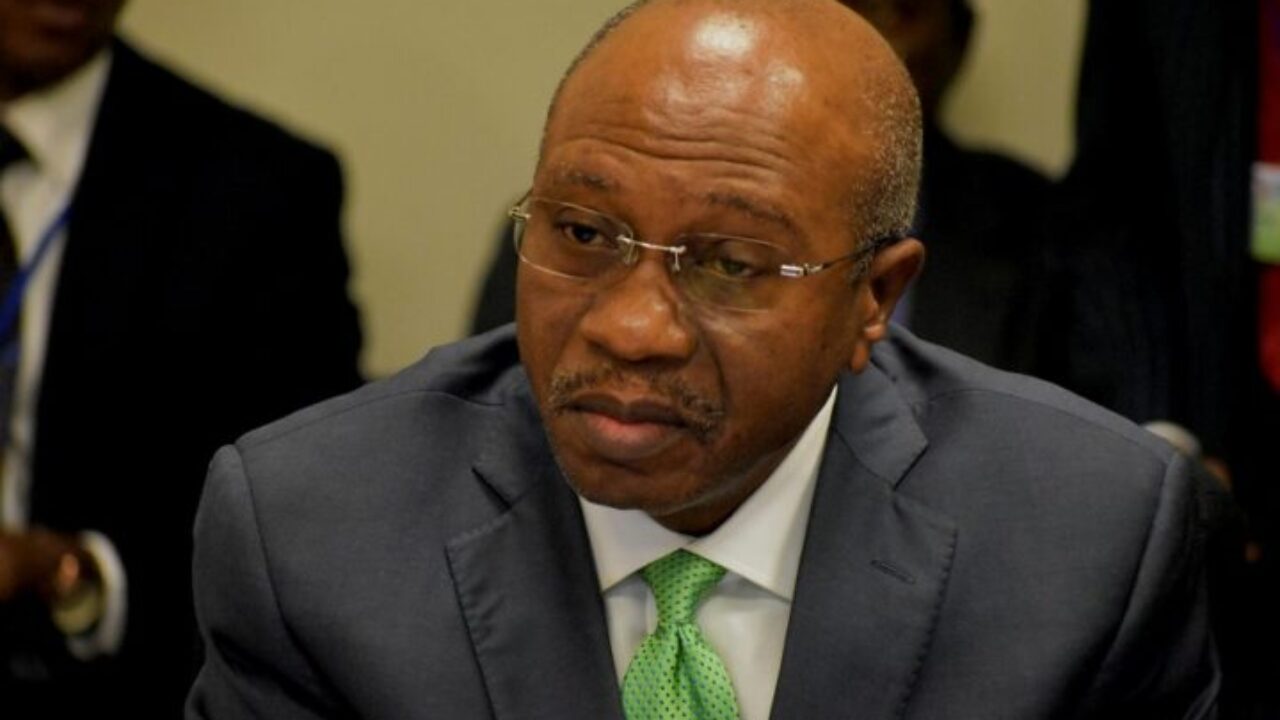
A director from the Federal Ministry of Finance told the FCT High Court in Maitama, Abuja, on Tuesday that N124.86 billion was withdrawn from the Consolidated Revenue Account (CRA) during Godwin Emefiele’s time as the Central Bank of Nigeria (CBN) governor without the necessary approvals.
Ali Muhammed, the 10th witness for the prosecution in the Economic and Financial Crimes Commission (EFCC) trial of the former CBN governor, said such withdrawals need the finance ministry's and the Accountant General of the Federation's (OAGF) approvals.
“The deduction of N124.8 billion is not known to the Federal Ministry of Finance,” Muhammed said, referring to one of the charges against Mr Emefiele in this case.
This case also includes claims of unlawful naira redesign led by Mr Emefiele. It is one of the many cases he has faced since his removal in June 2023 over alleged corruption and misconduct.
The EFCC has accused him of unlawfully redesigning naira notes and printing currency worth N684.5 million at the cost of N18.96 billion. They said he unlawfully approved the withdrawal of N124.8 billion from the CRA, breaking a rule that states no money can be taken from the account without the National Assembly's approval, usually through a budget or Appropriation Act.
The CRA was set up as the Consolidated Revenue Fund in the Nigerian constitution. It is the main account of the federal government where most government revenues go and from which spending happens with legislative approval.
In May, Hamisu Abdullahi, a deputy director at CBN’s domestic settlement division, said N124.8 billion was withdrawn without the National Assembly’s approval. Abdullahi explained that this money was used to pay off CBN’s “internal debts.”
On Tuesday, Mr Muhammed, led by EFCC lawyer A.O. Mohammed, said none of the divisions in his department at the Federal Ministry of Finance that work with the CBN knew about the N124.86 billion withdrawal. The witness, who is the Director of Home Finance, said he only got a letter from a special investigator asking about the N124.86 billion taken from the CRA.
He said he called three divisions under his department: State Finance and Public Investments, Trade Division, and Banking and Other Financial Institutions, to check if they were aware of the transaction. He also wrote to the OAGF, “being the custodian of all payments in the country, especially at the federal level,” to find out if they knew about this transaction.
He said the OAGF replied in a letter that “the OAGF is not aware of such a transaction and the office concluded that it was a direct debit from the CBN.” When asked what direct debit meant, Mr Muhammed explained, “It means it was withdrawn by the CBN without recourse to any other office.”
When the prosecution lawyer asked if the CBN’s way of withdrawing the funds was standard practice, the witness said, “Usually, the OAGF and Ministry of Finance would direct deductions to be made before any withdrawal is made.” After his findings, Mr Muhammed sent the OAGF’s response to the special investigator looking into Mr Emefiele’s time in office.
The prosecution lawyer submitted the letters from the Ministry of Finance and OAGF as evidence. Mr Emefiele’s lawyer, Olalekan Ojo, a Senior Advocate of Nigeria (SAN), did not object, so the trial judge, Maryanne Anenih, accepted them as evidence. The judge then postponed the case until Wednesday for the defense to cross-examine the witness.
So far, the EFCC has called 10 witnesses, including Mr Muhammed. Many of them highlighted the alleged lack of approvals from the right authorities for the naira redesign, which is central to the trial, and other financial transactions during Mr Emefiele’s time.
In November 2024, the fifth witness, Kingsley Obiorah, a former CBN deputy governor, testified that the bank’s board never recommended the naira redesign to former President Buhari. Obiorah, who testified virtually, said he had served as a Special Adviser to Mr Emefiele before becoming a deputy governor.
He said the CBN board first heard of the naira redesign policy in mid-December 2022. Similarly, Chinedu Eneaya testified in October 2025 that Mr Emefiele started the controversial naira redesign in 2022 without getting approval from the board or Committee of Governors (COG). He said Mr Emefiele only sought approval after former President Buhari agreed to it.
According to the witness, Mr Emefiele admitted this in his statement during the investigation. Between late 2022 and early 2023, the CBN pushed forward with the naira redesign policy, stopping the old N200, N500, and N1000 notes from being legal tender. This policy caused chaos nationwide, leading some state governors to ask the Supreme Court for help.
Mr Buhari strongly defended the policy, ignoring a Supreme Court order that paused its implementation in 2023. The Supreme Court finally ruled on 3 March 2023, overturning the policy and forcing Mr Buhari to change his approach.


Drop your comment
No comments yet — be the first to drop the gist 👇