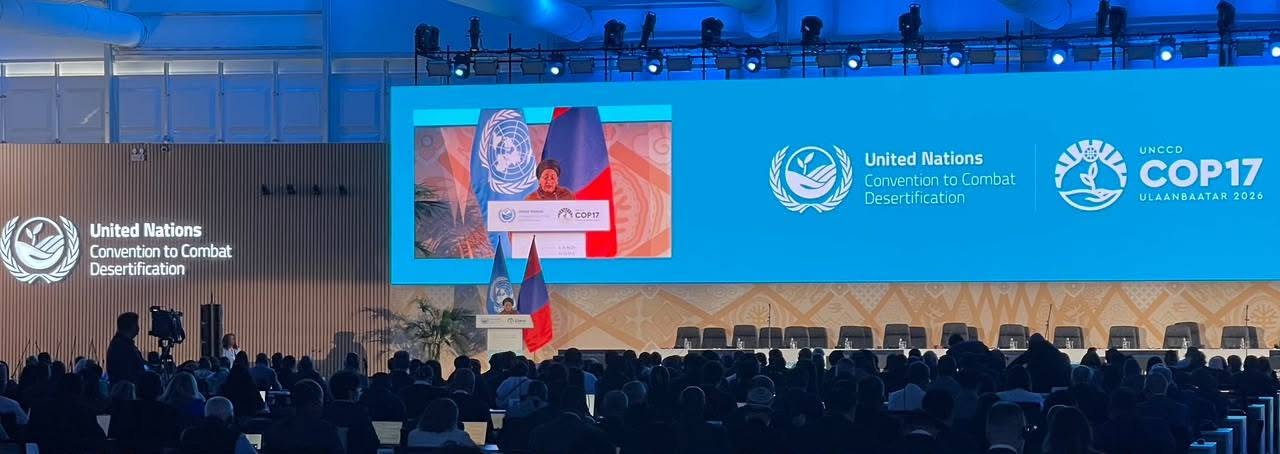
It is the 10th day of the two-week talks at the 17th session of the United Nations Convention to Combat Desertification (UNCCD COP17). The conference is now in its final and most important phase.
Wednesday is Land and Indigenous Peoples Day at the conference in Ulaanbaatar. This day focuses on land restoration, Indigenous Peoples, pastoralists, and local communities.
With less than 72 hours left before the talks wrap up on Friday, tensions are rising. Parties are struggling to agree on some key issues on the COP17 agenda.
The disagreements started early on. There were procedural and substantive differences among parties over various agenda items. Indigenous peoples, civil society groups, and young people voiced their concerns about not being included in the formal discussions. They insist their voices must be heard in decisions that affect their communities and livelihoods.
COP17 in Mongolia
COP17 began on 17 August in Ulaanbaatar, Mongolia, with the theme “Restoring Land. Restoring Hope.” The conference is set to end on 28 August.
The United Nations says the conference brings together delegates from UNCCD’s 197 Parties, as well as government, business, civil society leaders, scientists, young people, Indigenous Peoples, pastoralists, and smallholder farmers.
They are discussing solutions to the linked challenges of desertification, land degradation, and drought. The focus is on how restoring land can reduce instability, prevent displacement, and improve human and national security in vulnerable areas.
PREMIUM TIMES learned that at least 60 delegates from Nigeria are expected to be at the conference.
“Land is our most vital infrastructure, underpinning food security, water, livelihoods, and stability. When land fails, insecurity rises, through lost livelihoods, forced displacement, and increased competition over scarce resources,” said UNCCD Executive Secretary Yasmine Fouad.
“With UNCCD COP17, Mongolia is sending a powerful message: Restoring Land, Restoring Hope is not just an environmental agenda, but a priority for development and resilience.”
She explained that as drought worsens and land degradation speeds up, the conference needs to promote practical solutions. This includes restoring degraded land and soils and improving the connection between land and water to help communities thrive.
According to the UNCCD Data Dashboard, about 11.96 per cent of Africa’s land area is degraded. In Nigeria, roughly 23.41 per cent, or about 21.07 million hectares, of its total land area is degraded.
In Nigeria, officials say more than 50 per cent of the country’s rangelands and grazing routes are degraded. This situation has led to farmer-herder conflicts that have affected communities for decades.
Nigeria and other African countries are pushing for a legally binding international agreement on drought management. This agreement would create a stronger framework for countries to prepare for and manage drought.
Finance is another major issue. Nigeria’s representative to the UNCCD said increased funding is essential to support national needs, including implementing the country’s climate and adaptation plans.
But reports from the negotiation rooms show that parties are still divided over the proposed drought framework. There are concerns that unresolved issues could be carried over to a future COP.
The main issues emerging from the talks include drought management, land degradation, finance, rangelands and pastoralists, Indigenous Peoples and local community participation, and procedural and geopolitical tensions.
Drought Framework: Binding or Voluntary?
One of the most contentious issues is the push for a global framework on drought management.
African countries, small island developing states, and other vulnerable nations are pushing for stronger international action, including a legally binding agreement.
But some developed nations and other parties are hesitant about a binding agreement. They have raised concerns about its financial implications, implementation, and overlaps with existing international frameworks.
This disagreement could mean that talks might extend beyond COP17 if parties cannot find common ground.
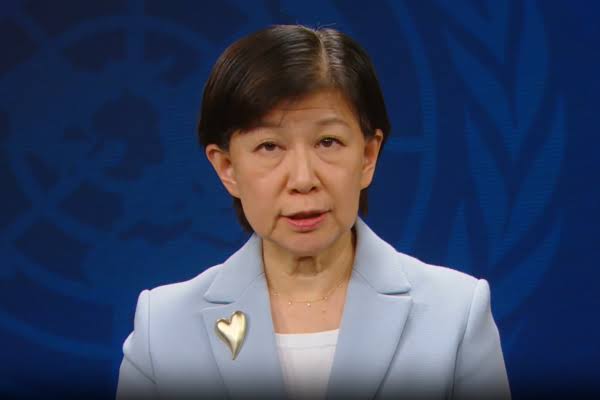
UNCCD Deputy Executive Secretary Andrea Meza acknowledged the differing views during a press conference on drought.
“We’re in the middle of the negotiation and what we’re seeing is different positions,” she said.
“We’re hearing some say this should be treated as a local issue, while others believe it needs to be addressed at the national level.”
However, she mentioned that many parties agree this is a global challenge that needs global solutions.
“I’m hopeful that countries will reach an agreement,” she added.
“Maybe we will not agree, but I think most countries, especially with Super El Nino this year, are facing many challenges and cannot return home without a negotiated outcome.”
She noted that negotiations are just one part of the solution.
“But more than what happens in negotiations is just one piece. We also need action.”
Finance and Investment
The financial gap for land restoration and drought resilience is another major issue.
Negotiators are trying to find ways to turn years of promises into real funding and action on the ground. This includes using funds pledged through initiatives like the Riyadh Global Drought Resilience Partnership.
The UN estimates that trillions of dollars will be needed by 2030 to restore degraded land and improve drought resilience.
Developing countries are asking for easier access to finance, simpler procedures, and lower costs. There is also growing interest in blended finance and more private-sector involvement.
Meza said finances must be mobilized at the level needed to tackle the growing threat of drought.
“We also need to mobilize financial resources at the scale that is needed,” she said.
She pointed out initiatives like the International Drought Resilience Alliance and the Drought Investment Facility as ways to help gather resources and private capital.
This issue is very important for Africa, where governments face serious resource limitations despite severe land degradation, drought, and desertification challenges.
Rangelands and Pastoralists
Rangelands and pastoralist livelihoods are also central topics at COP17, especially since 2026 has been designated the International Year of Rangelands and Pastoralists.
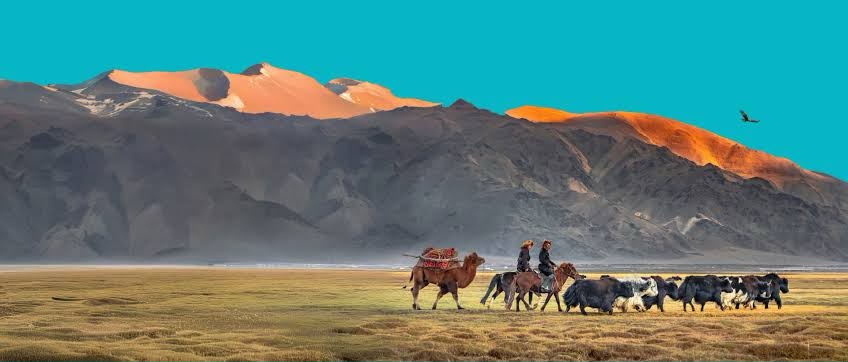
Negotiators and stakeholders are discussing how to manage grazing lands, land tenure, sustainable livestock value chains, and payments for ecosystem services.
For Mongolia, where pastoralism is key to rural life, this issue is vital.
The country’s situation shows how drought can lead to many risks, such as pasture shortages, livestock losses, food insecurity, and inflation.
A representative from the Mongolian Parliament said the country needs to shift from a reactive approach to a proactive and resilient one.
“Resilience is not just a slogan; it needs to be part of policy,” she said.
Indigenous Peoples and Local Communities
The involvement of Indigenous Peoples and local communities has become very important as negotiations reach their end.
Indigenous groups have raised concerns about being left out of formal decision-making processes, despite their vast traditional knowledge and direct experience with land degradation and drought. Some members of these groups held a peaceful protest on Tuesday to express their grievances about the process so far.
When asked how their concerns were being addressed, Meza said more efforts are needed to ensure their voices are included.
“Clearly, we need to ensure that different platforms are in place to guarantee the voices of local communities and Indigenous Peoples are heard,” she said.
She described the creation of the Indigenous Peoples and Local Communities Caucus in Riyadh as a significant development.
“This is why what happened in Riyadh, with the creation of the Indigenous Peoples and Local Communities Caucus, was significant. It was to ensure that we can hear from these stakeholders and consider their knowledge and solutions.”
But she stressed that representation should go beyond just participation.
“What we need is to understand that their needs must also be addressed and acted upon.”
Meza explained that issues surrounding one blocked agenda item could slow progress on the caucuses, though negotiations are still ongoing.
“For many countries, it’s still very important to ensure these spaces are guaranteed,” she said.
She added that the formal negotiation process is just one part of the bigger picture, and partnerships outside the formal process are becoming increasingly important.
“Now more than ever, coalitions of different stakeholders wanting to work together toward the same goal are essential,” she said.
She pointed out the International Drought Resilience Alliance as a place where Indigenous Peoples and local communities can participate more meaningfully.
“Inside the International Drought Resilience Alliance, it’s important to have diverse representation to ensure Indigenous peoples and local communities can be at the table to discuss solutions.”
Her message is that resources and knowledge must continue reaching affected communities, regardless of the negotiations’ outcome.
“We need to keep mobilizing resources for these communities and facilitating access to knowledge and information.”
She also mentioned the International Drought Resilience Observatory as a tool for wider access to information and knowledge.
“The aim of having the International Drought Resilience Observatory is to provide a friendly tool that anyone can access and learn from or share their knowledge.”
“This is why we believe it is an essential and critical tool.”
Procedural and Geopolitical Tensions
Procedural disagreements have created more challenges in the negotiations.
The conference began with tensions over a key agenda item about the post-2030 Future Strategic Framework. There have also been disagreements over gender, civil society participation, and synergies with other UN environmental conventions.
Some of these topics were provisionally set aside, which drew criticism from Indigenous Peoples and civil society groups demanding stronger representation.
These disputes highlight the broader geopolitical tensions affecting global environmental negotiations. They raise questions about how far parties are willing to compromise for a consensus outcome.
The Road to Friday
With less than three days left before the end of COP17, negotiators are under pressure to resolve their differences.
The outcome will affect more than just the conference in Ulaanbaatar.
For Africa, where drought, land degradation, desertification, and food insecurity threaten livelihoods, the stakes are high.
For pastoralists and Indigenous Peoples, the talks could determine whether their traditional knowledge and land-use practices get more recognition in global policies.
For governments and development partners, the negotiations will test if financial promises can turn into real resources for communities facing land degradation and drought.
And for the UNCCD, COP17 is a key test of whether the global community can move beyond promises to practical action with real funding.
As one UNCCD official put it, the challenge is no longer just understanding the threat.
“More than what happened in the negotiation is just one piece. We also need action.”
With the conference ending on 28 August, the results of the negotiations could decide if countries make stronger international commitments on drought or delay key decisions for a future COP.
Drop your comment
No comments yet — be the first to drop the gist 👇