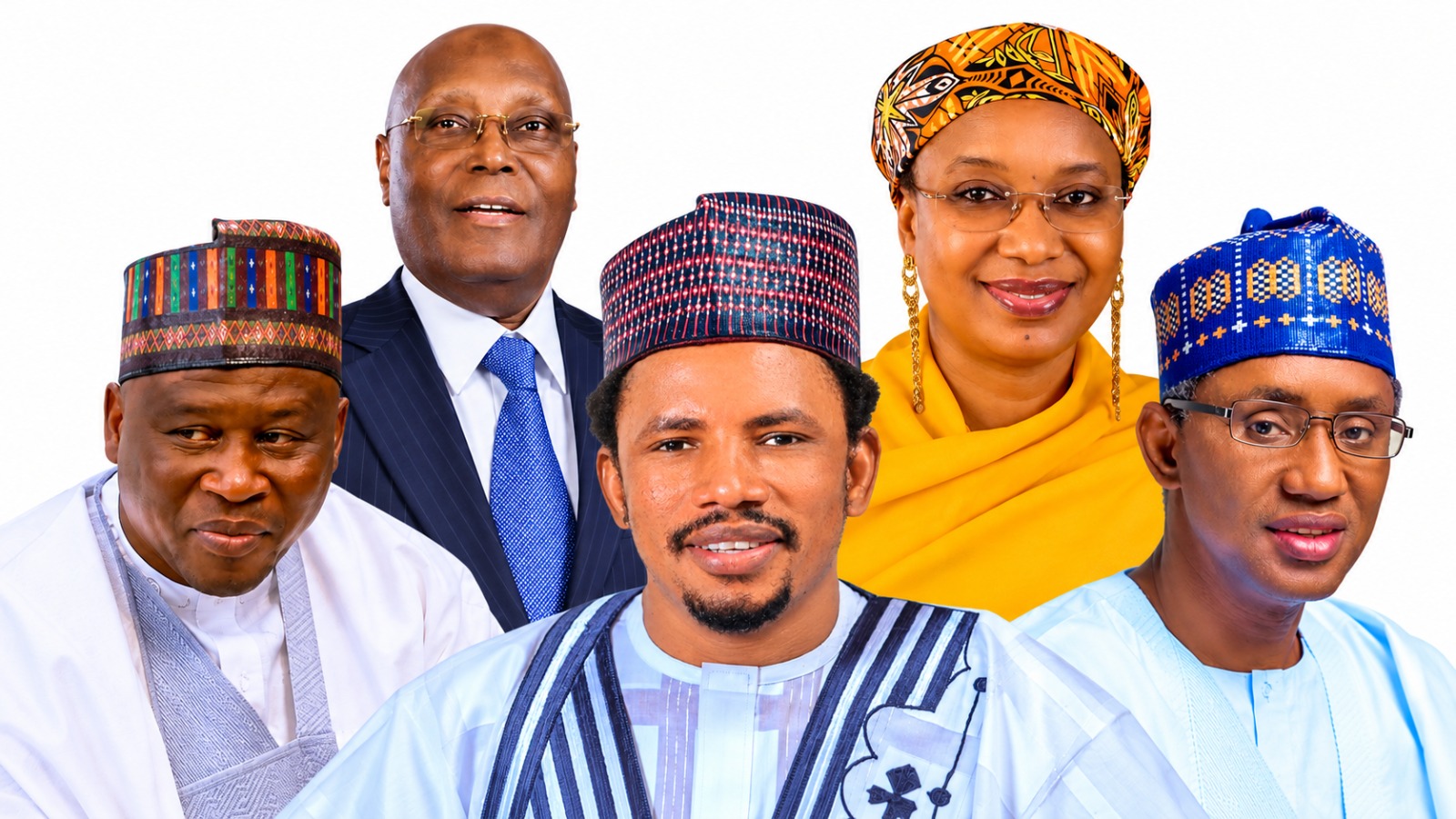
The 2027 governorship election in Adamawa State is looking like one of the most interesting in the state’s history.
Governor Ahmadu Fintiri is set to leave office when his second term ends next May. His exit, along with the different interests of former Vice President Atiku Abubakar, National Security Adviser Nuhu Ribadu, and other local factors, means no party stands out as the clear favorite as campaigns kick off.
During the 2023 general elections, Fintiri and Atiku teamed up under the Peoples Democratic Party (PDP) to defeat the All Progressives Congress (APC).
Since then, the political scene has changed a lot. Fintiri and Atiku are no longer allies, and other major shifts have happened across the state.
Now, six candidates believe they can win the governorship election.
The Power Dynamics
Fintiri switched to the APC in February. His alliance with Ribadu has boosted the ruling party in a state it lost in 2019. Back then, Fintiri beat then-incumbent Jibrilla Bindow by over 40,000 votes.
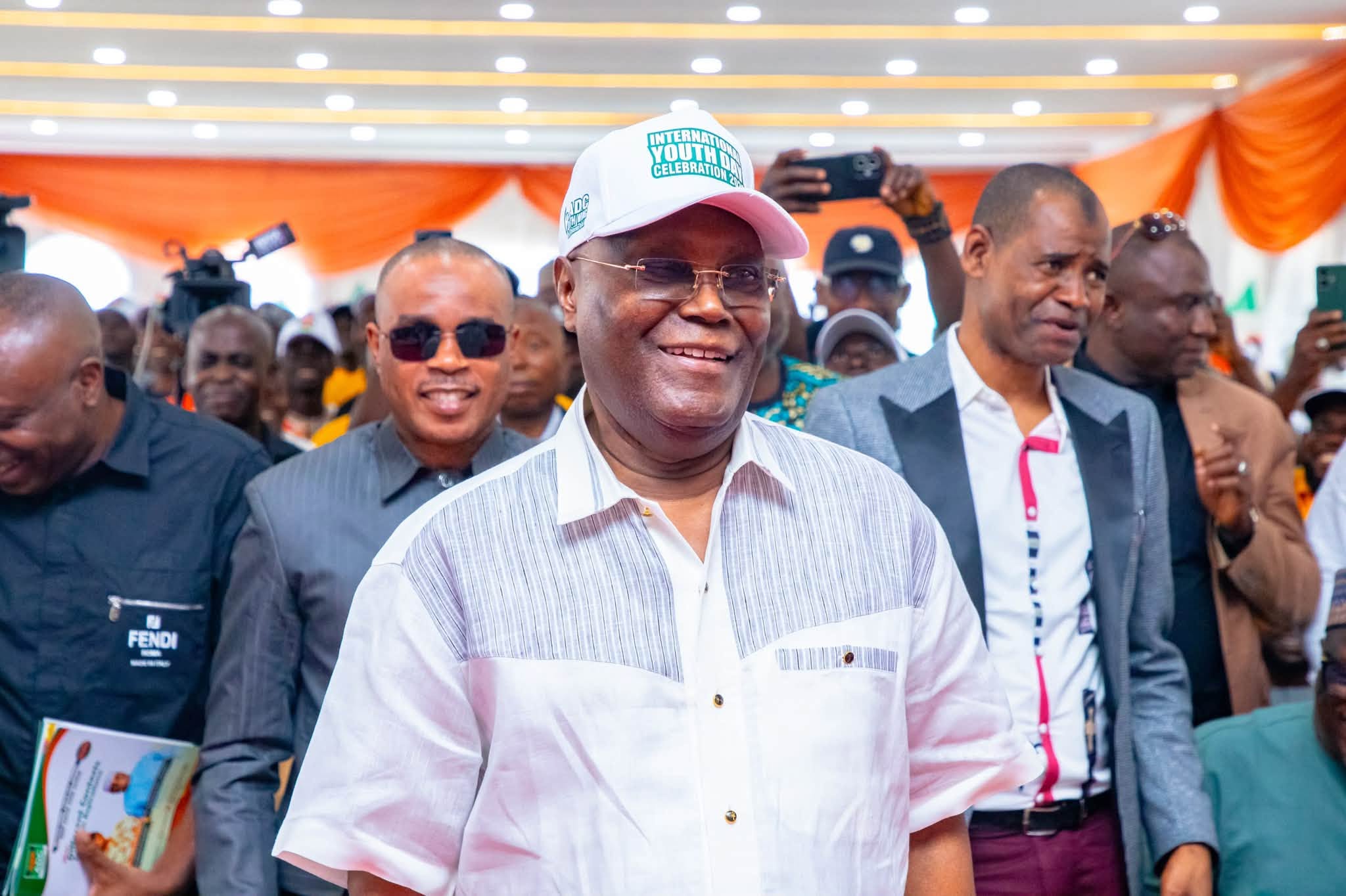
Atiku still holds a strong position both locally and nationally. His push for the presidency gives the African Democratic Congress (ADC) candidate a solid boost.
But Adamawa voters have shown in past elections that they do not always follow the lead of big names in politics. So, having Fintiri, Atiku, or Ribadu backing a candidate may not guarantee a win in the 2027 governorship race.
Volatile Politics
Adamawa State has faced political ups and downs for a long time, mainly due to its mix of ethnic groups. This has been clear since before the current state was formed.
During the transition to the Second Republic, then Gongola State, which included Adamawa and Taraba, had five political parties fighting for the 1979 governorship election.
Abubakar Barde from the GNPP won that election, becoming the first executive governor. But Bamanga Tukur from the NPN defeated him in the 1983 election. Tukur’s time was cut short by a military coup that year.
Political instability showed again during the Ibrahim Babangida regime’s attempt to transition to the Third Republic.
In the SDP gubernatorial primaries, Atiku faced off with late Bala Takaya. The competition got so heated that the military canceled the primaries and disqualified both men from the re-run.
The SDP eventually chose Boss Mustapha, but party divisions helped Saleh Michika from the NRC win the 1991 governorship election.
Split-ticket voting is common in Adamawa.
In 1979, while the NPN won the presidential election, the GNPP took the governorship. Similarly, in 1993, Moshood Abiola from the SDP won the presidential election while the state was governed by Michika from the NRC.
In the Fourth Republic, Boni Haruna served two terms from 1999 to 2007 after Atiku was chosen as the vice-presidential candidate.
But the 2007 election sparked new political fights. Murtala Nyako from the PDP was declared the winner. However, the Election Petition Appeal Tribunal voided his win in February 2008 due to the exclusion of some opposition candidates.
Nyako won the re-run in April 2008, but his second term was troubled, leading to his impeachment in July 2014.
After Nyako’s removal, Fintiri, then Speaker of the House, became acting governor. But he also had a short tenure after the Federal High Court ruled that Deputy Governor Bala Ngilari’s resignation was invalid.
In 2015, Bindow won under the APC. He served only one term, losing to Fintiri in 2019, who then secured a second term.
The Candidates and the Crises
With federal backing, resources from the ruling party, and support from Fintiri’s move to the APC, analysts say the APC candidate, Tijjani Galadima, is the frontrunner.
Galadima comes from the respected Galadima family in Adamawa. He is an experienced administrator and technocrat.
He studied Agriculture at Ahmadu Bello University and has a master’s degree in Banking and Finance from the University of Ibadan.
Before this, he was the Executive Secretary and CEO of the Petroleum Technology Development Fund. There, he led major projects and scholarships.
Galadima’s campaign, called the “Adamawa Rising Agenda,” aims to continue Fintiri’s infrastructure projects, improve transparency, boost agriculture, and enhance healthcare.
He also promises to improve road networks, increase crop yields, provide clean energy, and maintain free secondary education.
But he faces stiff competition.
A key rival, Abdulrahman Haske, left the APC after disagreeing with the primary results. Now, he is the candidate for the Allied Peoples Movement (APM).
Haske is a successful businessman educated at the American University of Nigeria and Manchester Business School. He is the Group Managing Director of AA&R Investment Group.
His company is involved in oil, agriculture, ICT, and logistics. He also holds the title of ‘Ciroman Ganye’ in the state.
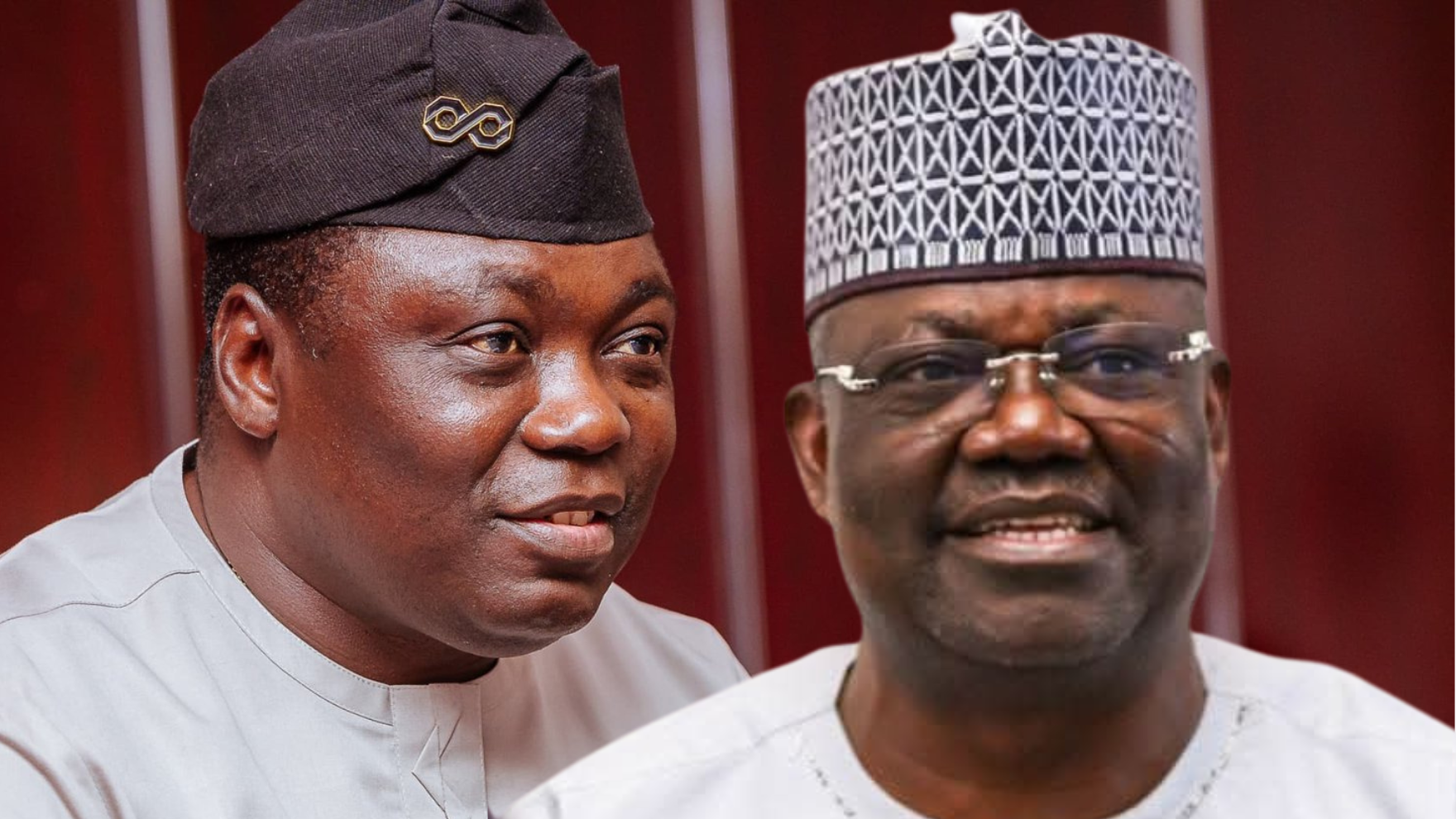
Three State House members from Yola South, Nasarawo Binyeri, and Numan also joined him and got APM tickets.
Haske’s platform appeals to young people, promoting industrialization of agriculture and corporate efficiency.
His choice of Safriel Glah, a retired NNPC general manager, as running mate strengthens the APM.
The ADC
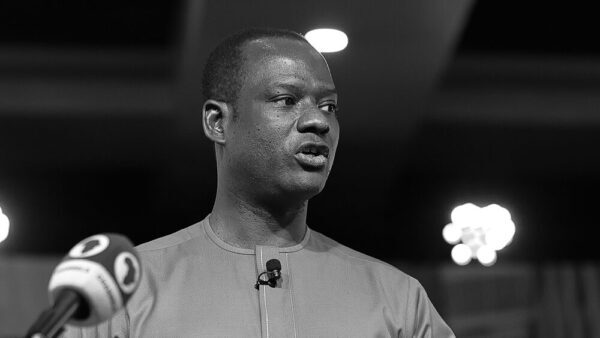
The ADC candidate, Hamman Modibbo, is a public finance expert and the first head of the Nigerian Financial Intelligence Unit (NFIU).
He has a Master’s degree in International Business from the University of Salford and a Bachelor’s degree in History from the University of Maiduguri.
As the NFIU’s first head, Modibbo built the agency into one that handles financial intelligence for local and international bodies.
His campaign focuses on transparency, financial discipline, and security.
But he faces challenges in his party. Umar Suleiman, a former Nigerian Ports Authority head, won the ADC primary in May but insists he is the rightful candidate.
He has taken legal action against the party’s attempt to replace him.
Despite this, ADC leaders and Atiku endorsed Modibbo in August, causing a split in the party.
Now, Suleiman is fighting in court while the ADC backs Modibbo.
Adding to the confusion, Muhammad Shuwa is also vying for the ADC ticket.
The NDC, LP, and PDP
The NDC candidate, Aishatu Ahmed, known as Binani, is a strong politician in Adamawa.
A former senator, she is known for her grassroots work and projects that support women and micro-entrepreneurs.
She studied civil engineering and was a former House of Representatives member. She was the APC candidate in 2023 and gained attention when a rogue official declared her the winner.
Ishaku Abbo, who represented Adamawa North in the Senate from 2019 to 2023, is also in the race. His election was annulled by the courts. He is popular among the youth in Northern Adamawa.
Running for the Labour Party, Abbo aims to connect with young voters and improve rural infrastructure.
Maurice Vunobolki, the PDP candidate supported by Nyesom Wike, is a qualified accountant and development consultant.
He has worked on various development projects in Northern Nigeria.
But he faces internal competition from Caleb Myebangara, who is also running for the PDP ticket.
How the Election Will Be Fought and Won, Analysts
Mahdi Abba, head of Political Science at Modibbo Adama University, Yola, says each party has its strengths, making for a close race.
He believes the APC candidate benefits from the power of incumbency and strong party support. Abba sees Galadima as a strong contender.
He adds that Modibbo could gain from Atiku’s influence.
“Historical voting trends show a link between Atiku’s party ties and success, APC won in 2015 with him, then PDP won in 2019 and 2023 when he returned. With Atiku backing ADC, they could have a big impact,” Abba said.
On Mrs Ahmed, Abba recognizes her political experience and strong grassroots ties, giving the NDC momentum in Adamawa.
“Their record of winning elections, especially in urban areas, highlights her appeal,” he added.
The PDP could benefit if ethnic and religious factors affect the vote.
Abba points out that since all the APC, NDC, ADC, and APM candidates are Muslim Fulanis, this may split their voter base, which could favor the PDP.
“Also, the Labour Party candidate is well-liked in his home area, which could play a key role if religious sentiments come into play,” Abba said.
Drop your comment
No comments yet — be the first to drop the gist 👇