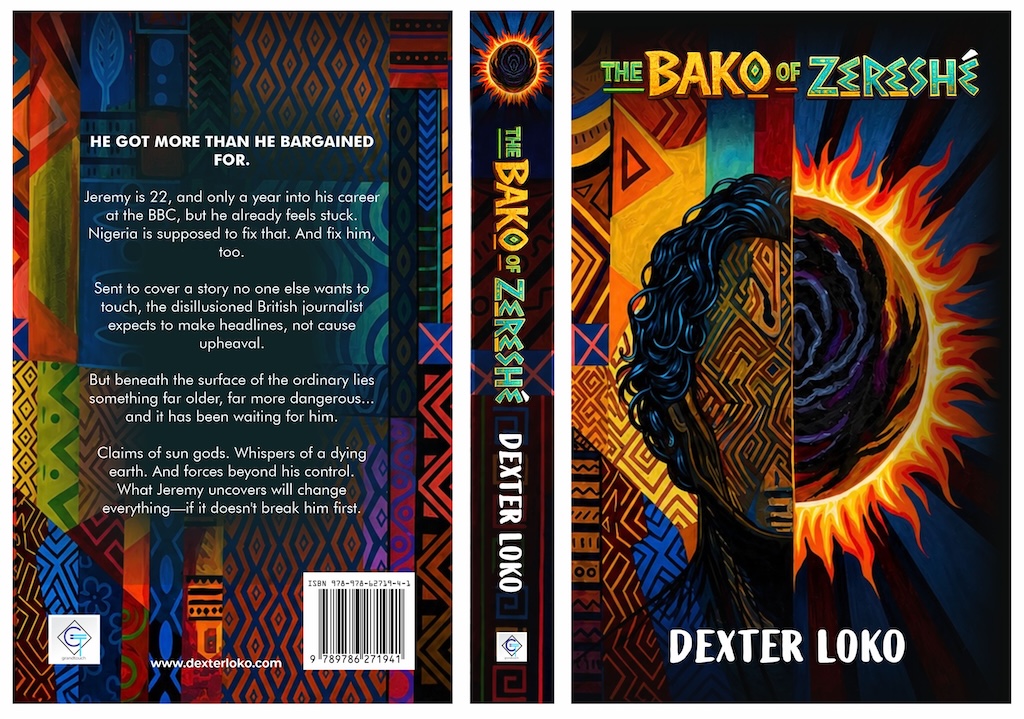
The Bako of Zereshé is the second book by Nigerian-Irish writer, Dexter Loko. It tells the story of Jeremy Fletcher, a 22-year-old BBC reporter from Britain. He feels lost in the magical land of Zereshé, which is Nigeria’s secret thirty-seventh state. There, he meets Asha, the Prime Minister’s daughter; Shani, Asha’s cautious best friend; and Chudi, a kind-hearted outcast who is shunned for not having magical powers. As Jeremy gets deeper into Zereshé’s magical world, where he is seen as an outsider, he becomes part of an old fight between good and evil. With political issues, secrets, and shaky loyalties around him, Jeremy must face the corrupt forces against him and his own struggles with doubt, loss, and hidden faith. Together with his new friends, who face tests of loyalty, they try to stop a disaster that threatens Zereshé and the whole world. Will they manage to change what fate has in store, or will Zereshé’s worst fears come true?
The story is told from a third-person limited point of view, mainly focusing on Jeremy Fletcher’s experiences.
“Chudi didn’t answer. He just smiled. Then Jeremy saw it. Shells. Enormous shells floating on the river. Not just shells. They were turtles. Giant turtles. Each one was roughly the size of a small ferry.”
One strong point of the novel is its world-building, which truly earns Loko praise. From grand landscapes with tall mountains, shining lakes, and green forests to the made-up creatures like Kitas and Grocupines, these things remind the reader that they are in a world that is not ordinary. Adding to this rich setting is the unique technology used by the Zereshéan people, making the novel even more imaginative.
Loko’s mix of different themes is also impressive. He brings together opposites like good and evil, tradition and change, belief and disbelief, local and foreign, purists and reformers, strong and weak, and powerful and powerless. This creates a deeper meaning and gets readers to think about different and often conflicting viewpoints.
While the novel has many strengths, it also has some weaknesses. The characters are interesting but often stay the same, making their growth limited.
Another issue that can pull the reader out of the story is the mixed use of real-world pop culture references. For example:



“…Mudiaga told him the words in Avani. They translate loosely to the English words, Watermelon Sugar High.”
At one point, Asha’s household password, ‘Watermelon Sugar High’, seems to refer to the popular song by Harry Styles, “Watermelon Sugar”. But later, there is this:
“Jeremy perked up, ‘The cuffs are like kryptonite and Superman!’ …’Who is Superman?’ Chudi asked.”
Jeremy’s friends do not know Superman, who is one of the most famous characters in global pop culture. While there might be a reason for this in the story, it is not explained, making the difference feel odd. This small issue can briefly take readers out of the fictional world, raising questions about the culture in the novel. This does not mean the book has many logical problems; this is just a single case.
Overall, The Bako of Zereshé is a book that does more good than bad. Dexter Loko has created an African-inspired story that is both thought-provoking and entertaining, inviting readers to think about identity, bravery, and the weight of power. If you liked Nnedi Okorafor’s characters in Akata Witch and The Nsibidi Scripts series, or Tomi Adeyemi’s bright images in Children of Blood and Bone and the Legacy of Orisha trilogy, or if you just want more African-inspired fantasy, then this is a book you should definitely read.




Drop your comment
No comments yet — be the first to drop the gist 👇