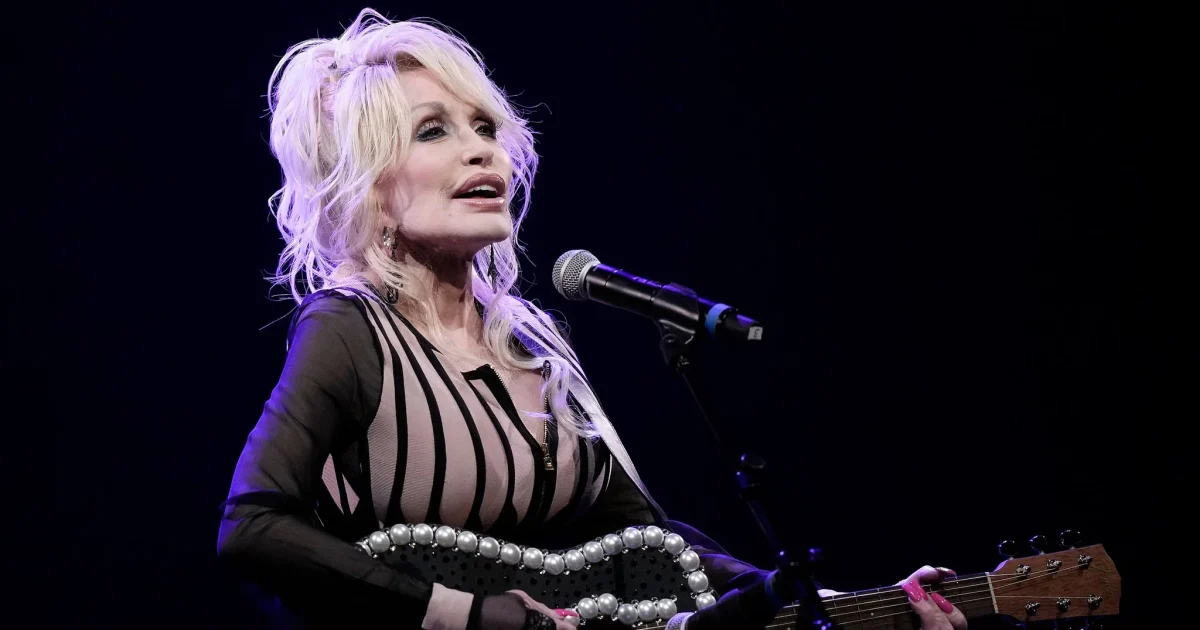
It was in late spring of 1964, just a day after finishing high school, that a small farm girl packed her things and said goodbye to her life in the Smoky Mountains of rural Tennessee. Her goal was Nashville, the heart of country music. She left the two-bedroom house where she lived with her parents and eleven siblings, holding onto a dream and the strong belief that she could succeed.
Like many who chase big dreams, Dolly Parton faced a time of doubt, seeking fame and fortune while sometimes questioning if she made the right choice. Then, three years later, her luck changed. Country music star Porter Wagoner invited the twenty-one-year-old Dolly to be the “girl singer” on his popular TV show, The Porter Wagoner Show.
Wagoner needed someone to take over from his female singer, Norma Jean, who had left after getting married. He saw something in Dolly that others didn’t quite see yet and gave her a national platform. Dolly repaid his faith with great songwriting, musicianship, charm, and a dynamic stage presence. Together, they formed one of the most important partnerships in country music.
But Dolly Parton was never meant to stay as someone else’s “girl singer.” Soon, she emerged as a powerful artist in her own right. Eventually, the student had to surpass the teacher. In 1974, after seven years on the show, Dolly felt it was time to move on.
To express her feelings, she wrote Porter a song: “I Will Always Love You.” What started as a personal farewell would later become one of the most famous songs ever, especially after Whitney Houston’s version turned it into a global hit. But we will get back to that.
Porter did not take Dolly’s exit well. Their relationship turned sour, and he ended up suing her for breach of contract, asking for $3 million in damages. The matter was settled out of court for $1 million, which Dolly paid in installments because she couldn’t cover it all at once.
For many, such an event would end a relationship. Not for Dolly. The lawsuit was tough, but she didn’t let this one painful moment erase all the good times they had before.
Some people become famous by giving the world exactly what it wants. Dolly Parton became special because she didn’t care about fitting into anyone’s idea of who she should be. She showed the world the real Dolly, shining in rhinestones, with big hair, wearing flashy outfits, and having a heart as big as her public image. Beneath all the glam, many people saw something more lasting: authenticity.
Long before Dolly Parton was a global star, she started shaping the woman she would become. Dolly once shared how, as a child, she became interested in a woman in her community who was often looked down upon and called promiscuous, even a prostitute. But Dolly saw more than the gossip. The woman always looked great, with styled hair, neat nails, and clothes that made her stand out.
Young Dolly looked past the judgment and saw the beauty. She decided she wanted to look just like that woman when she grew up. And she did.
This story reveals a lot about her. Dolly understood very early that other people's opinions didn’t have to limit her identity. She would define herself completely.
So she embraced big hair, bold makeup, long nails, daring dresses, high heels, and, of course, rhinestones. She even talked openly about her cosmetic procedures. Dolly Parton literally made herself into the woman she wanted to be, and the world had plenty to say.
People mocked her looks. They wondered about her surgeries. They questioned why any woman would want such a bold, exaggerated, and unapologetically feminine image. Dolly’s answer was simple: she liked it. She famously joked that it costs a lot to look this cheap.
Yet for all the glitz, glam, fame, and wealth tied to Dolly Parton, one quality set her apart from many others: her great humanity and her strong instinct to help those in need. Remarkably, she often did this without looking for attention.
In November 2016, terrible wildfires hit Sevier County, Tennessee, the place where Dolly was born and raised. Fourteen people died, and thousands of buildings were destroyed or damaged. Dolly didn’t just send out a message of sympathy. She took action.
Within forty-eight hours of the disaster, Dolly and the Dollywood Foundation set up the My People Fund. Families who lost their homes were promised $1,000 every month for six months. In the end, 921 families benefited from this.

For Dolly, this was not charity from afar. These were her people, from the mountains that shaped her childhood and gave her her identity.
Then there was the song. Dolly wrote “I Will Always Love You” when she was still a young songwriter. Almost twenty years later, Whitney Houston recorded it for The Bodyguard and turned it into something extraordinary. The song Dolly once wrote as a personal goodbye became a worldwide cultural hit.
Since Dolly kept her songwriting and publishing rights, Whitney’s huge success brought her big royalties, reportedly around $10 million in the 1990s alone. What she did with that money is one of the most moving stories in music history.
She bought a large office and studio in a mostly Black area in Nashville, far from the main music center at that time. She could have put her money anywhere. Instead, she chose to invest in a community that was largely Black and gave the property a name that was both funny and sweet: “The House That Whitney Built.”
Dolly explained that she loved being there because it was Whitney’s community, and she felt it was also her own. That instinct to give rather than just gather was clear even in her complicated relationship with Porter Wagoner.
Years after their famous partnership ended badly, Porter faced serious financial troubles. The IRS was after him for unpaid taxes, and he started selling his things to pay off his debts. One of the items he considered selling was a small catalog of songs he had collected over the years. Dolly could have stayed out of it. After all, this was the man who once sued her. Instead, she stepped in.
Dolly Parton bought the publishing company that owned Porter Wagoner’s songs, giving him the financial help he desperately needed. Then she did something amazing: she gave the company back to him. She understood how much those songs meant to Porter. She wanted him to keep them and, in the end, pass them on to his children. That is the true Dolly Parton.
There are countless other generous acts she has done, both in public and away from the cameras. Through her Imagination Library, Dolly has promoted childhood literacy on a large scale, providing free, quality books to children from birth to age five, no matter their families’ financial situations.
When Dolly teamed up with the Herschend family in 1986, the Silver Dollar City attraction in Pigeon Forge became Dollywood. Her goal was not just profit. She wanted the world to see the beauty of the Smoky Mountains she loved as a child while also creating jobs and opportunities for her community.
In many ways, Dolly’s story feels familiar to me. I also grew up with eight siblings in a small village in Eastern Nigeria, where we lived mainly from our family farm. Like Dolly’s hometown, it was a place where dreams could seem far away but still felt within reach.
After coming to America, I spent a lot of time working in the coal region of Appalachia, a beautiful area that looks a lot like the Smoky Mountains where Dolly was born. Maybe that is why her story speaks to me so deeply.
Beneath the rhinestones, the big hair, the fame, the wealth, and the larger-than-life persona lies a story I know well. It is about a child born into modest beginnings who refused to let her start hold back her dreams. Dolly Parton did not just escape poverty. She rose above it without being ashamed of where she came from. She did not forget her people when success came. She went back for them.
Success can make someone famous. Wealth can give someone power. But neither makes a person generous. Dolly Parton became all three while staying true to herself.
Dolly Parton, we are forever thankful for the love, laughter, music, kindness, and humanity you shared with the world.
Now that you have your wings, we wish you all the best as you join the rest of Heaven’s Angels. There will never be another Dolly Parton, and we will always love you.


Drop your comment
No comments yet — be the first to drop the gist 👇