
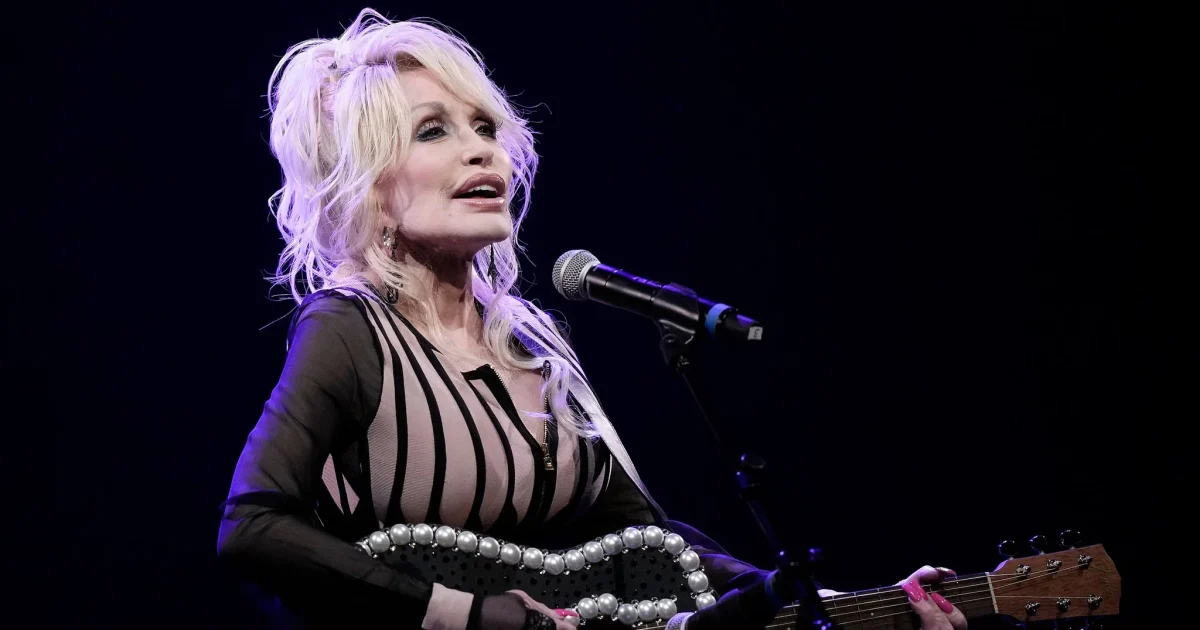
The world has lost a great country music star, the late Dolly Parton.
Parton was a gifted storyteller and songwriter, winning ten Grammy Awards from fifty-five nominations. Her songs connect with many generations and will continue to do so. On 25 August, Dolly, at 80, stopped singing for us. She gave us a legacy we never asked for and might not deserve. After her passing, the world paid tribute. Her greatness was clear, and everyone agreed on her impact. Dolly Parton gave us a coat of many colours, and we can do better by ensuring every child has proper clothing.
Dolly Rebecca Parton-Dean showed that being poor is not shameful. It is not a part of one’s DNA or a curse. In fact, it can be a source of pride.
In her 1971 hit “Coat of Many Colours,” she shared a true story of poverty alongside the Biblical tale of Joseph. The “coat” symbolizes love and acceptance. Parton’s coat was made from scraps and sewn with love by her mother. Even with patches on her britches and holes in her shoes, the child felt no shame. When classmates laughed, she remembered her mother’s love and turned the situation around. She told them that the rags she wore were “worth more than all their clothes.”
She then took her message further. She argued: “One is only poor only if they choose to be.” This idea is not entirely correct. Poverty is an economic reality, often caused by many factors. It is not a choice but a situation brought on by the socioeconomic system. It is rare for anyone to choose a life of poverty. Examples include Prince Siddhartha Gautama (the Buddha) and St Francis of Assisi, who chose poverty for spiritual reasons.
For Parton, her true wealth was not material. She said: “Now I know we had no money but I was rich as I could be in my coat of many colors my mama made for me.” She emphasized that real wealth is about living for others and making the world better. Parton showed this through her charity work. She fought childhood illiteracy with her Imagination Library program, offered the Dolly Parton Scholarship, and supported various important projects like hospitals.
As she rose from humble beginnings to fame, she remembered where she came from. Many of her songs remind us of the struggles people face. “Coat of Many Colours” is the most famous, but she also wrote songs like “Daddy’s Working Boots” and “9 to 5” that celebrate working people. In “Poor Folks Town,” there might be little money but there is lots of love. In “My Tennessee Mountain Home,” she captures the beauty of nature and rural life: “In my Tennessee mountain home life is as peaceful as a baby’s sigh. In my Tennessee mountain home crickets are singing in the fields nearby.”
I see Parton as a fierce fighter who knew how to outsmart her opponents. In “Jolene,” she used these skills. In her plea for love, she came off as weak and vulnerable: “I’m begging of you please don’t take my man (Jolene) Jolene, Jolene, Jolene, Jolene please don’t take him just because you can.”
She flatters her rival: “Your beauty is beyond compare with flaming locks of auburn hair, with ivory skin and eyes of emerald green (Jolene). Your smile is like a breath of spring. Your voice is soft like summer rain, and I cannot compete with you, Jolene (Jolene).”

Then she positions herself as someone in need, saying: “You could have your choice of men but I could never love again. He’s the only one for me, Jolene (he’s the only one). I had to have this talk with you. My happiness depends on you and whatever you decide to do, Jolene.”
Here, she shows Jolene as someone who is free and can choose any man she wants. She wraps up her appeal with a heartfelt plea: “Please don’t take him just because you can (just because you can) Jolene (please don’t take him, please don’t take him) Jolene Jolene (Jolene) Jolene. He’s the only one for me, Jolene.”
In my opinion, Jolene was already defeated and should look elsewhere since she “could have her choice of men.”
In another clever move, she draws in a potential lover in “The Bargain Store.” She tells him: “My life is likened to a bargain store and I may have just what you’re looking for. If you don’t mind the fact that all the merchandise is used, with a little mendin’ it could be as good as new. Why you take for instance this old broken heart. If you will just replace the missing part you would be surprised to find how good it really is. Take it and you never will be sorry that you did.” So, it is a promise of a life choice with no regrets. Yet, beneath her gentle demeanor lies a strong heart.
In “I Will Always Love You,” she makes a hard choice: “If I should stay well I would only be in your way, and so I’ll go, and yet I know that I’ll think of you each step of my way.”
For her, it was a tough goodbye: “Bitter-sweet memories, that’s all I have and all I’m taking with me. Good-bye, oh, please don’t cry, cause we both know that I’m not what you need.” This shows that a woman can face the truth and that love alone isn’t always enough.
Dolly Parton was a gifted storyteller and songwriter with ten Grammy Awards from fifty-five nominations. Her songs connect with many generations and will continue to do so. On 25 August, Dolly, at 80, stopped singing for us. She gave us a legacy we never asked for and might not deserve. After her passing, the world paid tribute. Her greatness was clear, and everyone agreed on her impact. Dolly Parton gave us a coat of many colours, and we can do better by ensuring every child has proper clothing. The world has enough resources to guarantee every child the right to clothing, shelter, food, basic healthcare, and education. Together, we can end poverty. This is our duty to Dolly Parton.



Drop your comment
No comments yet — be the first to drop the gist 👇