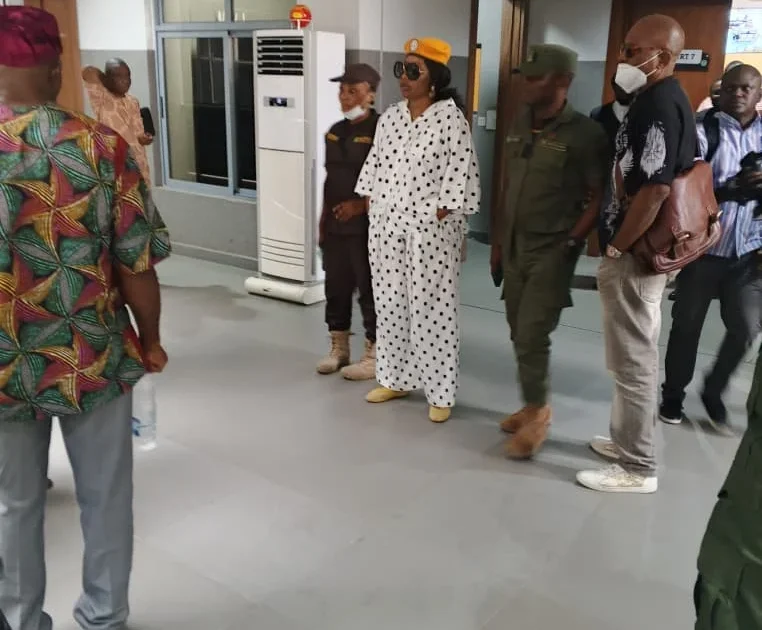
Nollywood actress Doris Ogala, on Friday, knelt before a Federal High Court in Lagos to apologise for her bad behaviour during a previous sitting.
The court returned her to the Kirikiri Correctional Centre after holding off on her bail request until November 6.
Ogala, facing charges of cyberstalking, cyberbullying, and attempted extortion involving Pastor Chris Okafor, showed remorse to Justice Akintayo Aluko. She promised not to repeat the behaviour that caused a scene in court earlier.
She had been sent to the correctional centre following her arraignment on Wednesday. Ogala personally begged the judge, saying she regretted her actions and never thought she would end up in prison.
She said, “I am very sorry, my Lord. I apologise for my bad behaviour. I have never been to prison before and I wasn’t expecting that I would do that.
“I regret my actions and I apologise to my Lord. I tender my apologies wholeheartedly. Sorry, this will never happen again going forward.”
Her apology came after the judge expressed anger over her behaviour on Wednesday, which included shouting and singing in court. This disruption led to the court rising and prevented the hearing of more than seven other cases scheduled for that day.
Justice Aluko mentioned he thought about punishing her for contempt on the day of the incident but decided against it, even though he felt her actions deserved a punishment.
He said, “She should have been given some form of imprisonment, right, on that day, but I kept my cool and I rose.”
The judge added that Ogala could have faced at least two months in prison for her actions. He expressed his displeasure, asking, “Why do you have to start shouting and start singing in the open court? You conducted yourself in a manner that forced the court to rise. That’s what you did, and it’s already recorded.”
He also pointed out that the defence lawyer failed to address the incident when discussing the bail application. The judge recalled that he had pushed for a quick hearing of the bail request, explaining he had made sure it was heard within 48 hours.
He was disappointed that the disruption happened despite the court’s efforts to handle the matter quickly.
Ogala’s lawyer, Marshal Abubakar, also apologised to the judge. He called the incident regrettable and assured the court that it was not typical of his client’s character.
He stated he had known Ogala for a long time and did not expect her to act that way. After the apologies, the court heard arguments about the bail application.
Abubakar urged the court to grant Ogala bail. He argued that the prosecution had shown she deserved bail by suggesting conditions for her release in their counter-affidavit.
He stated that the prosecution’s stance indicated they were not against her being released but were worried about the conditions.
He said that when the prosecution accepts that a defendant can get bail, the court should make fair decisions. He argued that bail conditions should not be too strict, asking the judge to consider the case's circumstances and the law.
The defence lawyer also referenced legal cases to support his argument that bail conditions should be fair and not violate the rights of an accused person.
But the prosecution, led by Tolulope Mokolu, asked the court to impose strict conditions on Ogala, especially due to worries about her social media activity.
The prosecution claimed that Ogala’s continued use of social media could harm witnesses and interfere with justice.
Mokolu maintained that while Ogala had constitutional rights to free speech, those rights are not unlimited and must follow the law.
He urged the court to limit her contact with witnesses and stop her from posting on social media that could affect the case.
The prosecution also argued that any violation of the proposed bail conditions should have proper consequences.
After hearing both sides, Justice Aluko postponed his decision on the bail application until November 6, 2026. Ogala was sent back to the Kirikiri Correctional Centre while they wait for the court's decision.


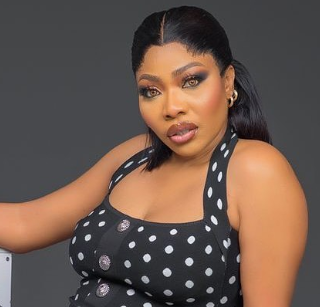
Ogala faced charges from the Attorney-General of the Federation on three counts related to cyberbullying, cyberstalking, and attempted extortion involving Pastor Okafor.
Mokolu claimed that Ogala committed these offences between September 2024 and March 2026.
He told the court that Ogala allegedly shared nude and private photos of Okafor on her social media without his permission, causing him embarrassment and distress.
She pleaded not guilty to these charges.
In an interview, Ogala’s lawyer, Marshal Abubakar, said he would ask the Attorney-General to drop the criminal charges against her. He described the case as a private matter between former lovers.
Abubakar made this statement on Friday after the court decided to postpone the ruling on Ogala’s bail application until November 6, 2026.
He believed that prosecuting Ogala violated her rights, insisting that the conflict was a personal issue between ex-lovers.
He said, “I strongly believe that the arrest of Doris Ogala, the investigation as far as this matter is concerned, and the subsequent filing of charges against her are an affront to her fundamental rights.”
He continued, “The subject matter that led to this entire transaction in this matter was purely a matter between a boyfriend and a girlfriend.”
Abubakar insisted that the state should not involve itself in such personal disputes. He said, “Nigerians have a fundamental right to express their grievances.”
He added that criminalising free speech was unacceptable. He said, “The idea of criminalising free speech in this country has been contemptuous.”
He also suggested that people who felt offended should seek civil remedies rather than using the police to handle personal conflicts.
He stated that democracy allows for criticism, even if it feels harsh. “Democracy accepts dissent. Democracy accepts even vulgar abuses.”
Abubakar maintained that using law enforcement to arrest people over insults had no place in a democracy.
He called for the removal of parts of the Cybercrimes Act that criminalise free speech.
Abubakar pointed out that in 2022, some court challenges were made against the Cybercrimes Act 2015, especially Section 24. This section was ruled unconstitutional for violating freedom of expression rights.
He mentioned that the National Assembly amended the Act in 2024 to address these issues.
However, he claimed that security agencies still apply the law without reflecting the amendments accurately.
He accused some powerful figures of using the police to intimidate critics, saying it threatens democratic freedoms.
He said, “Today, when you insult somebody who is a man of means, the same government official will simply approach the police and give them money to arrest and detain such an individual.”
When asked if he would formally challenge the prosecution after appearing in court, Abubakar said he planned to write directly to the Attorney-General.
He said, “It is also my honest belief that this matter should be discontinued and the charges withdrawn.”
He insisted that this issue should not move forward as a criminal case against any Nigerian citizen.

Drop your comment
No comments yet — be the first to drop the gist 👇