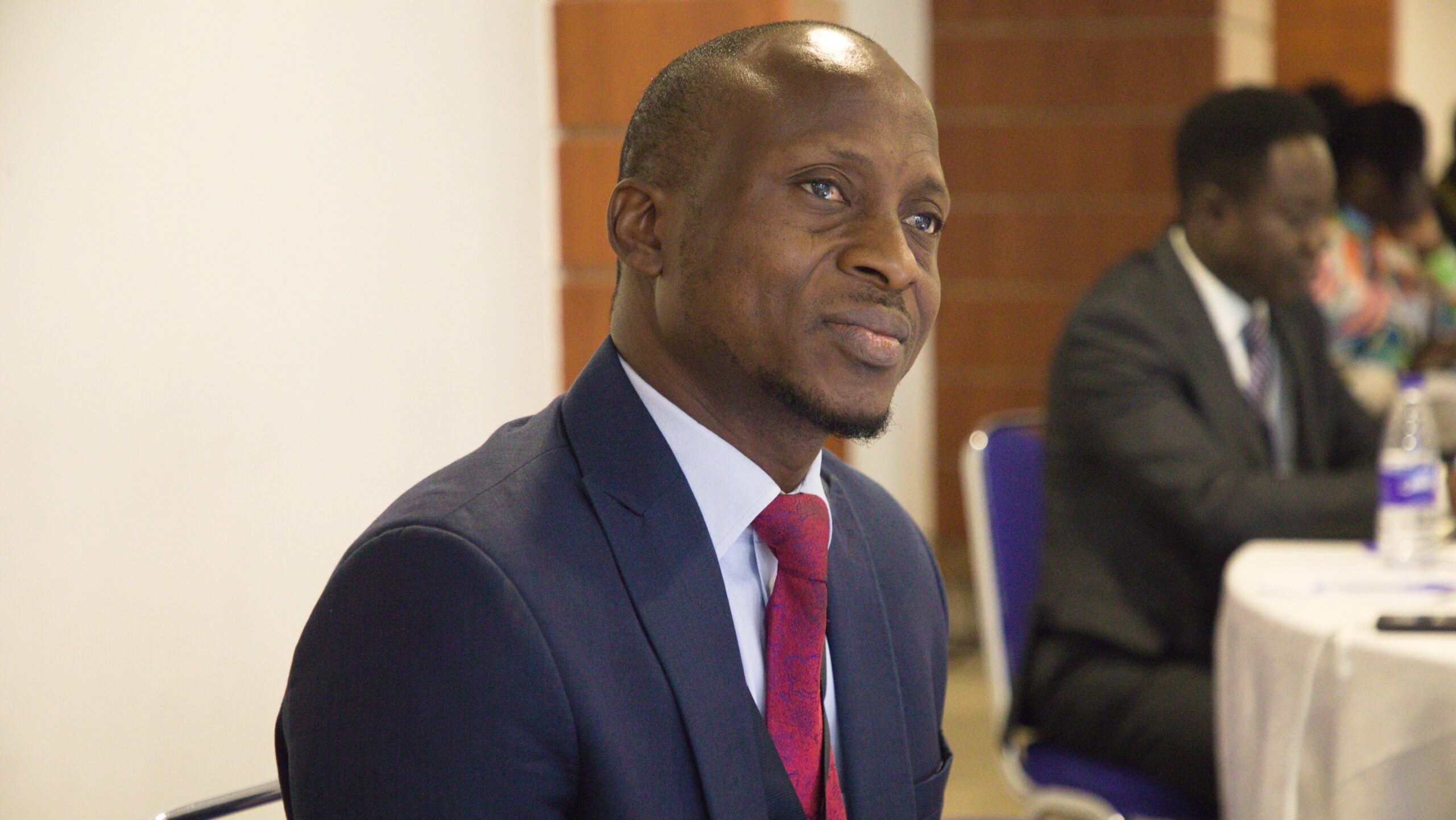
An economist, Paul Alaje, has said that the demand by Nigerian workers for a N500,000 minimum wage is not realistic given the current economic situation. He warned that such a hike could lead to more inflation.
Mr Alaje, who is the chief economist at SPM Professionals, said that the existing N70,000 minimum wage is too low and cannot help workers live decently.
He shared his thoughts on Arise Television’s News Night on Friday during a three-day warning strike by public sector workers under the Joint National Public Service Negotiating Council (JNPSNC) from October 2 to 4.
The workers are asking for a new minimum wage, an immediate salary increase, and a drop in petrol prices to N500 per litre.
These demands were included in a letter the council sent to President Bola Tinubu on September 21. The strike notice was signed by the council’s National Secretary, Olowoyo Gbenga.
Mr Alaje explained that raising the minimum wage to N500,000 right now could worsen inflation by increasing the money in circulation without a rise in production.
“If you raise salary to N500,000 today, it’s going to cause inflation to shoot up,” he said.
He pointed out that inflation is still a big problem. He said that raising salaries without addressing the costs of goods and services will not really help improve workers’ living standards.
The economist mentioned that the focus should be less on how much a worker earns and more on what that salary can actually buy.
Mr Alaje supported the workers’ complaints about the current minimum wage. He recalled that he had warned labor representatives against accepting N70,000 when the wage was being negotiated back in 2024.
“I told labor, when they were about to settle for N70,000, that in two or three years they’d regret it,” he said.
He emphasized that the purchasing power of the wage should be the main point in salary talks.
“Asking for more money has never solved our problem. The real question is: what can the money in your pocket buy?”
He questioned if a worker earning N70,000 could comfortably pay rent, feed a family, or send children to school in big cities like Lagos, Abuja, Port Harcourt, Kano, or Kaduna.
“Are you able to send your children to school with N70,000? Are you able to pay rent in Lagos, Abuja, Port Harcourt, Kano, or Kaduna? Are you able to feed yourself?” he asked.
“What labor should be asking for is real value, not just a bigger number.”
Mr Alaje suggested that a wage of between N125,000 and N150,000 would be more suitable under current conditions if we consider inflation.
He also called for better access to affordable healthcare and primary education. He argued that lowering the cost of essential services would help workers have more money left over.
Mr Alaje talked about the recent rise in petrol prices since the removal of the fuel subsidy in 2023.
Before the subsidy was taken away, petrol cost less than N200 per litre. Prices have now shot up to about N1,450 per litre at the time he spoke.
He said the price hike should not be blamed only on the subsidy removal. He pointed out that the drop in the exchange rate, inflation, and global economic pressures have also raised petrol costs.
“Subsidy’s gone, and we’re paying far more, not less,” he said.
“The exchange rate, inflation, and the war affecting major oil-producing regions, they’ve all pushed the cost onto us.”
According to Mr Alaje, the government’s economic plan should take the country through four stages: crisis, stability, growth, and prosperity.
He noted some improvements in the foreign exchange market, with the naira becoming more stable.
“You’re not seeing as much shaking in the exchange rate anymore, it has settled around N1,330 to N1,350,” he said.
“But what matters is what that means for ordinary people, not just the numbers.”
Mr Alaje pointed out that the power sector is one of the major issues holding back Nigeria’s economic growth.
He said that increasing electricity supply would lower production costs for businesses and increase the country’s ability to produce.
“One of the things that can transform this is energy,” he said. “Electricity is in recession.”
He argued that sustainable wage increases would be hard to achieve without improvements in productivity.
On the workers’ request for petrol to be sold at N500 per litre, Mr Alaje said the success of this would depend on how the government carries out such a plan.
He made a clear distinction between the previous petrol subsidy system and measures to boost domestic production.
“What made the old subsidy bad was that we were importing fuel, the money was leaving the country,” he said.
He argued that government support should focus on strengthening local production and manufacturers.
“The question now is: what can be done to support local manufacturers without taking money out of the government’s pocket?”
He pointed to South Korea, India, and China as countries that used investment in local production and manufacturing to move from economic crisis to steady growth.
Mr Alaje also questioned whether Nigeria’s recent economic growth is improving living standards.
He said the economy has grown by about 3 to 4 percent, compared to roughly 1 to 2 percent under the last government.
But he argued that growth figures alone do not tell the full story.
“The question is: what is happening to employment? Is poverty reducing or increasing?” he asked.
He referred to World Bank figures that show over 60 percent of Nigerians live in poverty.
This highlights the gap between overall economic growth and the welfare of households.
An economy can show growth while families continue to struggle if rising prices, unemployment, and weak purchasing power outpace income increases.
The JNPSNC warning strike started at midnight on October 2 and is set to last until October 4. Workers across federal, state, and local governments were told to join in.
The council had earlier written to the presidency on September 21, listing its demands and warning of a strike if the government did not respond.
Nigeria’s current minimum wage of N70,000 was approved in 2024 after talks between the government, labor, and other groups.
This wage was introduced after the removal of the petrol subsidy in May 2023, a move the federal government said was necessary to cut waste and redirect public resources for development.
Since then, rising petrol and essential goods prices have intensified the debate about whether the current minimum wage meets workers’ basic needs.
Mr Alaje’s views show the main challenge in this debate. Raising wages without boosting production could cause inflation, but keeping wages the same while prices keep rising would further reduce workers’ purchasing power.
Therefore, the challenge for policymakers is not just about how high to set the minimum wage, but how to raise workers’ real incomes without causing more price increases.


Drop your comment
No comments yet — be the first to drop the gist 👇