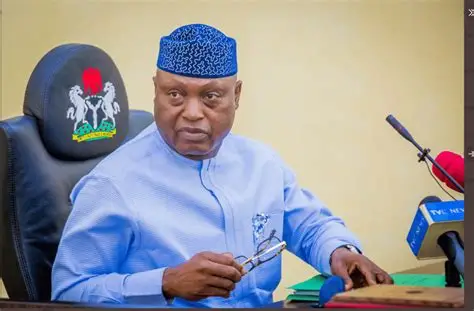
The Ekiti State governorship election has come and gone, but the political fight is still on. Governor Biodun Oyebanji and the APC are celebrating their big win, but now everyone is watching the PDP and ADC as they decide their next moves, especially with claims of vote rigging and calls for a legal challenge, writes ABIODUN NEJO.
The Ekiti State governorship election took place on Saturday, June 20, 2026, with 15 political parties participating. But only three parties, the All Progressives Congress, the Peoples Democratic Party, and the African Democratic Congress, were seen as real contenders.
The results announced by the Independent National Electoral Commission in the early hours of Sunday, June 21, raised doubts about the strength of the opposition parties. The PDP and ADC were expected to challenge the ruling APC but fell short.
The APC won the election, taking all 177 wards and all 16 local government areas in the state. Governor Biodun Oyebanji and the APC received 319,244 votes, which is 85.72 percent of the total votes cast. The PDP candidate, Dr Wole Oluyede, came second with 40,543 votes (10.83 percent), while the ADC candidate got 12,842 votes (3.46 percent).
This outcome contrasted sharply with the confidence shown by the opposition parties before the election. The APC expected to win across all local governments, but the PDP and ADC claimed they would at least win in 10 local government areas.
Election observers noted that the exercise was mostly peaceful and without violence, but they raised concerns about vote-buying. They urged the Independent National Electoral Commission and security agencies to tackle this issue before future elections, including the August 15, 2026 Osun State governorship election and the 2027 general elections.
Before the election, candidates from the three main parties, Oyebanji, Oluyede, and Bejide from the ADC, campaigned hard, visiting communities to gather support from voters. Now, both the PDP and ADC have started preparations for possible legal challenges following the creation of an Ekiti State Governorship Election Petition Tribunal by Justice Monica Dongben-Mensem, the President of the Court of Appeal.
The tribunal was established through a letter dated June 16, sent by Tribunal Secretary Zubairu Nuhu, titled “Constitution of the Governorship Election Tribunal for Ekiti State 2026.” The tribunal will sit at the National Industrial Court premises within the Ekiti State High Court Complex in Ado Ekiti.
It was not surprising when ADC candidate Bejide rejected the election results on June 21, claiming the process was not credible. He said, “My immediate reaction is to reject the result of the election in its entirety because, in my view, the exercise conducted on Saturday was not credible.”
Bejide added, “We are compiling the results which we will study and come out with our position as a party. That is exactly what we are doing now.” During his campaign, he had promised to focus on agriculture, infrastructure, civil service welfare, and youth empowerment if elected.
His campaign spokesman, Chief Gboyega Aribisogan, accused Oyebanji’s government of not performing well. He said many Ekiti residents have not felt the benefits of government policies. “Our strength lies with the people of Ekiti State who have demonstrated that they have not enjoyed dividends of democracy under the current administration,” he said.
The PDP candidate, Oluyede, also rejected the results through a statement from his campaign organization. He said the result “does not, in our considered view, reflect the true will and aspiration of the people of Ekiti State.”
On June 23, Oluyede told journalists that the party would review the results and consult with its leadership and legal team before deciding on the next steps. He said, “Based on reports received from our polling agents across the 16 local government areas, I firmly believe that the election fell short of the standard of a free, fair and credible election that the good people of Ekiti deserved.”
Oluyede pointed out issues like vote-buying, intimidation, and problems with BVAS. He expressed respect for the office of President Bola Tinubu, stating that their decisions after the election would be guided by “wisdom, responsibility, and respect for our democratic institutions.”
He continued, “For that reason, I am currently consulting extensively with the leadership of our great party, my lawyers, and members of my legal team. Those consultations are ongoing. At the appropriate time, I shall brief the good people of Ekiti State on the outcome of those consultations and the next steps regarding all matters arising from this election.”
Before the election, Oluyede had promised to improve Ekiti’s economy and social services with his 10-point development agenda, called “My Contract with Ekiti.” But after INEC declared Oyebanji the winner, celebrations erupted across the state, with supporters organizing road shows that ended at the Government House in Ado Ekiti.


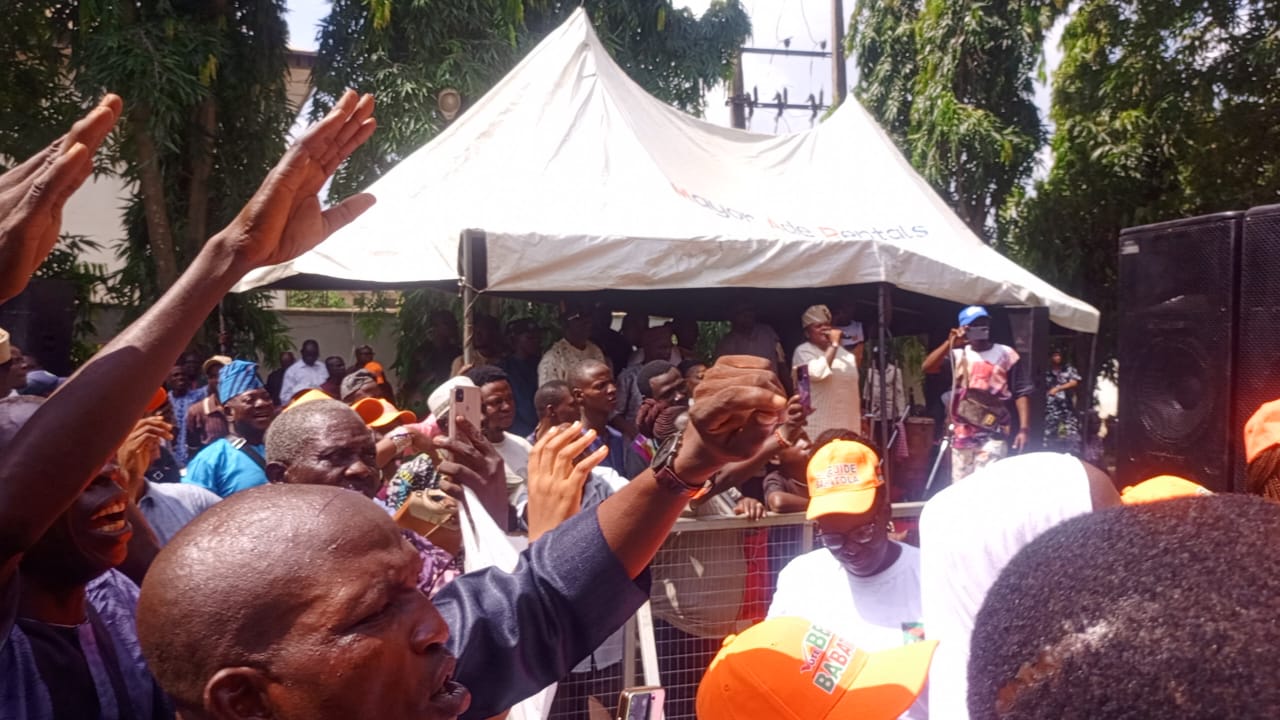
APC governors and party leaders who came to support Oyebanji were among the first to celebrate. They called it a historic win for the governor, who became the first Ekiti governor to break the second-term jinx. Governor of Imo State, Hope Uzodimma, congratulated Ekiti residents, saying the victory shows the good leadership of Oyebanji’s government.
Uzodimma said, “We are happy as a party, we are happy as progressive governors. We are proud that one of our own has demonstrated that good governance yields good results.” Ogun State Governor Dapo Abiodun called Oyebanji’s win “democracy at work.” He credited the outcome to support from Ekiti voters.
Abiodun added, “The process was fair and transparent, and the election was peaceful. We commend INEC for conducting such a fair process and the law enforcement agencies for their good work.”
Senator Opeyemi Bamidele, the Senate Leader and Chairman of the APC/Oyebanji Campaign Organisation, said the result shows support for Oyebanji’s leadership. He said this renewed mandate would help continue policies that drive development in the state.
Governor Oyebanji called the victory humbling and assured residents he would not take it for granted. He said, “We are cognizant of the significance of this electoral statement. More importantly, the significance of the outcome.”
He added, “With this, Ekiti has taken a new course. It is the dawn of a new era where consensus building, peace, and harmony have become the currency of political engagement.”
The governor thanked Ekiti voters for their trust and promised to fast-track his administration’s projects. He said, “We will rededicate ourselves even more strongly in implementing our shared prosperity agenda.”
Oyebanji also mentioned he reached out to PDP and ADC candidates Oluyede and Bejide, asking them to work together for the state’s development. Prominent Nigerians and groups, including President Bola Tinubu and the Ekiti Council of Elders, congratulated the governor on his re-election.
APC State Publicity Secretary Segun Dipe said Oyebanji’s win is due to years of planning, good governance, and focusing on the welfare of citizens since he took office in 2022. Dipe noted three main factors that influenced the election: the party’s grassroots presence, Oyebanji’s performance record, and federal support.
He said, “The 85.72 percent votes can be read as Ekiti choosing to keep that channel open for the next four years.” Dipe added that the election result represents both an endorsement and a responsibility for Oyebanji and the APC.
He concluded, “The task now is to match that trust with accelerated delivery, completion of key roads, healthcare upgrades, and youth employment.”
On Sunday, June 21, the Case Tracking and Response Centre, led by the Balm in Gilead Foundation for Sustainable Development, praised Ekiti residents for their peaceful conduct during the election. The Executive Director of BIGIF, Dr Tumininu Adedeji, said the exercise showed improvements in inclusiveness and peaceful participation.
The centre urged INEC to conduct a thorough post-election audit of the BVAS and improve its technology for future elections. Adedeji said, “The deployment of technology has become an integral part of electoral reform.”
They also called on political parties to avoid vote trading and respect voters' choices. The Independent National Electoral Commission presented the Certificate of Return to Oyebanji in a simple ceremony in Ado Ekiti and praised residents for their peaceful election conduct, calling it “a model of democratic practice.”


Drop your comment
No comments yet — be the first to drop the gist 👇