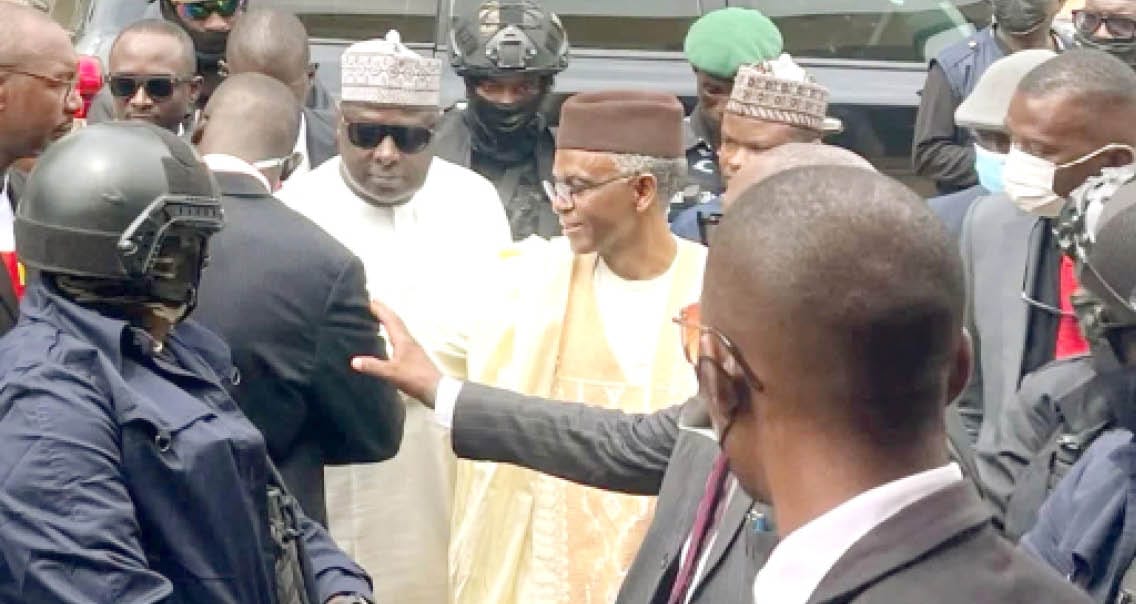
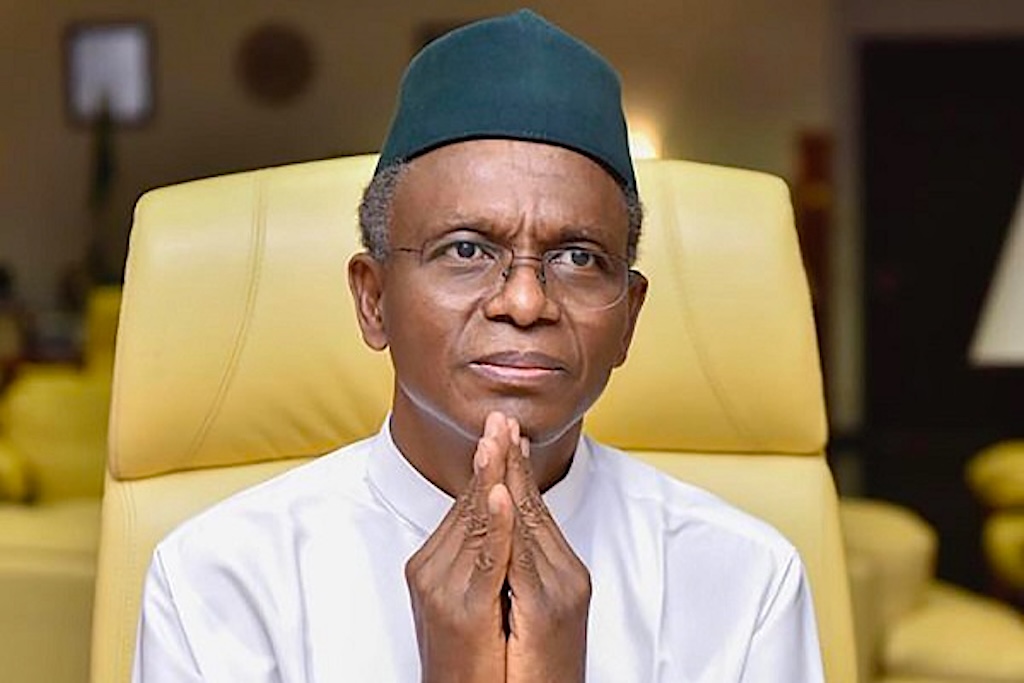
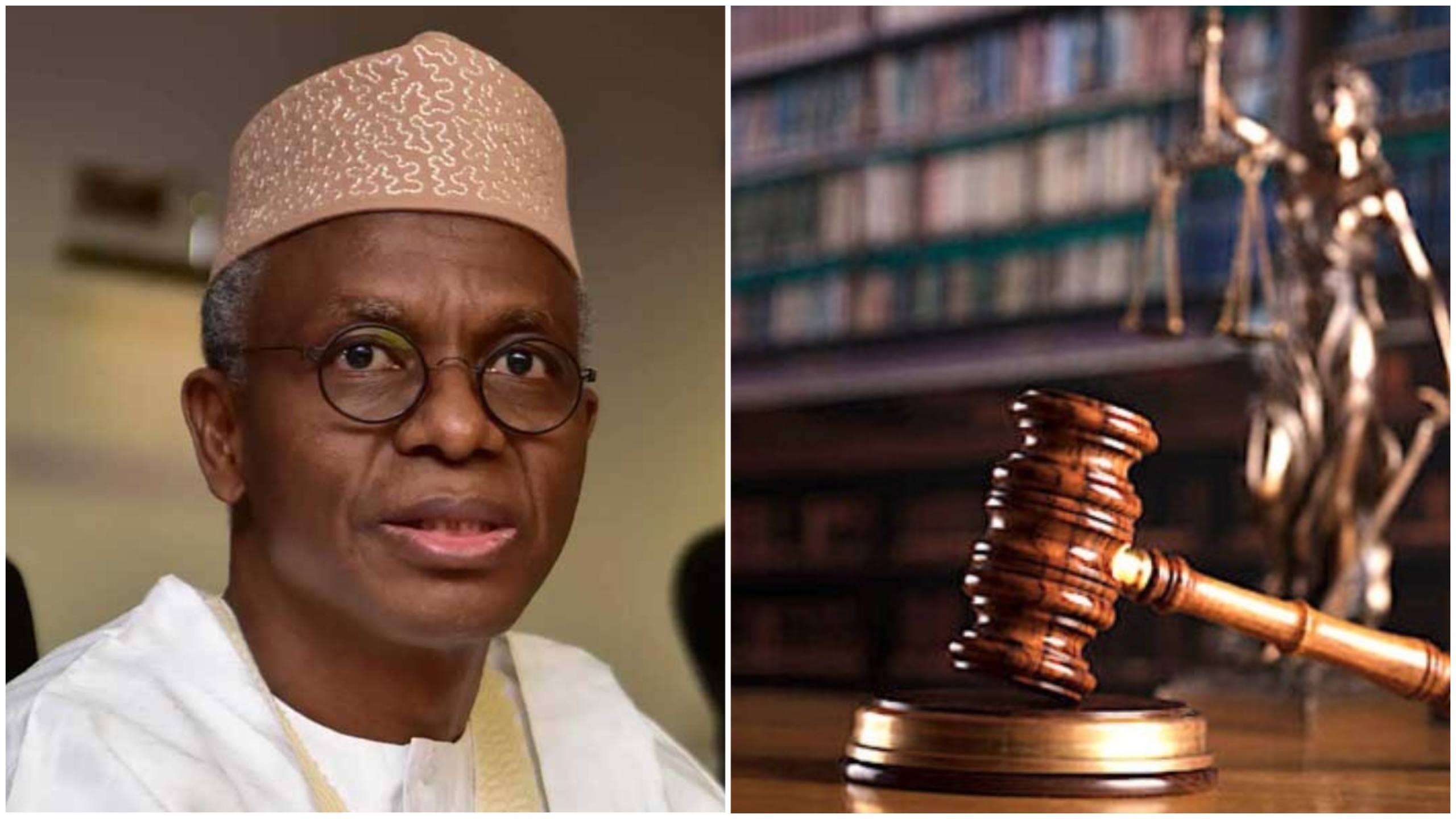
The Kaduna State High Court on Tuesday pushed back the case against former Governor Nasir El-Rufai over alleged fund mismanagement. The court set new dates for November 30 and December 1 to continue questioning a digital forensic expert from the Department of State Services (DSS).
This delay happened after the court dismissed an objection from El-Rufai’s legal team regarding the expert’s testimony. The expert, Shegun Kayode, was called to testify in the case.
Justice Darius Khobo, who presided over the case, ruled that the prosecution could call the witness even though his name and evidence summary were not in the witness list provided by the prosecution.
The judge stated that the defence’s right to a fair hearing could still be upheld by allowing them to cross-examine the witness.
This ruling came after El-Rufai’s senior lawyer, Paul Erokoro, SAN, expressed concerns. He argued that the defence did not receive the witness’s evidence summary or the subpoena. Erokoro claimed that this omission prevented the defence from preparing adequately for the cross-examination and understanding the case they needed to respond to.
On the other hand, Ayodele Adedipe, representing the Independent Corrupt Practices and Other Related Offences Commission (ICPC), argued that not including a subpoenaed witness in the proof of evidence does not automatically mean the testimony cannot be accepted.
In his ruling, Justice Khobo confirmed that the witness had been subpoenaed under an order signed by the court on June 30, 2026.
The judge also mentioned that the defence could address any concerns about fair hearing through cross-examination.
Earlier in the proceedings, Kayode told the court that the DSS carried out a forensic examination of communication records and audio recordings linked to El-Rufai and some associates, at the request of the ICPC.
He explained that the examination followed a formal request from the commission and received approval from the DSS director-general.
Kayode stated that their specialized software showed two-way communications involving El-Rufai, his brother, and another person between October 25 and 28, 2025.
He said the findings led to further analysis of audio recordings obtained from a communication intelligence server.
Kayode noted that the DSS telecommunications intelligence unit provided call data records through a secure server, following procedures to preserve electronic evidence.
He told the court that his team made four copies of the original audio recording while keeping the original safe to maintain the evidence's integrity.
The witness explained that the examination included analyzing vocal characteristics, background noise, and electromagnetic interference.
He added that the results showed the audio came from a human voice in a natural setting, not from an artificial source.
Kayode also conducted biometric voice analysis using another forensic tool to check the speaker’s voice.
He claimed that the recording included a conversation between El-Rufai and his elder brother about plans to shut down a company, Singularity, stop an ongoing Economic and Financial Crimes Commission (EFCC) case involving that company, and avoid an investigation into another company, IHS.
He further alleged that the conversation mentioned $500,000 and $100,000 set aside for settling EFCC officials and an intermediary.
These allegations are part of the witness’s account of the forensic findings, which the court has yet to confirm.
Kayode stated that he prepared a detailed forensic investigative report and submitted it to the court as evidence.
However, Erokoro objected to this document being presented, arguing that the prosecution could not introduce new evidence through a subpoenaed witness without following the right legal steps.
In response, Adedipe dismissed the objection, claiming that the court had previously ruled that evidence from a subpoenaed witness does not have to be included in the proof of evidence.
After listening to both sides, Justice Khobo overruled the objection and allowed Kayode to continue his testimony. The judge also mentioned that the defence could get a certified copy of the evidence from the court’s registry.
The ICPC is prosecuting El-Rufai on nine counts related to alleged corruption and abuse of office during his time as governor of Kaduna State.
The commission claims he convinced the state government to release around N11 billion to an unregistered entity for a light rail project that was never done.
It also accused him of approving and receiving about N289.8 million as severance pay, much higher than the roughly N20 million he was legally entitled to, giving himself an unfair advantage.
In another accusation, the commission claimed he mismanaged more than $1.08 million from a World Bank loan to the state, going against the loan agreement.
The ICPC further alleged that he worked with an associate, who is currently at large, to offer bribes to federal investigators to compromise an ongoing investigation involving a private firm.
Other charges include the unlawful awarding of a N4.6 billion CCTV contract in Kaduna city, breaking procurement laws, and giving undue advantage to an associate through this contract.
El-Rufai has denied all the charges against him.
Drop your comment
No comments yet — be the first to drop the gist 👇