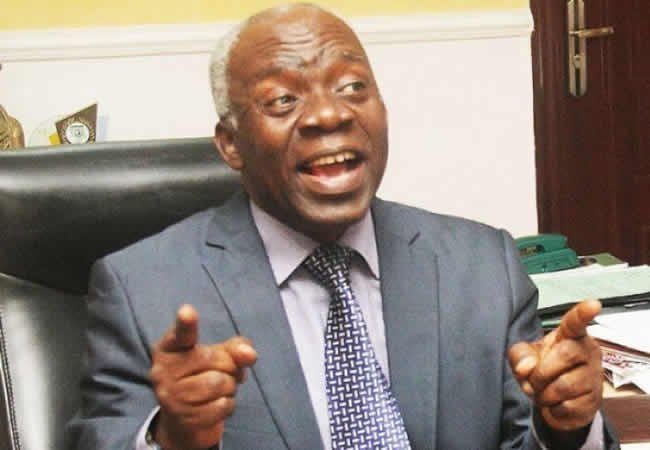
Human rights lawyer and Senior Advocate of Nigeria, Femi Falana, has asked the federal government to stop importing petrol. He wants the 450,000 barrels of crude oil said to be allocated daily for local use to be sent to Nigerian refineries.
Mr Falana believes that giving crude to local refiners would cut Nigeria's need for imported petrol. It would also help ease the tough times many are facing since the petrol subsidy was removed.
He spoke on Channels Television’s Sunday Politics while the debate about the economic effects of President Bola Tinubu’s petrol subsidy removal in May 2023 was heating up.
Mr Falana pointed out that while the subsidy system was not sustainable and had claims of fraud, Nigerians have not seen enough benefits from the extra money coming to the three levels of government since the subsidy ended.
“State governors are getting more allocations. The federal government is getting more money. Local governments are getting more funds on paper. It is the duty of the Nigerian people now to demand accountability,” he said.
He raised concerns about the figures used to support petrol subsidy payments. He noted the gap between reported petrol use and the volume supplied.
“At a point, we were told that local consumption, the rate of local consumption, was 68 million litres per day. Yet the NNPC claimed then that it was supplying the market to the tune of over 98 million litres per day,” Mr Falana said.
He also questioned why Nigeria still imports petrol when there are local refineries working.
He said it does not make sense for Nigeria to depend on imports while having crude oil and refineries growing.
“As of last week and today, fuel importation into Nigeria is about 43 per cent of consumption. Why? There are local refineries that are importing fuel into Nigeria,” he said.
Mr Falana mentioned the Dangote Refinery, which has been supplying more refined products to Nigeria and exporting some too.
The Nigerian Upstream Petroleum Regulatory Commission reported in August that domestic refiners got 53.7 million barrels of crude and condensate in the second quarter of 2026. The Dangote Refinery made up about 98 per cent of what local refiners received.
The lawyer said the federal government should focus on getting crude to local refiners instead of wasting foreign currency on imported petrol.
“The country sets aside 450,000 barrels of crude oil for local consumption. We must ask NNPC what has happened to that allocation,” he said.
He also challenged the government to show how the extra money made since the subsidy removal is used.
He noted that the Federal Government had planned about $10 billion yearly for fuel imports. He believes this savings should have improved lives in Nigeria.
“Now, the money earmarked for fuel importation by the government, $10 billion per annum, ought to have been saved, but the bulk of this money goes for servicing of debt. That’s where the problem lies,” he said, adding that the floating of the naira also consumed the subsidy savings.
Mr Falana said Nigerians should ask the federal government, state governments, and local councils how the extra money is being spent.
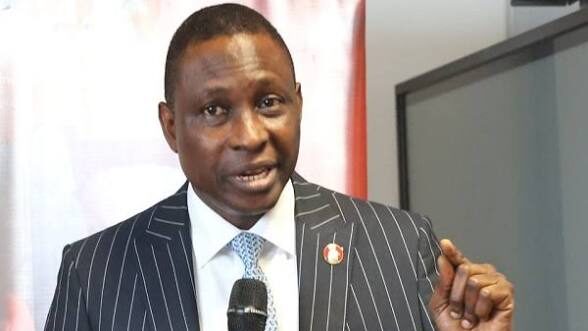
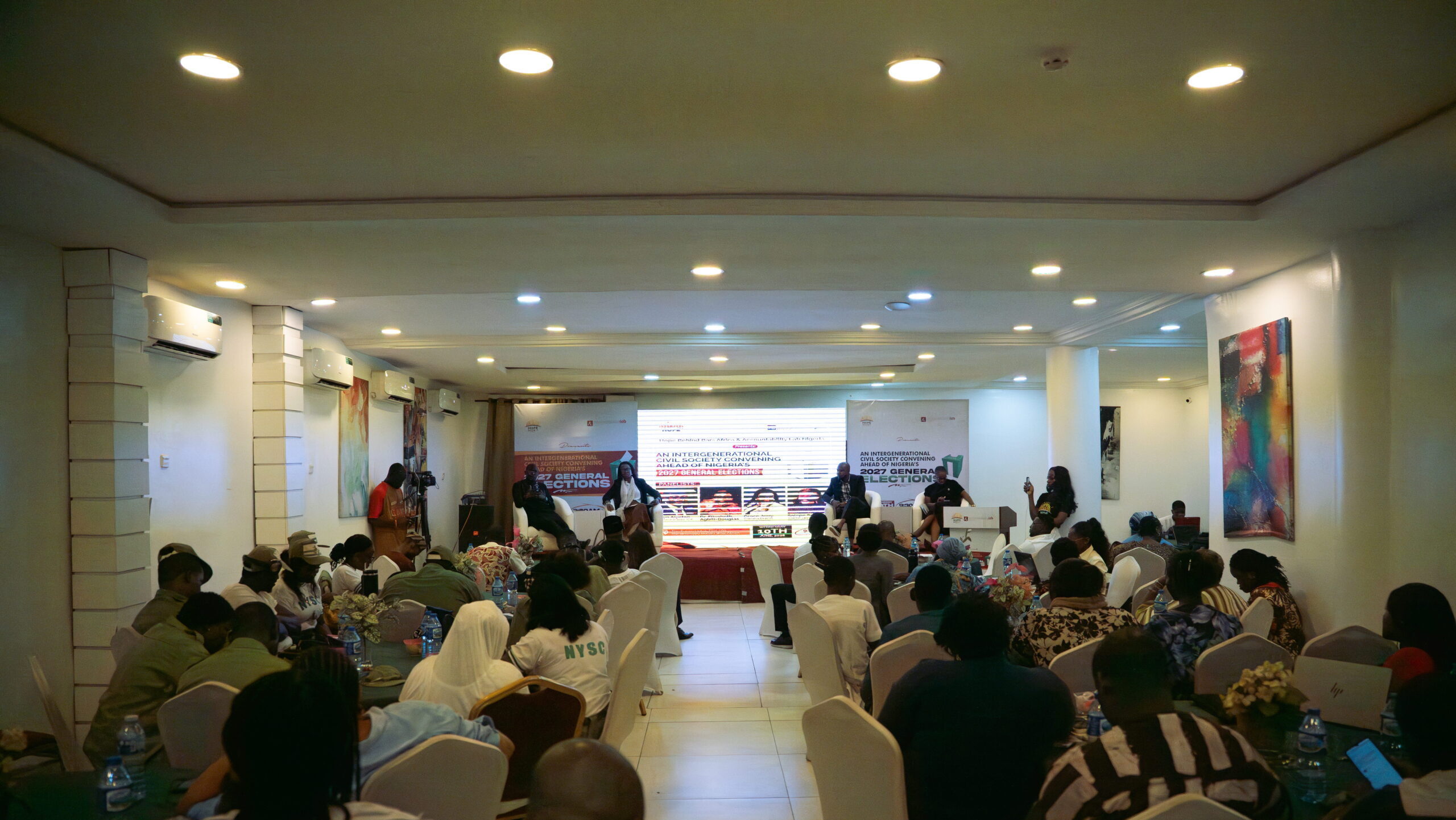

He gave an example of a road to Afe Babalola University in Ekiti State, saying residents are still waiting for the federal government to help even after the local government got good allocations.
“So you can’t fix a road with less than N500 million? And in any case, state governments were fixing roads, and they would then go to Abuja to ask for a refund. So, we must begin to ask questions of the local government, the state government and the federal government,” he said.
“Where are the benefits? It’s a fallacy being told to wait and wait and wait. People are dying.”
The debate about the subsidy removal has grown as the country nears the 2027 general elections.
Former Vice President Atiku Abubakar, the presidential candidate of the African Democratic Congress, has promised to partially bring back the subsidy if elected. Peter Obi from the Nigeria Democratic Congress supports removing it but wants the funds used wisely.
Mr Falana also criticized the influence of international financial institutions on Nigeria’s economic decisions.
He accused the International Monetary Fund and World Bank of pushing Nigeria to remove the petrol subsidy and raise electricity prices.
“Who is in charge? They tell us when to remove subsidies, when to remove electricity tariffs, or when to increase electricity tariffs, even in darkness,” he said.
The lawyer called Nigeria’s current economic system a “new colonialist economy” and criticized the naira's devaluation. He believes an economy that relies on imports cannot benefit from currency devaluation.
“If you are going to make life better for the people, it is to abandon some of these policies that are meant to promote poverty,” he said.
When asked what he would do if he were in charge of Nigeria’s petrol policy, the lawyer suggested two immediate actions.
First, he wants the NNPC to explain what happened to the 450,000 barrels of crude oil meant for local consumption.
“First, I will insist on finding out from the NNPCL what has happened to the 450,000 barrels allocation to local consumption daily. If we can locate those barrels of crude oil, then we can look for a refiner to refine them in the interest of the Nigerian people,” he said.
Second, he wants strict enforcement of laws that guarantee local governments have financial independence.
He said the federal government should follow the Supreme Court ruling that says statutory allocations for local governments should go directly to them.
“Secondly, the law that provides for the welfare of our people will have to be enforced. The government must enforce the judgment of the Supreme Court, that funds, statutory allocations of local governments, be paid directly to them,” Mr Falana said.


Drop your comment
No comments yet — be the first to drop the gist 👇